
New Zealand’s Holidays Act 2003 is notoriously complex. It has been the subject of countless Employment Relations Authority (ERA) disputes, major payroll remediation projects across both the public and private sectors, and years of government review. The Employment Leave Act received Royal assent on 6 August 2026 and is due to replace the Holidays Act on 6 August 2028. Until then, employers must continue to follow the current Holidays Act rules.
Whether you are managing five employees or five hundred, understanding the current rules and preparing for what is coming is essential. Getting leave wrong is not just an inconvenience — it is a compliance risk that can lead to arrears payments, penalties, and reputational harm. This guide walks you through every major leave entitlement under the Holidays Act 2003, the key changes on the horizon, and the most common mistakes employers make.
Disclaimer: This article is for informational purposes only and does not constitute legal advice. Consult an employment lawyer or visit Employment New Zealand for guidance specific to your organisation.
Related calculator: New Zealand Annual Leave Calculator
Key Principles: How Leave Pay Is Calculated
Before diving into individual entitlements, it helps to understand the three pay calculation methods the Holidays Act uses. Getting these wrong is the single biggest source of compliance failures.
Ordinary Weekly Pay (OWP) is the regular, recurring amount an employee earns in an ordinary week. It includes base salary plus regular allowances but excludes irregular bonuses, overtime, and one-off payments. OWP is used to calculate most leave payments, including annual leave.
Average Weekly Earnings (AWE) is total gross earnings over the last 52 weeks divided by 52 (or 13 weeks divided by 13 for some calculations). AWE gives a more accurate figure when earnings fluctuate due to variable hours, overtime, or seasonal work.
Relevant Daily Pay (RDP) is what an employee would have earned on the day they took leave. In practice, for salaried employees on a 5-day week, this is OWP divided by 5. RDP is used for sick leave, bereavement leave, and public holiday payments.
Annual Leave Under the Holidays Act
Annual leave is the cornerstone entitlement under the Holidays Act 2003. Every employee in New Zealand is entitled to a minimum of 4 weeks of paid annual leave after 12 months of continuous employment with the same employer. Leave begins to accrue from the first day of employment, but the entitlement to take that leave does not crystallise until the 12-month mark.
How Annual Leave Accrues
Annual leave accrues progressively throughout the year, not all at once on the employee’s anniversary date. This is an important distinction. At any point before the 12-month anniversary, an employee has a proportional entitlement based on how long they have worked. After 12 months, the full 4-week entitlement becomes available, and a new accrual cycle begins.
Part-Time and Variable-Hours Employees
Part-time workers receive the same 4 weeks of annual leave, pro-rated to their ordinary hours. A part-time employee working 20 hours per week is entitled to 4 weeks of leave at 20 hours per week — not 4 weeks at full-time hours.
For employees with varying or irregular hours, calculating annual leave pay requires the “greater of” test. When annual leave is taken, the employer must pay the greater of:
- Ordinary weekly pay (OWP) at the time the leave is taken, or
- Average weekly earnings (AWE) over the 52 weeks immediately before the leave
This test exists to protect employees whose hours fluctuate. If an employee worked significant overtime or extra shifts earlier in the year, the AWE figure may be higher than their current OWP. The employer must pay whichever amount is greater.
Worked Example: Annual Leave Payment
Consider an employee earning a base salary of $40,000 per year plus a regular shift allowance of $5,000 per year. Their OWP is ($40,000 + $5,000) / 52 = $865 per week. When they take one week of annual leave, they must be paid $865 — not the base salary alone. The shift allowance is regular and recurring, so it must be included.
Pro-Rata Annual Leave on Departure
If an employee leaves before using their full entitlement, they must be paid out accrued annual leave on a pro-rata basis. For example, an employee who resigns after 6 months (26 weeks) has accrued: 4 weeks x (26 / 52) = 2 weeks of annual leave. That 2 weeks is paid out at the greater of OWP or AWE at the time of departure.
Pay-as-You-Go (8%) for Casual and Fixed-Term Employees
For casual employees or those on fixed-term agreements of less than 12 months, the employer and employee may agree to a pay-as-you-go arrangement. Under this arrangement, the employer pays an additional 8% of gross earnings in lieu of accruing annual leave entitlements. This 8% must be shown as a separate line item on the payslip. It is not a substitute for providing leave — it is only permitted in specific circumstances where accruing and taking leave in the traditional sense is impractical.
Sick Leave
Sick leave under the Holidays Act 2003 provides employees with paid time off when they are unwell or injured, or when a dependant (such as a spouse, partner, or child) is unwell.
Entitlement
After 6 months of continuous employment, an employee becomes entitled to 10 days of sick leave per year. This entitlement renews on each subsequent 6-month or 12-month anniversary (whichever applies based on when the employee first became entitled). The 10-day minimum was increased from 5 days in 2021 under the Holidays (Increasing Sick Leave) Amendment Act.
Accumulation and Carry-Over
Unused sick leave carries over from year to year, but the statutory minimum caps accumulation at 20 days at any one time. An employer may, of course, provide more generous sick leave entitlements — and many do. If the employment agreement provides for more than 10 days per year or allows accumulation beyond 20 days, the more generous terms apply.
Sick Leave Daily Pay Example
Sick leave is paid at the employee’s relevant daily pay. For an employee with an OWP of $800 per week on a 5-day work week, their daily rate is $800 / 5 = $160 per day. One day of sick leave is paid at $160.
Proof of Sickness
An employer can request a medical certificate (proof of sickness) if an employee is absent for 3 or more consecutive calendar days. Beyond the 3-day rule, an employer may also request proof where there is a pattern of absences (for example, frequent absences on Mondays or Fridays), or where the employer has reasonable suspicion that the absence is not genuine. The employment agreement may also include a provision allowing the employer to request proof after fewer days, provided this is agreed in writing. If the employer requires proof, they must cover the cost of the medical certificate if the employee would not otherwise have obtained one.
Public Holidays
New Zealand has 11 public holidays per year, plus one regional anniversary day. Every employer needs to understand the rules around public holiday entitlements, because the calculations and obligations are more complex than many realise.
The Full List of NZ Public Holidays (2026)
- New Year’s Day — 1 January
- Day after New Year’s Day — 2 January
- Waitangi Day — 6 February
- Good Friday — 3 April
- Easter Monday — 6 April
- Anzac Day — 25 April
- King’s Birthday — 1 June
- Matariki — 10 July
- Labour Day — 26 October
- Christmas Day — 25 December
- Boxing Day — 26 December
In addition, each region observes one provincial anniversary day (e.g., Auckland Anniversary, Wellington Anniversary, Canterbury Anniversary). The specific date varies by region.
If the Employee Does Not Work on a Public Holiday
If a public holiday falls on a day that would otherwise be a working day for the employee, they are entitled to a paid day off. The employee receives their relevant daily pay or average daily pay for that day.
If the Employee Works on a Public Holiday
If an employee works on a public holiday, they are entitled to:
- Time-and-a-half pay for the hours actually worked, AND
- An alternative holiday (a paid day off to be taken at a later date)
Both entitlements apply. Employers cannot offer one in place of the other. In effect, an employee working on a public holiday receives their normal day rate, plus the work pay for hours performed, plus a penalty loading — commonly between 150% and 200% of the ordinary rate depending on the employment agreement. The statutory minimum is time-and-a-half (150%), but many collective agreements set higher rates.
The “Otherwise Working Day” Test
The critical question for public holidays is whether the day in question would have been an “otherwise working day” for the employee. For employees with regular, predictable schedules, this is straightforward. For employees with irregular or rotating rosters, the Holidays Act requires employers to consider several factors:
- Whether the employee would have worked on the day but for the public holiday
- The employee’s work patterns
- The employment agreement
- Any other relevant factors, including whether the employee works the majority of the days in question over time
Getting the “otherwise working day” test wrong is one of the most common compliance failures for NZ employers, particularly those with shift workers, casual staff, or employees on variable rosters.
Bereavement Leave
Bereavement leave is available to all employees from the first day of employment. There is no qualifying period. The Holidays Act 2003 provides for two tiers of bereavement leave.
3 Days of Bereavement Leave
An employee is entitled to 3 days of paid bereavement leave on the death of:
- A spouse or partner
- A parent or step-parent
- A child or step-child
- A sibling
- A grandparent
- A grandchild
- A spouse’s or partner’s parent
The 3-day minimum is a starting point, not a ceiling. Many employers allow additional time, particularly where the employee is a primary organiser for funeral arrangements or needs to travel. Approaching bereavement leave with flexibility and empathy is both good practice and good faith under the Act.
1 Day of Bereavement Leave
An employee is entitled to 1 day of paid bereavement leave for the death of any other person, provided the employer accepts that the employee has suffered a bereavement. This is a broad provision. It can cover close friends, extended family members, whanau, or any other person with whom the employee had a significant relationship. Employers should approach these requests with sensitivity and good faith.
Family Violence Leave
Since 2019, employees affected by family violence have been entitled to 10 days of paid family violence leave per year, available from the first day of employment. This entitlement was introduced by the Domestic Violence — Victims’ Protection Act 2018 and is entirely separate from sick leave. Taking family violence leave does not reduce any other leave entitlement.
Key Employer Obligations
- Family violence leave records must be kept confidential. Leave balances and usage for this type must not be visible to other employees or managers who do not need to know.
- An employee does not need to provide proof of family violence to access this leave, although the employer may request it in limited circumstances (and must handle any information received with extreme care).
- An employer must not treat an employee adversely because they are, or are suspected to be, a person affected by family violence.
Family violence leave is a critical entitlement. Employers should ensure their leave management systems can track it separately and confidentially.
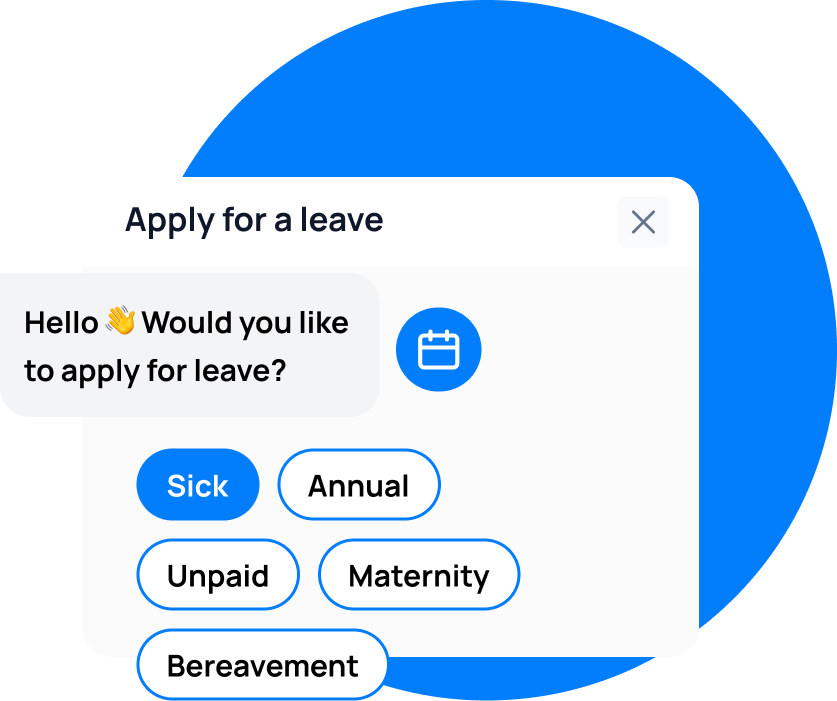
leave emails? Track your employee's leave with Leave Balance
Parental Leave
Parental leave in New Zealand is governed by the Parental Leave and Employment Protection Act 1987, not the Holidays Act 2003 directly, but it is a core leave entitlement that every employer must understand.
Government-Funded Paid Parental Leave (PPL)
The primary carer (the birth parent or the person who assumes primary responsibility for the child’s care) is entitled to 26 weeks of government-funded paid parental leave. The maximum weekly rate for 2026 is approximately $754.46 per week (before tax). This rate is adjusted annually. PPL is funded by the government, not the employer, but employers must facilitate the application process and hold the employee’s job open.
Eligibility
To qualify for PPL, the primary carer must have worked for the same employer for at least 6 months (an average of at least 10 hours per week) at the expected date of delivery or the date they assume care of the child.
Partner’s Leave
The partner of the primary carer is entitled to:
- 2 weeks of unpaid partner’s leave if they have worked for the same employer for at least 6 months
- 1 week of unpaid partner’s leave if they have worked for the same employer for at least 6 months but less than 12 months (in some circumstances)
Extended Leave
Between both parents, up to 52 weeks of parental leave can be taken in total. This comprises 26 weeks of paid parental leave plus up to 26 weeks of unpaid extended leave. The primary carer and partner can share the leave allocation between them, subject to eligibility requirements.
Job Protection
Employers must hold an employee’s position open while they are on parental leave, or offer a comparable position if the original role genuinely no longer exists. Failing to do so is a breach of the Parental Leave and Employment Protection Act.
The Employment Leave Act: What Is Changing
The Holidays Act 2003 has been under review for years. The Employment Leave Act, introduced as a Bill in March 2026 and granted Royal assent on 6 August 2026, will replace the Holidays Act on 6 August 2028. This is the most significant overhaul of leave legislation in New Zealand in over two decades.
Why the Change
The Holidays Act’s complexity has led to widespread non-compliance. Major employers — including government departments, banks, and large retailers — have been forced to undertake multi-million dollar remediation exercises after discovering they had been underpaying leave for years. The new Bill aims to simplify calculations and make compliance more achievable.
Key Changes Under the Employment Leave Act
Leave accrues from day one, in hours. Under the current Act, annual leave accrues progressively but the full entitlement is only available after 12 months. Under the new Bill, leave will accrue in hours from the first day of employment:
- Annual leave accrual rate: 0.0769 hours of leave per hour worked (equivalent to 4 weeks over a full year for a full-time employee)
- Sick leave accrual rate: 0.0385 hours of leave per hour worked
This hourly accrual model eliminates the complexity of the “greater of” test, OWP vs AWE calculations, and the various pay calculation methods that have caused so much confusion.
12.5% Leave Compensation Payment replaces 8% pay-as-you-go. For casual and short-term employees, the current 8% holiday pay loading will be replaced with a 12.5% Leave Compensation Payment. This higher rate reflects the inclusion of public holiday and sick leave entitlements in the loading.
Simplified “otherwise working day” test. The Bill proposes a clearer, more prescriptive test for determining whether a public holiday falls on an otherwise working day, reducing the ambiguity that currently causes so many disputes.
Bereavement and family violence leave remain available from day one. These entitlements are already available from day one under the current Act, but the new Bill formalises and consolidates them within the new framework.
Timeline
The Employment Leave Act is due to commence on 6 August 2028, the second anniversary of Royal assent. Employers must continue following the Holidays Act 2003 until the replacement law takes effect.
Common Compliance Mistakes
Even well-intentioned employers frequently make errors under the Holidays Act 2003. Here are the most common mistakes to watch for.
Using Flat 8% Holiday Pay When the “Greater Of” Test Would Give More
Some employers apply the 8% pay-as-you-go rate to all employees, or use it as a shortcut for calculating annual leave pay. This is only permitted for casual or fixed-term employees under specific circumstances. For permanent employees, the “greater of” OWP vs AWE test must be applied every time annual leave is taken.
Not Paying Time-and-a-Half Plus an Alternative Day
When an employee works on a public holiday, they are entitled to both time-and-a-half pay and an alternative holiday. Some employers pay one or the other, but both are required under the Act. Failing to provide both is a compliance breach.
Applying the Wrong “Otherwise Working Day” Test
For employees with irregular schedules, determining whether a public holiday falls on an otherwise working day requires careful analysis. Employers cannot simply default to “Monday to Friday” for all employees. The test must reflect the employee’s actual working patterns.
Not Providing Bereavement Leave to New Employees
Bereavement leave is available from the first day of employment. Unlike annual leave and sick leave, there is no qualifying period. Some employers mistakenly apply a waiting period, which is a breach of the Act.
Failing to Keep Compliant Leave Records
Employers are required to keep accurate records of all leave entitlements, accruals, and usage for each employee. These records must be kept for at least 6 years. Inadequate record-keeping not only makes compliance harder — it can also be treated as a standalone breach.
Flexible Working Arrangements
While not part of the Holidays Act itself, the Employment Relations Act gives every employee in New Zealand the right to request flexible working arrangements from their first day of employment. This includes requests for part-time hours, changed start and finish times, job sharing, compressed work weeks, or work-from-home arrangements.
Employers must consider every request and respond in writing within one month. A request can only be refused on genuine business grounds — for example, an inability to reorganise work among existing staff, or a detrimental impact on quality or performance. Employers who dismiss flexible working requests without proper consideration risk a personal grievance claim.
For leave management purposes, flexible working arrangements directly affect how leave accrues and is paid. An employee who moves from 5 days to 4 days per week will have their annual leave entitlement adjusted accordingly, and their OWP and RDP calculations must reflect the new arrangement.
Penalties for Non-Compliance
The Employment Relations Authority (ERA) has broad powers to address breaches of the Holidays Act 2003. Penalties are not theoretical — they are actively enforced, and the financial and reputational consequences can be significant.
The ERA can order:
- Back pay for any underpaid leave, often spanning multiple years
- Compensation for disadvantage or humiliation suffered by the employee
- Penalties payable to the Crown — these can reach $20,000 or more for significant breaches by an individual, and higher for companies
- Legal costs awarded against the employer
In practice, remediation costs often dwarf the penalty itself. Several large NZ employers have paid tens of millions of dollars in historical leave underpayments after audits revealed systematic errors in OWP and AWE calculations. The lesson is clear: getting leave calculations right from the start is far cheaper than fixing them later.
How Leave Balance Helps NZ Employers Stay Compliant
Managing leave under the Holidays Act 2003 — and preparing for the Employment Leave Act — requires a system that can handle the complexity. Spreadsheets and manual tracking are a recipe for errors, particularly when dealing with variable-hours employees, public holiday calculations, and multiple leave types.
Leave Balance is designed to handle exactly this. The platform tracks annual leave, sick leave, public holidays, bereavement leave, and family violence leave in a single system, with configurable policies that match New Zealand’s statutory entitlements.
Key features for NZ employers:
- Configurable leave policies that reflect Holidays Act entitlements, including the “greater of” test, public holiday rules, and bereavement leave from day one
- Slack and Microsoft Teams integration so employees can request and manage leave directly from the tools they already use
- Team calendars and absence visibility to help managers plan around public holidays, regional anniversary days, and peak leave periods
- Compliance-ready record-keeping with full audit trails for every leave transaction
- Flat-rate pricing at just $29 USD per month for unlimited employees — no per-seat charges, no hidden costs
Whether you are navigating the current Holidays Act or preparing for the Employment Leave Act, Leave Balance gives you the confidence that your leave management is accurate, compliant, and effortless.
leave emails? Track your employee's leave with Leave Balance