When making employees redundant, many UK employers focus on redundancy pay calculations and consultation obligations — and then discover, sometimes too late, that they have got the annual leave payment wrong. Accrued but untaken holiday must be paid out on termination, and getting the calculation right is both a legal obligation and a practical necessity.
This guide covers the statutory rules, walks through the calculations with worked examples, addresses the tricky questions around carry-over and clawback, and explains how garden leave, PILON, and notice periods interact with holiday pay on redundancy.
The Statutory Right: Payment for Unused Holiday on Termination
Under Regulation 14 of the Working Time Regulations 1998 (WTR), when a worker’s employment terminates during the leave year, they are entitled to a payment in lieu of any accrued but untaken statutory annual leave.
This right:
- Applies to all workers, not just employees — agency workers, zero-hours contract workers, and casual staff are all covered
- Cannot be contracted out of — any contractual term that attempts to remove this right is void
- Covers the statutory entitlement (5.6 weeks / 28 days for a full-time worker) — contractual entitlement above the statutory minimum depends on the employment contract
- Applies regardless of the reason for termination — whether it is redundancy, resignation, dismissal, or mutual agreement
The key principle is simple: if the employee has accrued annual leave that they have not yet taken at the point of termination, they must be paid for it.
How to Calculate the Payment
Step 1: Determine the Statutory Accrual for the Year to Date
Statutory annual leave accrues proportionally throughout the leave year. For a full-time worker entitled to 28 days per year:
Monthly accrual = 28 days / 12 months = 2.33 days per month
If the employee is made redundant six months into the leave year, they have accrued:
6 months x 2.33 = 14 days
Step 2: Subtract Leave Already Taken
If the employee has already taken 8 days of annual leave in the current leave year:
14 days accrued - 8 days taken = 6 days untaken
Step 3: Calculate the Daily Rate
The daily rate for holiday pay purposes should reflect the employee’s normal remuneration. Following the landmark cases of British Gas Trading Ltd v Lock and Harpur Trust v Brazel, holiday pay should include:
- Basic salary
- Regular overtime (guaranteed and regularly worked voluntary overtime)
- Commission (if it is intrinsically linked to tasks the worker is obliged to perform)
- Regular allowances (shift allowances, travel allowances that are paid regularly)
For a salaried employee with a straightforward pay structure:
Daily rate = Annual salary / 260 (working days in a year)
For an employee earning £35,000 per year:
£35,000 / 260 = £134.62 per day
Step 4: Calculate the Payment
Payment = Untaken days x Daily rate
6 days x £134.62 = £807.69
This amount is subject to income tax and National Insurance deductions, as it is treated as earnings.
Worked Example: Part-Time Worker
Sarah works three days per week and earns £21,000 per year. Her statutory annual leave entitlement is:
3 days x 5.6 weeks = 16.8 days per year
She is made redundant on 30 September, nine months into the leave year. She has taken 10 days of annual leave.
- Accrued to date: 16.8 x (9/12) = 12.6 days
- Already taken: 10 days
- Untaken: 12.6 - 10 = 2.6 days
- Daily rate: £21,000 / (3 x 52) = £134.62 per day (or calculated as annual salary / 156 working days)
- Payment: 2.6 x £134.62 = £350.01
Worked Example: Mid-Year Redundancy With Bank Holidays
James works full-time and earns £40,000 per year. His employer includes the eight bank holidays within the 28-day statutory entitlement. He is made redundant on 31 July, seven months into a January-to-December leave year.
- Accrued to date: 28 x (7/12) = 16.33 days
- Annual leave taken: 5 days
- Bank holidays to date (January to July): New Year’s Day, Good Friday, Easter Monday, Early May bank holiday, Spring bank holiday = 5 bank holidays
- Total leave taken: 5 + 5 = 10 days
- Untaken: 16.33 - 10 = 6.33 days
- Daily rate: £40,000 / 260 = £153.85
- Payment: 6.33 x £153.85 = £973.87
Statutory vs Contractual Entitlement on Termination
This is a crucial distinction that many employers overlook.
Statutory Entitlement (28 Days)
The WTR guarantee the right to payment for accrued but untaken statutory leave on termination. This cannot be overridden by contract.
Contractual Entitlement (Above 28 Days)
If the employment contract provides more than 28 days — say, 33 days — the additional 5 days are a contractual benefit. What happens to these extra days on termination depends entirely on what the contract says:
- If the contract is silent on termination provisions for contractual leave, the employee is likely entitled to payment for accrued but untaken contractual leave as well (since the entitlement was part of their contractual terms).
- If the contract explicitly states that contractual leave above 28 days is forfeited on termination, this clause is generally enforceable — but only for the days above the 28-day statutory minimum.
- The employer cannot forfeit statutory leave (the 28 days) regardless of what the contract says.
Best practice is to be explicit in the employment contract about what happens to contractual leave above the statutory minimum on termination.
leave emails? Track your employee's leave with Leave Balance
What Happens With Carry-Over Leave?
Carry-over complicates the calculation. If an employee has annual leave carried over from a previous leave year, does this need to be paid out on redundancy?
Standard Position
The WTR are clear that only leave accrued in the current leave year generates a right to payment under Regulation 14. Historically, this meant carried-over leave did not need to be paid out.
Post-COVID Carry-Over
The Coronavirus Regulations (Working Time (Coronavirus) (Amendment) Regulations 2020) allowed workers to carry over up to four weeks of statutory leave into the following two leave years if they could not take it due to the pandemic. This carried-over leave must be paid out on termination because it represents accrued statutory leave that could not be taken.
Carry-Over Due to Sickness
Following the European Court of Justice decision in Stringer v HMRC and subsequent UK case law, employees who are on long-term sick leave and unable to take their annual leave can carry it over. This leave must be paid out on termination.
Carry-Over Due to Maternity/Family Leave
Similarly, if an employee could not take annual leave because they were on maternity, paternity, adoption, or shared parental leave, the carried-over leave must be paid out on termination.
Contractual Carry-Over
If the employer’s policy allows carry-over of contractual leave (above 28 days), whether this must be paid on termination depends on the wording of the policy and the contract.
The practical takeaway: Any statutory leave that was carried over because the employee was genuinely unable to take it (due to sickness, family leave, or COVID restrictions) must be paid on termination. Employers should maintain clear records of why leave was carried over and how much is outstanding.
Can You Claw Back Overpaid Holiday?
What happens when the calculation works the other way — the employee has taken more leave than they have accrued at the point of redundancy?
Example
Emma has a 28-day annual leave entitlement. She is made redundant on 30 April, four months into the leave year. She has accrued 28 x (4/12) = 9.33 days. But she took a two-week holiday in March and has already used 12 days.
She has taken 2.67 more days than she has accrued.
Can the Employer Deduct the Overpayment?
This depends on:
-
The employment contract: If the contract contains a clause permitting the employer to deduct overpaid holiday from the final pay, the deduction is generally lawful under Section 13 of the Employment Rights Act 1996 (which allows deductions authorised by the contract).
-
No contractual clause: Without an explicit contractual provision, the employer generally cannot make the deduction from wages. They would need to pursue the overpayment as a civil debt — which is rarely worth the cost or relationship damage during a redundancy process.
-
Practical considerations: Even where the contractual right exists, many employers choose not to exercise it during redundancy. The employee is already losing their job, and clawing back a few days’ holiday pay can cause disproportionate resentment and reputational damage.
Best practice: Include a clear clawback clause in employment contracts so the right exists if needed. But exercise discretion about whether to enforce it during redundancy.
Notice Period and Annual Leave
Can an Employee Take Holiday During the Notice Period?
Yes. An employee can request annual leave during their notice period, and the employer should consider the request in the normal way. The employer can also require the employee to take outstanding annual leave during the notice period.
Can the Employer Require the Employee to Take Holiday During Notice?
Under Section 15(2) of the Working Time Regulations, an employer can require a worker to take annual leave on specific dates, provided they give notice equal to twice the length of the leave. So to require an employee to take five days’ holiday, the employer must give ten days’ notice.
During a redundancy notice period, this is a common approach — particularly if the employee has a significant amount of untaken leave. However:
- The notice requirements must be met
- The employee must actually be free to enjoy the leave (this matters for garden leave — see below)
- It may be seen as heavy-handed if the employee wants to work their notice period
Does Annual Leave Continue to Accrue During the Notice Period?
Yes. Annual leave continues to accrue throughout the notice period, whether the employee is working their notice, on garden leave, or receiving payment in lieu of notice.
Garden Leave and Annual Leave
Garden leave is when an employee is required to stay at home during their notice period but remains employed. Their contract continues, and they are paid as normal.
Key points about garden leave and annual leave:
- Annual leave continues to accrue during garden leave because the employment relationship continues.
- The employer can require the employee to take annual leave during garden leave, subject to the notice requirements above.
- However, in practice, if an employee is on garden leave and also being told to take annual leave, the question arises: is the employee genuinely “on holiday” or are they simply sitting at home as they would be on garden leave? This distinction matters because annual leave should be a genuine period of rest.
- If the contract contains a clause allowing the employer to direct the employee to take holiday during garden leave, the position is more straightforward.
Best practice: Include an explicit clause in the employment contract or garden leave provision that allows the employer to require the employee to take outstanding holiday during garden leave.
PILON (Payment in Lieu of Notice) and Holiday Pay
Payment in Lieu of Notice (PILON) is when the employer ends the employment immediately and pays the employee for the notice period they would have worked.
How PILON Affects Holiday Pay
If the employer makes a PILON:
- The employment terminates immediately (or on the date specified).
- Annual leave stops accruing at the termination date.
- The employee must be paid for any accrued but untaken annual leave up to the termination date.
- There is a question about whether annual leave that would have accrued during the notice period should also be paid.
The Notice Period Accrual Question
If an employee is entitled to three months’ notice and the employer makes a PILON, does the employee’s annual leave entitlement include the three months they would have worked?
The answer depends on whether the PILON terminates the contract immediately or whether the contract is treated as continuing for the notice period. A contractual PILON clause typically terminates the contract immediately, meaning leave only accrues to the termination date. Without a contractual clause, the position is less clear — there is an argument that the employer is in breach of contract, and the employee should be put in the position they would have been in had the contract been performed, which would include leave accrued during the notice period.
Best practice: Include a clear PILON clause in the contract. Calculate the PILON amount generously to include an element for holiday that would have accrued during the notice period. This avoids disputes and costs relatively little.
Common Employer Mistakes
1. Forgetting to Pay for Accrued Holiday
The most basic mistake. Some employers calculate redundancy pay and final salary but overlook the payment for untaken annual leave. This is a breach of the Working Time Regulations and can lead to tribunal claims.
2. Using the Wrong Calculation Method
Paying holiday at basic salary only, when the employee regularly works overtime or receives commission, is a common error. Following Lock v British Gas and subsequent cases, holiday pay should reflect normal remuneration.
3. Not Tracking Leave Accurately
If the employer does not have accurate records of how much leave has been taken, the final payment calculation is guesswork. This leads to either underpayment (risking a claim) or overpayment (an unnecessary cost).
4. Confusing Statutory and Contractual Entitlements
Applying forfeiture clauses to statutory leave (which is not permissible) or failing to apply them to contractual leave (missing a legitimate cost saving) are both common errors.
5. Ignoring Carry-Over
Failing to account for leave carried over from previous years — particularly leave that was carried over because the employee was on sick leave or maternity leave — can result in significant underpayment.
6. Not Including Holiday in PILON Calculations
When making a payment in lieu of notice, some employers calculate the PILON but forget that holiday would have continued accruing during the notice period.
7. Deducting Overpaid Holiday Without Contractual Authority
Deducting overpaid holiday from the final pay without a contractual clause permitting the deduction is an unlawful deduction from wages under Section 13 of the Employment Rights Act 1996.
Practical Checklist for Employers
When processing a redundancy, work through this checklist for each affected employee:
- Identify the leave year — when does it start and end?
- Calculate accrued statutory leave to the termination date (pro-rata based on completed months or days)
- Calculate accrued contractual leave (if applicable) to the termination date
- Check for carry-over — is there any leave carried over from the previous year? If so, why was it carried over?
- Total the leave already taken — including bank holidays if they are part of the entitlement
- Calculate the untaken balance — accrued (including carry-over) minus taken
- Determine the daily rate — including regular overtime, commission, and allowances where applicable
- Calculate the payment — untaken days x daily rate
- Check for overpayment — has the employee taken more than they have accrued? Is there a contractual clawback clause?
- Consider notice period — is the employee working notice, on garden leave, or receiving PILON? How does this affect the calculation?
- Process through payroll — the payment is subject to tax and NI
How Leave Balance Makes Redundancy Leave Calculations Straightforward
When redundancy happens, the last thing you want is to be digging through spreadsheets and emails trying to figure out how much leave each employee has taken. Inaccurate records lead to underpayments, overpayments, and potential tribunal claims.
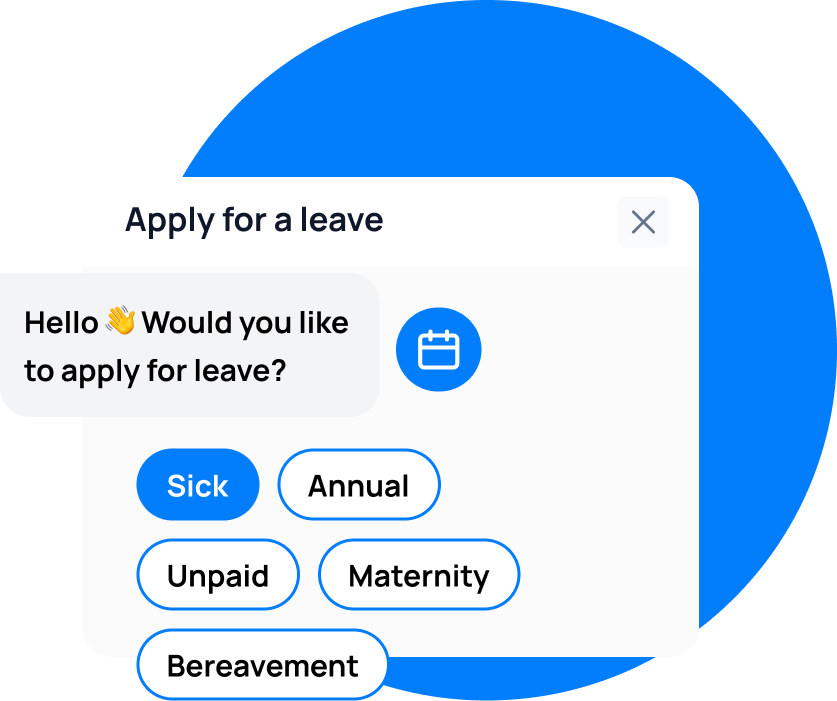
Leave Balance maintains a real-time, accurate record of every employee’s leave balance — including annual leave, bank holidays, carry-over, and any custom leave types. When you need to calculate the final holiday payment for a departing employee, the data is already there: accrued entitlement, leave taken, and the exact balance remaining.
For organisations managing redundancies across multiple locations or countries, Leave Balance’s multi-country support ensures that each employee’s balance reflects the correct statutory entitlements for their jurisdiction. No manual calculations, no guesswork.
At $10/month flat for unlimited employees, Leave Balance gives you the accurate leave data you need — not just for redundancy situations, but for day-to-day leave management that prevents these problems from arising in the first place.
leave emails? Track your employee's leave with Leave Balance
Key Takeaways
- Regulation 14 of the Working Time Regulations 1998 requires employers to pay for accrued but untaken statutory annual leave on termination — including redundancy.
- Calculate the payment as: (accrued days - days taken) x daily rate, where the daily rate reflects normal remuneration including regular overtime and commission.
- Carry-over leave must be paid out if it was carried over because the employee could not take it (sick leave, maternity leave, COVID restrictions).
- Clawback of overpaid holiday is only possible with a clear contractual clause — without one, the employer generally cannot deduct from final pay.
- Annual leave continues to accrue during notice periods, garden leave, and (arguably) PILON periods.
- The most common mistakes are failing to pay for accrued leave, using the wrong daily rate, and not tracking leave accurately throughout the year.
- Keep accurate, real-time leave records throughout the employment — this protects both the employer and the employee when termination occurs.