Statutory Sick Pay (SSP) is one of those topics every UK employer must understand — yet many get the details wrong. From miscalculating waiting days to failing to keep proper records, SSP mistakes can lead to penalties from HMRC, tribunal claims, and damaged employee trust.
Whether you are a small business owner handling payroll yourself or an HR professional managing hundreds of staff, this guide covers everything you need to know about SSP in 2025/26: who qualifies, how much you owe, how long it lasts, and what happens when it runs out.
What Is Statutory Sick Pay?
Statutory Sick Pay is the minimum amount employers in the UK must pay employees who are too ill to work. It is a legal obligation under the Social Security Contributions and Benefits Act 1992, not a discretionary benefit.
Key facts at a glance:
- Current rate (2025/26): £116.75 per week
- Duration: Up to 28 weeks in a single period of incapacity for work
- Waiting days: 3 qualifying days before SSP kicks in
- Who pays: The employer (not the government — the Percentage Threshold Scheme ended in 2014)
SSP is paid through your normal payroll process on your usual pay day. You deduct tax and National Insurance as you would with regular earnings.
Who Qualifies for SSP?
Not every worker is entitled to SSP. To qualify, an employee must meet all of the following conditions:
1. They Must Be an Employee
SSP applies to employees, not self-employed contractors. However, the definition is broad — agency workers and those on zero-hours contracts can qualify if they meet the other criteria.
2. They Must Have Done Some Work Under Their Contract
The employee must have started work under their contract. Someone who falls ill before their start date does not qualify.
3. They Must Be Ill for Four or More Consecutive Days
The illness must last at least four days in a row (including weekends and bank holidays). These are called “qualifying days.” Short-term absences of one to three days do not trigger SSP.
4. They Must Earn at Least the Lower Earnings Limit (LEL)
For 2025/26, the lower earnings limit is £125 per week. Employees whose average weekly earnings fall below this threshold do not qualify for SSP. Instead, they may be able to claim Universal Credit or Employment and Support Allowance (ESA).
5. They Must Notify You Properly
Employees must tell you they are sick within your specified notification period — or within seven days if you have not set one. You cannot refuse SSP simply because an employee was a day late notifying you, but you can set reasonable reporting requirements in your sickness absence policy.
Who Does NOT Qualify?
- Employees earning below the LEL (£125/week)
- Employees who have already received 28 weeks of SSP in a linked period
- Employees on a Maternity Allowance or Statutory Maternity Pay period
- Employees in legal custody
- Employees who have not yet started work under their contract
If an employee does not qualify, you must issue them a form SSP1 within seven days, explaining why. This allows them to claim alternative benefits.
Waiting Days: How the First Three Days Work
SSP is not payable from the first day of sickness. The first three “qualifying days” of illness are unpaid waiting days.
Qualifying days are the days an employee would normally be required to work. For someone on a standard Monday-to-Friday schedule, only weekdays count as qualifying days. Weekends do not.
Example: An employee who works Monday to Friday falls ill on Wednesday. Their qualifying days are Wednesday, Thursday, and Friday (three waiting days). SSP becomes payable from the following Monday.
Linked Periods of Incapacity
If an employee has two periods of sickness separated by eight weeks or fewer, these are “linked.” The waiting days from the first period carry over, so the employee does not serve new waiting days for the second illness. This is particularly relevant for employees with recurring conditions.
SSP Rates and Payment
The flat rate for 2025/26 is £116.75 per week. This amount is reviewed annually each April.
Important points about payment:
- SSP is paid for qualifying days only — the days the employee would normally work
- If an employee works fewer than five days, the weekly rate is divided proportionally
- SSP is subject to normal tax and National Insurance deductions
- You pay SSP through your standard payroll on your normal pay day
- You cannot pay less than the statutory rate, but you can pay more through an occupational scheme
Calculating SSP for Part-Time Workers
For part-time employees, you still pay the weekly rate of £116.75, but it is spread across their qualifying days. For instance, an employee who works three days per week receives £116.75 divided across those three days rather than the full five-day week.
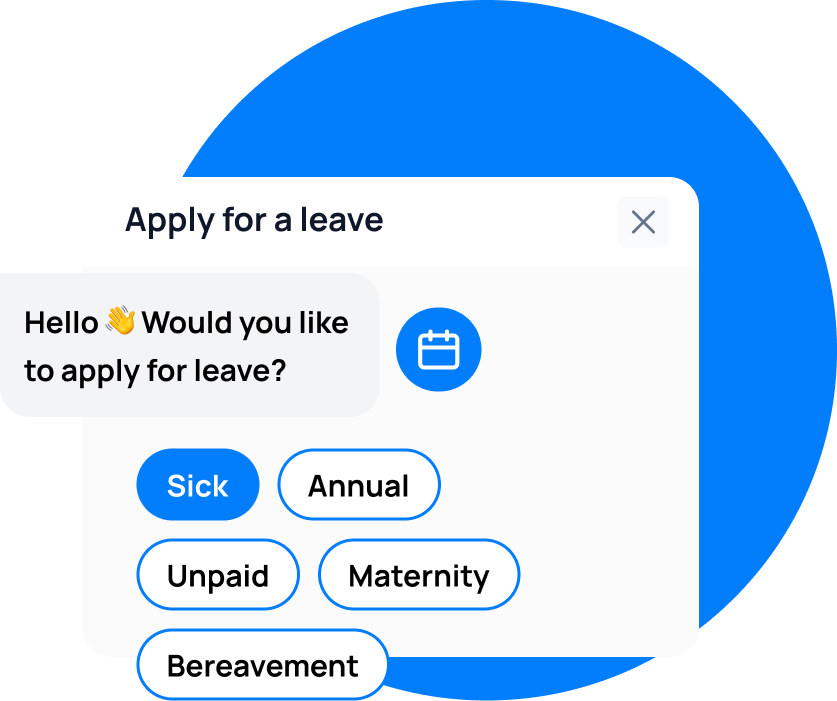
leave emails? Track your employee's leave with Leave Balance
Fit Notes and Medical Evidence
Self-Certification (Days 1–7)
For absences of seven calendar days or fewer, employees can self-certify their illness. You may ask them to complete a self-certification form (SC2) when they return, but you cannot demand a GP fit note for short absences.
Fit Notes (Day 8 Onwards)
From the eighth calendar day of absence, employees must provide a fit note (formally called a “Statement of Fitness for Work”) from a doctor, registered nurse, occupational therapist, pharmacist, or physiotherapist.
A fit note can state either:
- Not fit for work — the employee cannot work at all
- May be fit for work — with recommended adjustments such as altered hours, amended duties, a phased return, or workplace adaptations
If a fit note says “may be fit for work” and you cannot accommodate the suggested adjustments, you must treat the employee as not fit for work and continue paying SSP.
Challenging a Fit Note
If you disagree with a fit note, you cannot simply override it. You can, however:
- Ask the employee to return to their GP for a reassessment
- Seek an independent occupational health assessment (at your cost)
- Contact HMRC’s Statutory Payment Disputes Team if you believe SSP should not be paid
Long-Term Sickness and the 28-Week Limit
SSP is payable for a maximum of 28 weeks (196 calendar days) in any one period of incapacity for work, or across linked periods.
What Happens When SSP Runs Out?
When an employee reaches the 28-week limit:
- Issue form SSP1 at least four weeks before SSP is due to end, so the employee can apply for Employment and Support Allowance (ESA) or Universal Credit
- Consider occupational sick pay if your organisation offers contractual sick pay beyond the statutory minimum
- Review whether the employee’s condition qualifies as a disability under the Equality Act 2010 — if so, you have a duty to make reasonable adjustments before considering dismissal
- Take legal advice before making any decisions about capability dismissal
Long-Term Sickness and Dismissal
You can potentially dismiss an employee on long-term sickness, but only after:
- Exhausting reasonable adjustments
- Following a fair capability procedure
- Obtaining medical evidence (occupational health report)
- Consulting with the employee
Unfair dismissal claims and disability discrimination claims are common where employers act hastily. The Employment Tribunal expects a thorough, well-documented process.
Occupational Sick Pay vs SSP
Many UK employers offer occupational sick pay (also called contractual or company sick pay) that exceeds SSP. This is entirely voluntary — there is no legal requirement to offer it — but it is widespread, particularly in larger organisations and the public sector.
Common occupational sick pay structures include:
- Full pay for X weeks, then half pay for Y weeks (e.g., 6 weeks full pay, 6 weeks half pay)
- Service-based entitlements that increase with length of service
- Day-one sick pay that eliminates the three waiting days
How Occupational Sick Pay Interacts with SSP
If you offer occupational sick pay, it must be at least equal to SSP. You can either:
- Pay occupational sick pay that includes SSP (most common)
- Pay SSP plus a top-up to reach your contractual rate
You cannot use occupational sick pay to replace SSP — the statutory entitlement always applies as a floor.
Should You Offer Occupational Sick Pay?
There are strong business reasons to offer more than SSP:
- Retention: £116.75 per week is well below the national living wage. Employees who face severe financial hardship during illness may leave for employers who offer better sick pay.
- Morale: Generous sick pay signals that you value your people.
- Presenteeism reduction: When employees cannot afford to be off sick, they come to work ill — spreading infections and performing poorly.
- Recruitment: Enhanced sick pay is a meaningful benefit that candidates consider when comparing offers.
Record-Keeping Obligations
HMRC requires employers to keep records related to SSP. You should maintain:
- Dates of each employee’s sickness absence
- Evidence of incapacity (self-certification forms, fit notes)
- SSP payments made, including start and end dates
- Any SSP1 forms issued
- Details of qualifying days and waiting days
These records must be kept for at least three years after the end of the tax year to which they relate. HMRC can request them during a compliance check.
Common Record-Keeping Mistakes
- Not recording short absences (one to three days) even though they do not trigger SSP — these are still relevant for linked periods
- Losing or not requesting fit notes
- Failing to issue SSP1 forms when employees do not qualify
- Not tracking the 28-week limit across linked periods
Handling Return to Work
A well-managed return-to-work process protects both the employer and the employee. Best practice includes:
Return-to-Work Interviews
Hold a brief, supportive conversation with every employee returning from sickness absence. Cover:
- How they are feeling and whether they are genuinely ready to return
- Whether any workplace adjustments would help
- Whether there are underlying issues contributing to their absence
- An update on anything they missed while away
Phased Returns
For employees returning after long-term sickness, a phased return (gradually increasing hours over several weeks) is often appropriate. If a fit note recommends it, you should make reasonable efforts to accommodate it.
Reasonable Adjustments
If the employee’s condition qualifies as a disability under the Equality Act 2010, you have a legal duty to make reasonable adjustments. This might include modified duties, flexible working arrangements, assistive equipment, or additional breaks.
Sickness Absence Policies: What Every Employer Needs
A clear, written sickness absence policy helps you manage SSP consistently and reduces the risk of disputes. Your policy should cover:
- Notification requirements — who to contact, by when, and how
- Evidence requirements — self-certification for short absences, fit notes for longer ones
- SSP entitlement and any occupational sick pay on top
- Return-to-work procedures
- Trigger points for absence management (e.g., Bradford Factor thresholds)
- Long-term sickness procedures including occupational health referrals
- Data protection — how you store and use health information (GDPR compliance)
Make sure every employee has access to this policy from day one — include it in your employee handbook and refer to it in the employment contract.
How Leave Balance Helps You Manage Sick Leave
Tracking SSP manually — especially across linked periods, waiting days, and the 28-week limit — is error-prone and time-consuming. Spreadsheets fall apart as your organisation grows, and mistakes can mean overpayments, underpayments, or HMRC penalties.
Leave Balance simplifies the entire process:
- Track all absence types in one place, including sick leave, annual leave, and any custom policies you need
- Set up country-specific rules so your UK employees’ SSP entitlements are handled correctly alongside leave policies for staff in other countries
- Integrate with Slack and Microsoft Teams so employees can report absences instantly and managers get real-time notifications
- Maintain a complete audit trail of every absence — dates, evidence, approvals — ready for HMRC if they come knocking
- Support unlimited employees and policies for a flat $10/month (or $100/year), with no per-seat charges that punish you for growing
Start a 14-day free trial today — no credit card required — and see how much easier sick leave management can be.
leave emails? Track your employee's leave with Leave Balance