Leave Balance and Charlie HR solve different problems, and being honest about that is the most useful thing we can do in this comparison.
Charlie HR is a UK-focused all-in-one HRIS — it handles onboarding, performance reviews, document management, time off tracking, and more. Leave Balance is a dedicated leave management tool — it handles annual leave, sickness, custom leave types, and integrations with Slack and Teams.
The right choice depends entirely on what you actually need. This comparison will help you figure that out.
What Charlie HR Does
Charlie HR (commonly just “Charlie”) is built specifically for UK small businesses. Founded in London, it’s designed to be the single HR platform for companies that don’t have — and don’t want — complex enterprise HR software.
Charlie’s core modules include:
- Onboarding: Automated onboarding workflows, document collection, and task checklists for new starters
- Time off management: Leave requests, approvals, team calendars, and entitlement tracking
- Performance reviews: Goal setting, one-to-ones, review cycles, and feedback tools
- Company hub: Employee handbook, policies, org chart, and company information
- Document management: Contract storage, right-to-work checks, and document templates
- HR compliance: Employment law guidance, pension auto-enrolment reminders, and statutory obligation tracking
It’s a genuine all-in-one HR platform for the UK market, and it does this well.
What Leave Balance Does
Leave Balance is purpose-built for one thing: managing employee leave. It does this deeply rather than broadly:
- Leave request and approval workflows — via Slack, Microsoft Teams, or the web dashboard
- Unlimited custom leave policies — annual leave, sick leave, TOIL, compassionate leave, and any custom type
- Multi-country support — different policies, public holidays, and entitlements per country
- Real-time analytics — dashboards showing leave patterns, balances, and team availability
- Slack and Teams integration — full workflow support, not just notifications
- Calendar sync — leave data syncs to Google Calendar and Outlook
It deliberately does not include onboarding, performance reviews, document management, or other HR functions.
Pricing Comparison
Charlie HR
Charlie HR uses per-employee pricing across tiered plans:
- Essentials: ~£5/employee/month — core HR, time off, company hub
- Standard: ~£7/employee/month — adds performance management and advanced features
- Premium: ~£9/employee/month — full feature set including advanced analytics
Minimum spend applies (typically the equivalent of at least 5-10 employees). Annual billing discounts are available.
Leave Balance
Leave Balance uses flat-rate pricing:
- Monthly: £8/month — unlimited employees, unlimited policies
- Annual: £80/year — same features, two months free
- 14-day free trial, no credit card required
What You’ll Actually Pay
| Team size | Charlie HR (Essentials) | Charlie HR (Standard) | Leave Balance |
|---|---|---|---|
| 10 employees | ~£50/mo | ~£70/mo | £8/mo |
| 25 employees | ~£125/mo | ~£175/mo | £8/mo |
| 50 employees | ~£250/mo | ~£350/mo | £8/mo |
| 100 employees | ~£500/mo | ~£700/mo | £8/mo |
The pricing difference is significant — but it should be, because Charlie HR includes substantially more functionality. The question is whether you need that functionality.
Leave Management: Feature-by-Feature Comparison
Since both tools handle leave management, let’s compare that specific capability in depth.
Leave Request and Approval
Charlie HR: Employees submit leave requests through the Charlie web app or mobile app. Managers receive notifications and approve or decline from the same interface. The workflow is clean and functional.
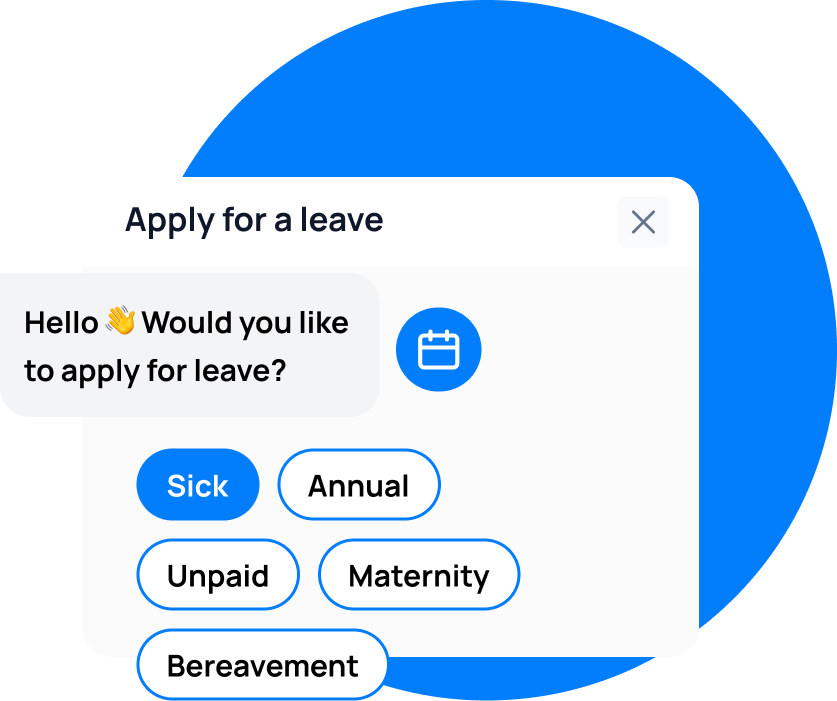
Leave Balance: Employees submit requests through Slack, Microsoft Teams, or the web dashboard. Managers approve with a single click in the same interface. The key difference is that the entire workflow can happen without leaving Slack or Teams.
Verdict: If your team lives in Slack or Teams, Leave Balance wins. If your team is comfortable using a separate HR portal, Charlie is perfectly adequate.
Leave Policy Flexibility
Charlie HR: Supports standard UK leave types — annual leave, sick leave, maternity/paternity, and a limited number of custom types. Policies can be configured per employee group, but there are limits on the number and complexity of custom policies.
Leave Balance: Unlimited custom leave types and policies on every plan. Different policies per country, department, or employee group. Configurable accrual rules, carry-over limits, and negative balance allowances.
Verdict: Leave Balance offers more depth and flexibility. If you have simple leave policies (everyone gets the same entitlement), both tools are fine. If you have varied policies — different entitlements by tenure, department, or location — Leave Balance is more configurable.
Multi-Country Support
Charlie HR: Charlie is built for the UK market. It handles UK compliance beautifully — bank holidays, statutory entitlements, SSP tracking, and UK employment law guidance. However, multi-country support is limited. If you have employees outside the UK, Charlie requires workarounds or isn’t suitable.
Leave Balance: Multi-country support is a core feature. Different policies, public holiday calendars, and entitlements per country. Add employees in Germany, France, or the Netherlands alongside your UK team without any configuration gymnastics.
Verdict: If your team is UK-only and will remain so, this doesn’t matter. If you have international employees or plan to hire them, Leave Balance is the better choice.
Team Calendar and Visibility
Charlie HR: Provides a team calendar view showing who’s off. Accessible through the web dashboard. Managers can see their team’s leave at a glance.
Leave Balance: Team visibility is available through Slack, Teams, and the web dashboard. Employees can check who’s off without leaving their chat app. Calendar sync pushes leave data to Google Calendar and Outlook.
Verdict: Leave Balance’s integration approach makes team visibility more accessible in the flow of work. Charlie’s calendar view requires opening the HR platform.
leave emails? Track your employee's leave with Leave Balance
Beyond Leave: Where Charlie HR Adds Value
This is where we need to be fair. Charlie HR offers capabilities that Leave Balance doesn’t, because they’re different types of tools.
Onboarding
Charlie HR’s onboarding module automates the new starter experience — document collection, task checklists, welcome messages, and first-day schedules. For a growing UK business, this can save significant HR time and create a better first impression.
Leave Balance doesn’t offer onboarding. If you need automated onboarding, you’d need a separate tool.
Performance Management
Charlie HR includes goal setting, one-to-one meeting templates, performance review cycles, and feedback tools. For companies that want to formalise their performance management process, this is genuinely useful.
Leave Balance doesn’t include performance management features.
Document Management
Contract storage, right-to-work document tracking, policy handbooks, and employee file management are all built into Charlie HR. This is particularly valuable for UK compliance — right-to-work checks, for example, are a legal requirement.
Leave Balance doesn’t manage documents.
UK Employment Law Guidance
Charlie HR provides built-in guidance on UK employment law — redundancy processes, disciplinary procedures, and statutory obligations. For small businesses without a dedicated HR professional, this can be invaluable.
When to Choose Charlie HR
Choose Charlie HR if you genuinely need most of these:
- Automated onboarding workflows for new starters
- Performance review cycles and goal tracking
- Document management and right-to-work tracking
- Employee handbook and policy management
- UK employment law guidance
- Leave management (as part of the above)
- A single platform for all HR functions
Charlie HR is particularly well-suited for:
- UK-only businesses with 20-200 employees
- Companies without a dedicated HR person who need compliance guidance
- Organisations that value having all HR in one place
- Teams that want to formalise their people processes (reviews, goals, onboarding) alongside leave tracking
Be honest with yourself: If you’ll actually use onboarding automation, run performance reviews through the platform, and store documents in Charlie, it’s good value for money. If you’ll sign up and primarily use the leave tracking module, you’re overpaying.
When to Choose Leave Balance
Choose Leave Balance if:
- Your primary pain point is leave management — requests, approvals, tracking, and visibility
- Your team uses Slack or Microsoft Teams as their primary communication tool and you want leave management to happen there
- You have employees in multiple countries (or plan to)
- You want the most cost-effective solution for leave management specifically
- You have complex leave policies that require flexibility (multiple policy types, varied entitlements, custom accrual rules)
- You already have other tools for onboarding, performance, and documents — and you just need leave sorted
- You’re a growing team and don’t want your leave software costs to scale with headcount
Leave Balance is particularly well-suited for:
- Remote and distributed teams that live in Slack or Teams
- Companies with employees across Europe
- Businesses of any size that want focused, affordable leave management
- Teams that use separate best-of-breed tools rather than a single HRIS
The “Best-of-Breed” vs “All-in-One” Decision
This comparison ultimately comes down to a broader philosophy: do you want one platform that does everything, or separate tools that each do one thing exceptionally well?
The Case for All-in-One (Charlie HR)
- One login, one interface, one vendor
- Data lives in one place — less risk of inconsistency
- Simpler vendor management and billing
- Features are designed to work together
The Case for Best-of-Breed (Leave Balance + Other Tools)
- Each tool is best-in-class for its function
- You only pay for what you actually use
- Easier to switch individual tools without disrupting everything
- Tools like Slack and Teams become the integration layer
Neither approach is wrong. But we’ve noticed a pattern: many small businesses sign up for all-in-one platforms intending to use every feature, but end up primarily using time off tracking and a few other basics. In that scenario, you’re paying all-in-one prices for single-feature usage.
A Practical Hybrid Approach
Some UK businesses take a pragmatic middle path:
- Use Leave Balance for leave management — £8/month for unlimited employees, deep Slack/Teams integration, multi-country support
- Use a simple onboarding checklist tool for new starters (Notion, Trello, or even a Google Doc works well for smaller teams)
- Use Google Drive or SharePoint for document storage (you’re likely already paying for this)
- Handle performance reviews through regular one-to-ones and a simple tracking format until you’re large enough to justify a dedicated tool
This approach costs a fraction of an all-in-one HRIS and covers the same ground. The trade-off is that data lives in multiple places, and you don’t get the polish of an integrated platform.
The Bottom Line
Charlie HR is a solid, well-designed UK HRIS that deserves its popularity. If you genuinely need a full HR platform — onboarding, performance, documents, compliance guidance, and leave management in one place — it’s a strong choice for UK businesses.
Leave Balance is the better choice if leave management is your primary need. The flat-rate pricing, deep Slack and Teams integration, multi-country support, and policy flexibility make it the more capable and cost-effective option for focused leave tracking.
The most expensive mistake is buying a full HRIS when you only need leave management. The second most expensive mistake is cobbling together workarounds when you genuinely need an integrated HR platform.
Be honest about what you need today, and choose accordingly. Both tools offer free trials — take advantage of that before committing.
leave emails? Track your employee's leave with Leave Balance