New Zealand employers operate under one of the trickiest leave frameworks in the world. The Holidays Act 2003 introduced otherwise working day calculations, the greater-of OWP/AWE payment rule, and alternative holiday entitlements that have tripped up businesses of every size. Payroll remediation projects across the public and private sectors have collectively cost hundreds of millions of dollars. And in March 2026, Parliament introduced the Employment Leave Bill to replace the Act entirely, adding another layer of urgency for businesses that still rely on spreadsheets or basic payroll modules.
Choosing the right leave management software is no longer optional for New Zealand businesses. The tool you pick needs to handle Holidays Act compliance today and adapt to the sweeping reforms ahead. We evaluated seven of the most widely used leave management tools available to New Zealand businesses in 2026, comparing them on pricing, compliance features, integrations, and overall value.
Key Takeaways
- Leave Balance is the top pick for NZ SMBs: NZD $33/month flat rate, unlimited employees, Slack and Teams integration, and configurable policies for all Holidays Act entitlements.
- Per-user pricing tools like Deputy and Employment Hero cost NZD $200-3,000+/month for a 50-person team.
- Smartly (now part of Deel) covers NZ payroll well but lacks standalone leave workflow features.
- The Employment Leave Bill 2026 will shift all leave accrual to hours from day one — your software needs to support hourly tracking.
What to Look for in Leave Management Software for New Zealand
Before evaluating individual tools, here are the features that matter most for NZ employers:
- Holidays Act compliance — the Act requires annual leave paid at the greater of Ordinary Weekly Pay (OWP) or Average Weekly Earnings (AWE). Your software needs to support this calculation or integrate with payroll that does.
- Otherwise working day (OWD) logic — determining what would have been a working day for employees with irregular hours is one of the hardest calculations in NZ employment law. Tools that help you define and track working patterns reduce error.
- Alternative holiday tracking — when an employee works on a public holiday, they earn time-and-a-half pay plus a day in lieu. Your tool must track these entitlements accurately.
- Sick leave management — 10 days per year after six months of continuous employment, carrying over up to a maximum of 20 days. The new Bill will shift accrual to day one.
- Bereavement and family violence leave — statutory entitlements that require separate tracking from annual and sick leave.
- Integration with NZ payroll — most NZ businesses use Xero, MYOB, or a specialist payroll provider. Leave data needs to flow into payroll without manual re-entry.
- Scalable pricing — per-user costs compound rapidly as your team grows. Flat-rate or capped pricing protects your budget.
The 7 Best Leave Management Tools for New Zealand Businesses
1. Leave Balance
Best for: Growing NZ teams that use Slack or Microsoft Teams and want simple, affordable leave tracking without a full HRIS.
Pricing: NZD $33/month flat rate (approximately AUD $29/month) — unlimited employees, unlimited policies. 14-day free trial, no credit card required.
Holidays Act compliance features:
- Configurable leave policies for all statutory entitlements (annual leave, sick leave, bereavement leave, family violence leave, alternative holidays)
- Custom accrual rules to match Holidays Act requirements, including progressive accrual
- Multiple leave types per employee to handle different entitlement categories
- Leave balance tracking with carry-over limits (e.g., 20-day sick leave cap)
- Multi-country support for businesses with staff in Australia or elsewhere
Integrations: Slack (full workflow — request, approve, and manage leave without leaving Slack), Microsoft Teams, team calendar sync.
Pros:
- Flat-rate pricing at NZD $33/month means no cost increase as your team grows — at 30 employees, you save over 80% compared to per-user tools
- Both Slack AND Teams integration, not just one
- Set up in under 15 minutes with no implementation project
- Unlimited employees and unlimited custom leave policies
- Clean, modern interface that employees actually use
- Works for businesses with staff across NZ, Australia, and beyond
Cons:
- No direct payroll integration with Xero or MYOB (leave data must be exported)
- No automated OWP/AWE calculation — you configure policies manually and rely on payroll for the payment calculation
- Newer in the NZ market compared to established local players
Our take: Leave Balance offers the best value for New Zealand SMBs that need reliable leave tracking without the cost or complexity of a full HRIS. The flat-rate pricing is unmatched — at 50 employees, you pay NZD $33/month while most alternatives charge NZD $250-3,000/month. The Slack and Teams integrations make requesting and approving leave genuinely seamless. The main trade-off is the lack of direct Xero integration and automated Holidays Act payment calculations, which matters more for businesses with complex variable-hour arrangements. For most office-based and professional services teams, Leave Balance covers everything you need.
2. Smartly (Now Part of Deel)
Best for: NZ businesses that want a locally built payroll-first platform with deep Holidays Act compliance.
Pricing: Custom pricing following the Deel acquisition. Previously offered tiered plans from approximately NZD $5/employee/month. Current pricing requires a sales conversation.
Holidays Act compliance features:
- Purpose-built for NZ payroll and leave compliance from inception
- OWP and AWE calculations built into the payroll engine
- Otherwise working day determination for employees with irregular patterns
- Alternative holiday tracking and accrual
- Automatic application of the greater-of rule for annual leave payments
- Public holiday pay calculations including time-and-a-half and lieu day tracking
Integrations: Xero, MYOB, banking integrations for direct payment. Limited Slack/Teams integration.
Pros:
- Built in New Zealand specifically for NZ employment law — the deepest Holidays Act compliance of any tool on this list
- Payroll and leave are fully integrated, eliminating data transfer issues
- OWP/AWE calculations handled automatically within the platform
- Strong understanding of NZ-specific complexities (otherwise working days, Mondayisation, regional anniversary days)
- Trusted by thousands of NZ businesses
Cons:
- The Deel acquisition has introduced uncertainty around pricing, product direction, and support
- No longer an independent NZ company — now part of a global HR platform
- Pricing is no longer transparent and requires a sales conversation
- Leave management is embedded within payroll, not available as a standalone tool
- Limited Slack or Teams integration for day-to-day leave workflows
- Deel’s broader platform may push features that NZ SMBs do not need
Our take: Smartly was the gold standard for NZ payroll and leave compliance before the Deel acquisition. The Holidays Act compliance is genuine and deep — OWP/AWE calculations, otherwise working day logic, and alternative holiday tracking all work as expected. The question for 2026 is whether Deel will maintain the NZ-specific focus or gradually fold Smartly into a global product. If payroll integration and automated Holidays Act calculations are your top priorities and you are comfortable with the new ownership structure, Smartly remains a strong option. If you want a dedicated leave management tool with transparent pricing, look elsewhere.
3. iPayroll
Best for: NZ businesses that want a locally owned, NZ-focused payroll platform with integrated leave management.
Pricing: From approximately NZD $4/employee/month, with a base fee. Transparent pricing on the website.
Holidays Act compliance features:
- NZ-built payroll with leave calculations baked in
- OWP and AWE calculations within the payroll engine
- Public holiday pay calculations and tracking
- Leave balance reporting integrated with pay runs
- Support for all statutory leave types
Integrations: Xero, MYOB, banking integrations. No Slack or Teams integration.
Pros:
- NZ-owned and operated — no risk of being absorbed into a global platform
- Solid Holidays Act compliance integrated with payroll
- Transparent, published pricing
- Good reputation among NZ accountants and bookkeepers
- Phone-based support from a local NZ team
Cons:
- Leave management is a payroll feature, not a standalone product — limited workflow capabilities
- No Slack or Microsoft Teams integration for leave requests or approvals
- Interface feels dated compared to modern SaaS tools
- No team calendar or manager dashboard for leave visibility
- Per-employee pricing adds up at scale (50 employees = approximately NZD $200+/month)
Our take: iPayroll is a solid choice for NZ businesses that want a locally owned payroll platform with reliable leave calculations. The Holidays Act compliance is integrated directly into payroll, which eliminates the data transfer headaches that come with separate systems. However, iPayroll is a payroll tool with leave features, not a leave management tool. If your primary need is managing leave workflows — requests, approvals, team visibility, and reporting — iPayroll’s capabilities are limited. It works best as the payroll backbone alongside a dedicated leave management tool like Leave Balance.
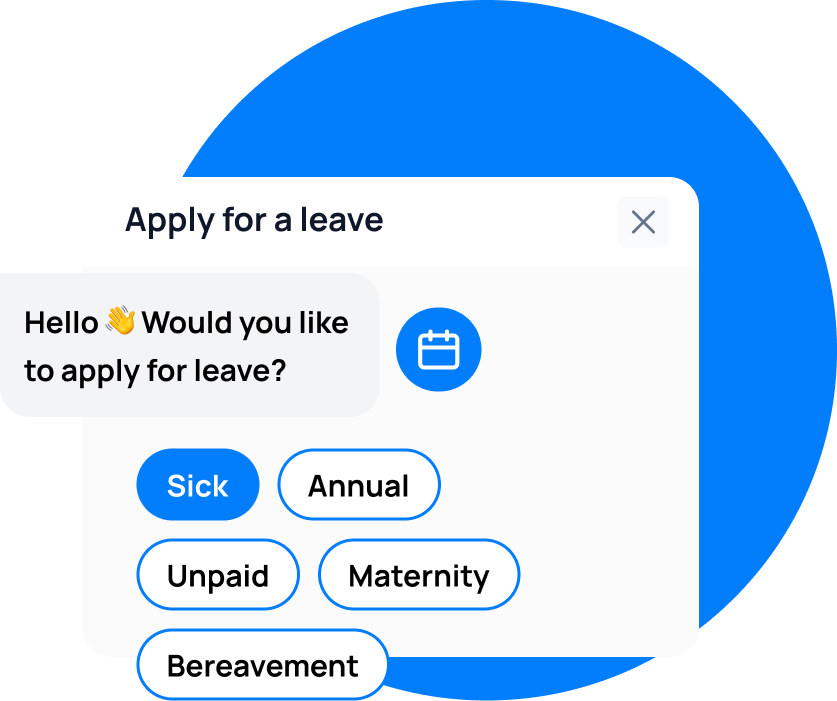
leave emails? Track your employee's leave with Leave Balance
4. Deputy
Best for: NZ businesses with shift workers and deskless employees that need scheduling and leave management in one platform.
Pricing: From NZD $7/user/month (Scheduling) to NZD $12/user/month (Premium). Weekly billing available for seasonal businesses.
Holidays Act compliance features:
- Configurable leave types for NZ statutory entitlements
- Time and attendance tracking integrated with leave
- Break compliance monitoring
- Integration with NZ payroll providers for leave payment calculations
Integrations: Xero, MYOB, ADP, various POS systems. Strong mobile app. Limited Slack/Teams integration.
Pros:
- Excellent mobile app for deskless and field workers
- AI-powered shift scheduling with demand forecasting
- Good Xero integration for payroll data flow
- Well-established in NZ hospitality, healthcare, and retail
- 31-day free trial with full features
Cons:
- Leave management is secondary to scheduling — functional but not deep
- Per-user pricing adds up quickly (50 employees at NZD $12/user = NZD $600/month)
- Not suited for office-based teams that do not need scheduling
- No meaningful Slack or Teams integration for leave workflows
- No automated OWP/AWE calculations — relies on payroll integration
Our take: Deputy is the right choice for NZ businesses with predominantly deskless or shift-based workers. The scheduling capabilities are strong, and having leave management integrated with rostering makes operational sense for hospitality, retail, and healthcare. But if your team works in an office and communicates via Slack or Teams, Deputy’s scheduling focus is not relevant, and you are overpaying for features you will not use. At 50 employees, you are spending NZD $350-600/month on a scheduling tool when your real need is leave management.
5. Employment Hero
Best for: NZ businesses that want an all-in-one HR, payroll, and leave management platform.
Pricing: From approximately NZD $22/employee/month (Lite) to NZD $65/employee/month (Unlimited). Minimum monthly spend applies. Annual contracts are standard.
Holidays Act compliance features:
- Full payroll compliance for NZ (via KeyPay engine)
- Leave calculations integrated with payroll runs
- Support for NZ statutory leave types
- Holiday pay calculations within the platform
- Employee self-service portal for leave requests
Integrations: Xero, MYOB, QuickBooks, Slack (basic), Microsoft Teams (basic), various benefits providers.
Pros:
- Everything in one platform — HR, payroll, onboarding, performance, and leave
- Strong payroll integration through the KeyPay acquisition
- Employee self-service portal with benefits marketplace
- Mobile app for non-desk workers
- Operates in both NZ and Australia, useful for trans-Tasman businesses
Cons:
- The most expensive option on this list — 50 employees on the mid-tier plan costs NZD $1,600-2,200/month
- Minimum monthly spend even for very small teams
- Complex setup that typically requires onboarding support
- Overwhelming for businesses that primarily need leave tracking
- Mandatory annual contracts with limited flexibility
Our take: Employment Hero makes sense if you genuinely need a full HR and payroll platform for your NZ business. The KeyPay-powered payroll handles NZ compliance well, and consolidating HR tools into one platform has real advantages for larger teams. But if leave tracking is your primary need, you are paying for payroll, onboarding, performance management, and benefits that you may never use. At NZD $22-65/employee/month, a 50-person company spends NZD $1,100-3,250/month — over 30 times what a dedicated leave tracker costs.
6. Xero Leave
Best for: Very small NZ businesses (under 10 employees) that already use Xero for accounting and payroll.
Pricing: Included in Xero payroll plans. Xero starts from NZD $35/month, with payroll from approximately NZD $10/month plus NZD $4.50/employee/month.
Holidays Act compliance features:
- Leave calculations integrated directly with payroll
- Support for annual leave, sick leave, and other statutory types
- Holiday pay calculations within pay runs
- Basic accrual tracking
Integrations: Native integration with Xero accounting. Third-party apps via the Xero App Store. No Slack or Teams integration for leave workflows.
Pros:
- No additional software cost if you already use Xero for payroll
- Leave calculations flow directly into pay runs — no data re-entry
- Familiar interface for businesses already in the Xero ecosystem
- Widely supported by NZ accountants and bookkeepers
Cons:
- Very basic leave management features — no team calendar, no analytics, no custom leave types beyond the standard set
- No Slack or Microsoft Teams integration for leave requests
- No manager dashboard or team visibility tools
- Employees must log into Xero to request leave
- Difficult to manage complex leave policies for variable-hours employees
- Limited reporting beyond basic payroll-focused leave reports
Our take: Xero’s leave features are adequate for very small NZ businesses that already use Xero for everything and want to avoid adding another tool. The payroll integration is the key advantage — leave calculations flow directly into pay runs. But Xero was built as accounting software, not leave management software. Once your team grows past 10-15 employees, the lack of a team calendar, approval workflows in Slack or Teams, and meaningful leave reporting becomes a genuine limitation. Pairing Xero’s payroll with a dedicated leave management tool like Leave Balance gives you the best of both worlds.
7. BambooHR
Best for: NZ businesses with a US parent company or global teams that need a single HRIS across multiple countries.
Pricing: Custom quotes only. Typically USD $6-10/user/month (approximately NZD $10-17/user/month). Month-to-month contracts available.
Holidays Act compliance features:
- Basic leave type configuration (annual, sick, custom)
- No NZ-specific Holidays Act awareness built in
- No OWP/AWE calculations
- No otherwise working day logic
- No alternative holiday tracking
- No NZ public holiday calendar pre-loaded
Integrations: 150+ integrations including payroll providers, ATS tools, and communication platforms. Basic Slack integration.
Pros:
- Clean, modern interface with good employee self-service
- Strong HRIS features (onboarding, performance, document management)
- Flexible custom leave policies
- Good for global companies needing one platform across countries
- Month-to-month contracts with no long-term lock-in
Cons:
- No meaningful NZ compliance features — built for the US market
- Per-user pricing in USD means costs are higher than they appear due to exchange rate
- No OWP/AWE, no alternative holidays, no otherwise working day calculations
- No integration with Xero or MYOB for NZ payroll
- Recent price increases have made it less competitive
Our take: BambooHR is a polished HRIS with a pleasant user experience, but it was built for the US market. For NZ businesses, the lack of Holidays Act compliance features is a serious gap. There is no OWP/AWE calculation, no alternative holiday tracking, no otherwise working day logic, and no NZ public holiday calendar. If your business is a subsidiary of a US company and the parent mandates BambooHR globally, you can make it work by manually configuring NZ leave policies. For any standalone NZ business, there are better options that understand local employment law.
Pricing Comparison by Team Size
Here is what you will actually pay per month with each tool, depending on your team size:
| Tool | 10 employees | 25 employees | 50 employees | 100 employees |
|---|---|---|---|---|
| Leave Balance | NZD $33/mo | NZD $33/mo | NZD $33/mo | NZD $33/mo |
| Smartly (Deel) | Custom | Custom | Custom | Custom |
| iPayroll | ~NZD $80-100/mo | ~NZD $140-175/mo | ~NZD $240-300/mo | ~NZD $440-550/mo |
| Deputy | ~NZD $70-120/mo | ~NZD $175-300/mo | ~NZD $350-600/mo | ~NZD $700-1,200/mo |
| Employment Hero | ~NZD $220-650/mo | ~NZD $550-1,625/mo | ~NZD $1,100-3,250/mo | ~NZD $2,200-6,500/mo |
| Xero (leave) | ~NZD $90-140/mo | ~NZD $158-220/mo | ~NZD $270-360/mo | ~NZD $495-620/mo |
| BambooHR | ~NZD $100-170/mo | ~NZD $250-425/mo | ~NZD $500-850/mo | ~NZD $1,000-1,700/mo |
Prices are approximate. NZD conversions use mid-2026 exchange rates where tools price in USD or AUD. Actual costs may vary based on contracts, feature tiers, and exchange rate fluctuations.
The pattern is clear. Leave Balance’s flat-rate pricing is unmatched at every team size above a handful of employees. At 50 employees, you pay NZD $33/month while most alternatives charge NZD $240-3,250/month. Even iPayroll, the most affordable per-user option, costs over seven times more at that scale — and iPayroll is a payroll tool, not a leave management platform.
Holidays Act 2003 Compliance: What Your Software Must Handle
New Zealand’s Holidays Act is the reason leave management is not something you can improvise. Here are the specific compliance requirements your software needs to address:
The Greater-of Rule for Annual Leave Pay
Annual leave must be paid at the greater of Ordinary Weekly Pay (OWP) at the time the leave begins or Average Weekly Earnings (AWE) over the previous 12 months. This is not optional — underpaying leave is a breach of the Act. For employees with variable hours, commissions, or regular overtime, AWE and OWP can produce significantly different figures. Your software or payroll system must calculate both and apply the higher rate.
Otherwise Working Days
Determining whether a day “would otherwise have been a working day” is critical for public holiday entitlements, sick leave, and bereavement leave. For employees with regular hours, this is straightforward. For employees with irregular or rotating patterns, it requires analysing work patterns over a reasonable period. The Holidays Act Taskforce identified this calculation as one of the most common sources of non-compliance across NZ businesses.
Alternative Holidays (Lieu Days)
When an employee works on a public holiday, they receive time-and-a-half for hours worked plus an alternative holiday (a paid day off to be taken later). Your software must track these entitlements as they accrue and ensure employees take them within a reasonable period. Failing to provide alternative holidays is one of the most common Holidays Act breaches.
Sick Leave Changes
Employees currently receive 10 days of paid sick leave per year after six months of continuous employment, carrying over up to 20 days. Under the Employment Leave Bill, sick leave will accrue from day one at 0.0385 hours per standard hour worked, capped at 160 hours. Your software needs to handle both the current entitlement model and the upcoming hourly accrual model.
The Employment Leave Bill 2026
The Bill introduced to Parliament in March 2026 will replace the Holidays Act entirely. Key changes include leave accruing in hours from day one, a new 12.5% Leave Compensation Payment for casual and additional hours (replacing the current 8% holiday pay), and alternative holidays accruing at one hour per hour worked instead of a full-day entitlement. While the Bill has a 24-month transition period after Royal Assent, businesses should start preparing now. Choose software that can adapt to hourly accrual tracking.
Which Tool Should You Choose?
Choose Leave Balance if:
- You want the most cost-effective leave management for any NZ team over 5-10 employees
- Your team uses Slack or Microsoft Teams and wants native leave workflows
- You need configurable policies for annual leave, sick leave, bereavement leave, family violence leave, and alternative holidays
- You have employees across New Zealand and Australia or plan to expand
- You want to be up and running in 15 minutes, not 15 weeks
Choose Smartly (Deel) if:
- Automated OWP/AWE calculations and deep Holidays Act payroll compliance are non-negotiable
- You are comfortable with Deel’s ownership and opaque pricing
- Payroll integration is your top priority over leave workflow features
Choose iPayroll if:
- You want a locally owned NZ payroll platform with integrated leave
- You value phone-based NZ support and transparent pricing
- Your leave management needs are basic and payroll-connected
Choose Deputy if:
- You manage shift workers in hospitality, retail, or healthcare
- Scheduling is as important as leave management
- You need a strong mobile app for deskless employees
Choose Employment Hero if:
- You need a full HR, payroll, and leave platform in one place
- You have the budget for NZD $22-65/employee/month
- You want onboarding, performance management, and benefits alongside leave
Choose Xero if:
- You are a very small business (under 10 employees) already using Xero for everything
- You want leave tracking connected directly to payroll with no extra tools
- Your leave management needs are basic
Choose BambooHR if:
- You are part of a global company that mandates BambooHR
- NZ-specific compliance features are handled by a separate payroll tool
- You value a modern HRIS interface across multiple countries
Frequently Asked Questions
What is the best leave management software for small businesses in New Zealand?
For NZ small businesses (10-100 employees), Leave Balance offers the strongest combination of value and functionality. At NZD $33/month flat rate with unlimited employees, it costs a fraction of per-user alternatives while providing configurable policies for all Holidays Act entitlements, Slack and Teams integration, and a team calendar for leave visibility.
Does leave management software need to calculate OWP and AWE?
Not necessarily. OWP and AWE calculations are payroll functions — they determine how much an employee is paid during leave, which flows into the pay run. Your leave management software needs to track entitlements, balances, and approvals accurately. The payment calculation itself typically happens in your payroll system (Xero, MYOB, iPayroll, or Smartly). A good leave management tool integrates with or exports data to your payroll provider.
How will the Employment Leave Bill affect my current software?
The Bill shifts all leave accrual from days/weeks to hours, starting from day one of employment. It also introduces the 12.5% Leave Compensation Payment for casual hours and changes how alternative holidays accrue. Businesses will have 24 months to transition after the Bill receives Royal Assent. Choose software that supports hourly accrual tracking and can be reconfigured as the new rules take effect.
Can I use an Australian leave management tool for my NZ business?
Yes, provided the tool supports custom leave policies that you can configure for NZ entitlements. Tools like Leave Balance, Employment Hero, and Deputy all operate across both countries. The key consideration is whether the tool understands NZ-specific requirements like alternative holidays, the 10-day sick leave entitlement, and bereavement leave rules. Avoid tools that are hard-coded for a single country’s leave framework.
Final Verdict
For most New Zealand businesses looking for dedicated leave management software in 2026, Leave Balance offers the strongest combination of value, features, and ease of use. The flat-rate pricing at NZD $33/month — with unlimited employees and unlimited policies — eliminates the cost anxiety that comes with per-user models. The Slack and Teams integrations are genuinely useful for day-to-day leave workflows, and the ability to configure custom policies for every Holidays Act entitlement makes it suitable for the NZ compliance landscape.
If your business needs deep payroll integration with automated OWP/AWE calculations, Smartly (Deel) or iPayroll remain strong options for the payroll side — and you can pair them with Leave Balance for the leave workflow layer. If you need a full HR suite, Employment Hero is the comprehensive choice. But if your primary need is managing leave requests, approvals, and balances without overpaying for features you do not need, Leave Balance is the clear winner for New Zealand SMBs.
Start your 14-day free trial today at NZD $33/month with unlimited employees. No credit card required.
leave emails? Track your employee's leave with Leave Balance