California employers juggle more leave categories than any other state in the country. Between bereavement leave, reproductive loss leave, expanded paid sick leave, and a web of overlapping federal and state protections, staying compliant requires constant attention. If you manage a team in California — or employ even a single worker there — this guide covers the leave laws you need to have on your radar right now.
The laws discussed in this article were enacted in 2023 and 2024, and they remain fully in effect today. California has continued its long-running pattern of expanding worker leave protections, and there is no sign of that trend slowing. Understanding these requirements is not optional — it is a baseline obligation for every California employer.
Key California Leave Laws Currently in Effect
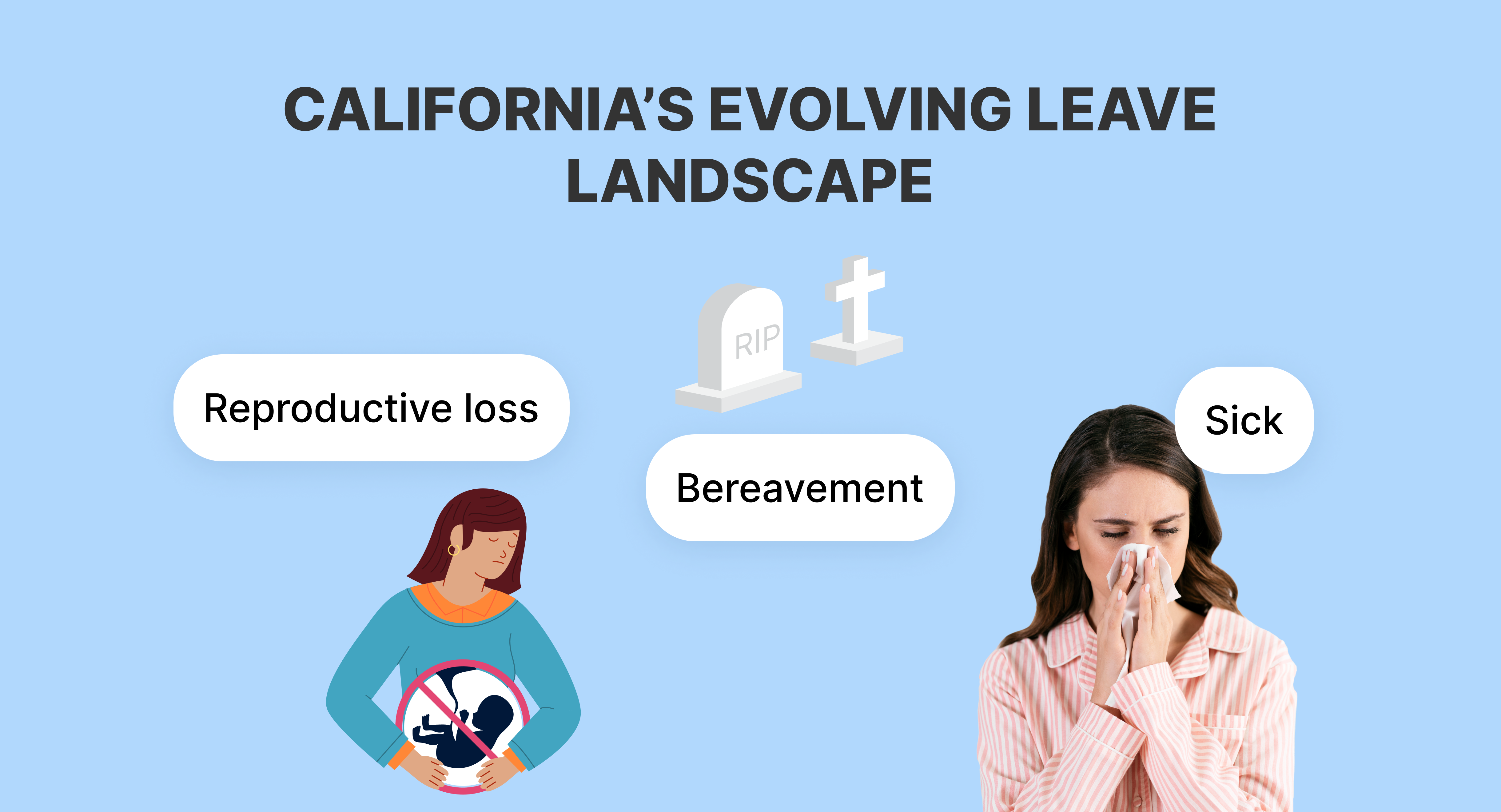
Here is a quick snapshot of the three leave categories covered in this guide:
- Bereavement Leave (AB 1949): Up to 5 days of unpaid, job-protected leave for the death of a family member. In effect since January 1, 2023.
- Reproductive Loss Leave (SB 848): Up to 5 days of unpaid leave following a reproductive loss event such as miscarriage, stillbirth, or failed adoption. In effect since January 1, 2024.
- Paid Sick Leave Expansion (SB 616): Minimum paid sick leave increased from 3 days (24 hours) to 5 days (40 hours) per year. In effect since January 1, 2024.
Each of these laws carries specific eligibility rules, employer obligations, and compliance risks. Let’s break them down.
Bereavement Leave
Since January 1, 2023, California’s bereavement leave law (AB 1949) has required employers with five or more employees to provide up to five days of unpaid, job-protected leave when an employee loses a family member.
Who qualifies as a family member? The definition is broad. It includes a spouse, domestic partner, child, parent, sibling, grandparent, grandchild, and parent-in-law. Employees do not need to take the five days consecutively — the leave must be completed within three months of the date of death.
Key employer obligations:
- Employees may use any accrued paid time off (vacation, PTO, sick leave) during bereavement leave.
- Employers may request documentation, such as a death certificate or obituary, but must handle all information with confidentiality.
- Retaliation against an employee for taking bereavement leave is prohibited.
If your organization handles extended employee absences, bereavement leave should be built into your broader leave management workflow so nothing falls through the cracks.
Reproductive Loss Leave
Effective January 1, 2024, Senate Bill 848 added reproductive loss leave to California’s employment code. This law requires employers with five or more employees to provide up to five days of unpaid leave following a reproductive loss event.
Covered events include:
- Miscarriage
- Stillbirth
- Failed adoption, surrogacy, or assisted reproduction
The leave must be taken within three months of the event. If an employee experiences multiple reproductive loss events in a 12-month period, the employer is required to provide leave for each event, up to a maximum of 20 days in a rolling 12-month period.
Confidentiality is critical. Employers must not disclose that an employee has requested or is taking reproductive loss leave, except as required by law. Given the deeply personal nature of these situations, sensitivity and discretion are essential. Fostering a supportive environment during these moments is closely tied to reducing employee burnout and building long-term trust with your workforce.
Paid Sick Leave (Senate Bill 616)
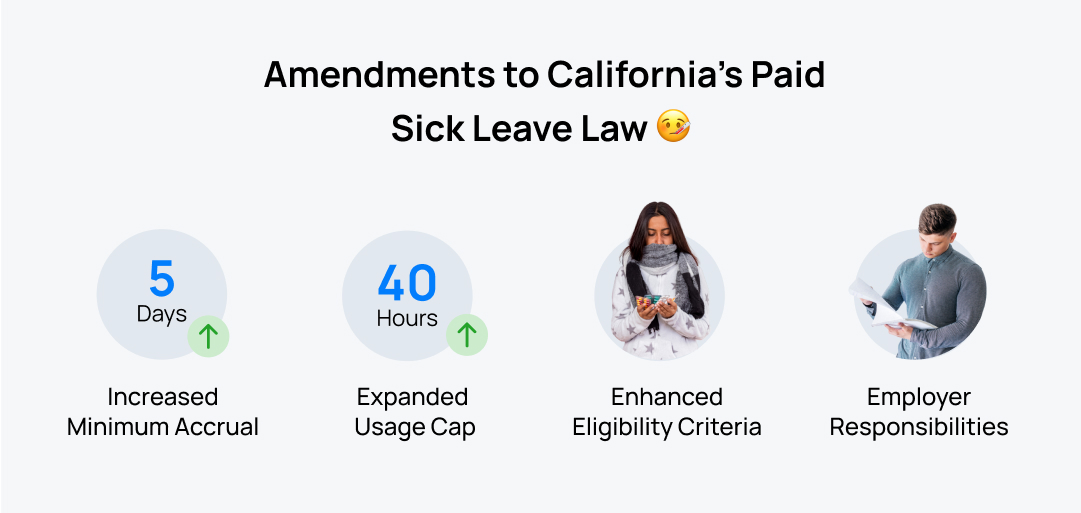
Senate Bill 616, which took effect on January 1, 2024, significantly expanded California’s paid sick leave requirements. The key changes are:
| Requirement | Previous Law | Current Law (SB 616) |
|---|---|---|
| Minimum annual accrual | 3 days / 24 hours | 5 days / 40 hours |
| Annual usage cap | 24 hours | 40 hours |
| Accrual carryover cap | 48 hours | 80 hours |
Eligibility: Any employee who works in California for 30 or more days within a year from the start of employment qualifies. There is a 90-day employment waiting period before an employee can begin using accrued sick leave.
Accrual methods: Employers can either use the standard accrual method (one hour of sick leave for every 30 hours worked) or frontload the full 40 hours at the beginning of the year.
Employer responsibilities include:
- Displaying accurate sick leave balances on employee pay stubs.
- Maintaining records of sick leave accrual and usage for at least three years.
- Calculating sick leave pay correctly — for employees with variable pay rates, this may require prorated salary calculations based on their actual compensation.
- Never retaliating against an employee for using or requesting paid sick leave.
Staying Compliant: Practical Steps for Employers
California’s leave laws are only useful if your organization actually follows them. Here is a practical checklist:
- Audit your current policies. Review your employee handbook and leave policies against current state requirements. Make sure bereavement leave, reproductive loss leave, and the updated sick leave minimums are all documented.
- Update your leave tracking system. Manual spreadsheets create compliance risk. Use a dedicated leave management tool that reflects California’s specific accrual and usage rules.
- Train managers and HR staff. Front-line managers are often the first point of contact when an employee requests leave. They need to understand what is legally required and what confidentiality obligations apply.
- Post required notices. California requires employers to display workplace posters that inform employees of their sick leave rights. Make sure yours are current.
- Document everything. Keep records of leave requests, approvals, and balances. In the event of a dispute or audit, documentation is your best defense.
- Communicate proactively. Don’t wait for employees to ask. Include leave policies in onboarding materials and send periodic reminders about available leave benefits.
Frequently Asked Questions
How many sick days does California require? As of January 1, 2024, California requires employers to provide a minimum of 5 days (40 hours) of paid sick leave per year under Senate Bill 616. This applies to all eligible employees who work in California for 30 or more days within a year.
Does California require bereavement leave? Yes. Since January 1, 2023, employers with five or more employees must provide up to five days of unpaid bereavement leave for the death of a family member. Employees may use accrued paid leave during this time.
What is reproductive loss leave in California? Reproductive loss leave, enacted through SB 848 effective January 1, 2024, provides up to five days of unpaid leave following events such as miscarriage, stillbirth, or failed adoption. Employers with five or more employees must comply, and strict confidentiality requirements apply.
Can employees use paid time off during bereavement or reproductive loss leave? Yes. While both bereavement leave and reproductive loss leave are technically unpaid, employees are permitted to use any accrued vacation, PTO, or sick leave during these periods.
Do these California leave laws apply to remote employees? Generally, California employment laws apply to employees who perform work in California, regardless of where the employer is headquartered. If you have remote workers based in California, these leave requirements likely apply to them. Consult an employment attorney if you are unsure about your specific situation.
Simplify Leave Management with Leave Balance
Tracking bereavement leave, reproductive loss leave, sick leave accruals, and every other leave category California requires is a lot to manage — especially if you are doing it manually. Leave Balance is built to handle exactly this kind of complexity. It automates accrual calculations, keeps your policies in sync with current law, and gives both HR teams and employees a clear view of leave balances at any time.
If you are ready to take the guesswork out of leave compliance, explore Leave Balance today.
This article is for informational purposes only and does not constitute legal advice. Consult an employment attorney for guidance specific to your situation.