
A clear PTO policy is one of the most important documents your small business can have. It sets expectations, reduces conflicts, and protects you legally. Yet many growing companies operate without a formal policy — relying on informal agreements that break down as the team scales.
This guide walks you through building a PTO policy from scratch, covering everything from types of leave to accrual methods to compliance requirements.
Why Your Business Needs a Written PTO Policy
Without a formal PTO policy, you risk:
- Inconsistent treatment — different managers granting different amounts of time off, creating resentment
- Legal exposure — many states require specific paid leave provisions, and verbal agreements don’t hold up
- Payroll errors — without clear accrual rules, calculating final payouts when employees leave becomes guesswork
- Culture problems — employees who don’t know the rules either take too little time off (burnout) or too much (resentment from peers)
A written policy eliminates ambiguity and gives both your HR team and employees a single source of truth.
Step 1: Decide Which Types of Leave to Include
Most small business PTO policies cover some combination of the following:
Vacation / Personal Time Off
The core of any PTO policy. Typical allocations for small businesses:
- Entry level: 10-15 days per year
- Mid-level: 15-20 days per year
- Senior / leadership: 20-25 days per year
Sick Leave
Many states now mandate paid sick leave — check your state requirements before setting minimums. Common allocations range from 5 to 10 days per year.
Public Holidays
Decide which holidays your company observes. Most US businesses offer 8-10 paid holidays per year, typically including New Year’s Day, Memorial Day, Independence Day, Labor Day, Thanksgiving, and Christmas.
Other Leave Types to Consider
- Bereavement leave — typically 3-5 days for immediate family
- Parental leave — increasingly expected even by companies not required by FMLA
- Jury duty — required in most states
- Volunteer / community service days — a growing perk for culture-conscious companies
- Mental health days — increasingly common, can be included under sick leave or as a separate category
Step 2: Choose Your Accrual Method
How employees earn PTO matters for both fairness and accounting. The three most common approaches:
Lump Sum (Annual Grant)
Employees receive their full PTO balance on January 1st (or their hire anniversary). Simple to administer but can lead to “use it early, regret it later” situations.
Best for: Companies with fewer than 20 employees who want simplicity.
Accrual-Based
Employees earn PTO incrementally — per pay period, per month, or per hours worked. For example, an employee earning 15 days/year accrues 1.25 days per month.
Best for: Growing companies that want predictable liability and fairer distribution.
Unlimited PTO
No set number of days — employees take what they need. Sounds generous but research shows employees at unlimited PTO companies often take less time off due to ambiguity and guilt.
Best for: High-trust teams with strong management practices and explicit minimum-use expectations.
Step 3: Set Your Rollover and Payout Rules
Two critical questions every PTO policy must answer:
Can unused PTO roll over?
- Use-it-or-lose-it: PTO expires at year-end. Note: this is illegal in some states (California, Montana, Nebraska).
- Capped rollover: Employees can carry over a set number of days (e.g., 5 days maximum).
- Full rollover: All unused PTO carries forward. Simple but can create large accrued liabilities.
Is unused PTO paid out on termination?
Several states require PTO payout upon separation. Even where not required, a clear payout policy prevents disputes. Define whether accrued but unused vacation is paid out and at what rate.
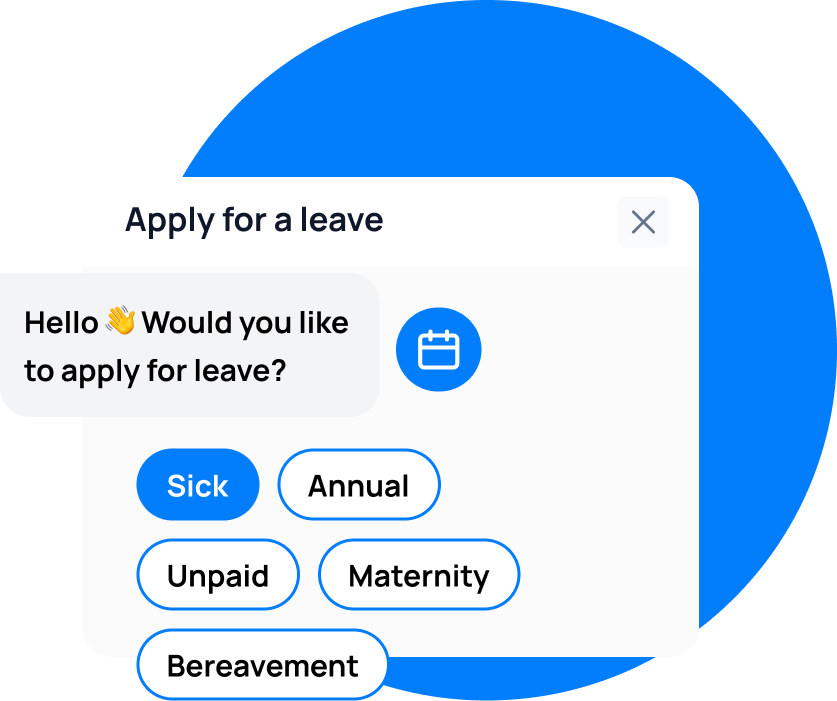
leave emails? Track your employee's leave with Leave Balance
Step 4: Know Your Legal Requirements
PTO laws vary significantly by state. As of 2026, here’s what you need to know:
States Requiring Paid Sick Leave (17+ states + DC)
Arizona, California, Colorado, Connecticut, Maryland, Massachusetts, Michigan, Minnesota, New Jersey, New Mexico, New York, Oregon, Rhode Island, Vermont, Washington, plus Washington D.C. — each with different accrual rates, usage caps, and eligibility rules.
States With Paid Family Leave (2026)
California, Colorado, Connecticut, Delaware (new in 2026), Maine (new in 2026), Maryland, Massachusetts, Minnesota (new in 2026), New Jersey, New York, Oregon, Rhode Island, Washington.
Federal Requirements
- FMLA: 12 weeks of unpaid, job-protected leave for eligible employees at companies with 50+ employees
- ADA: Reasonable accommodations may include leave modifications
- Pregnancy Discrimination Act: Cannot deny leave for pregnancy-related conditions
Important: Always consult with an employment lawyer in your state to ensure compliance.
Step 5: Define Your Request and Approval Process
A good PTO policy includes clear procedures:
- How to request: Specify the method (email, HR system, Slack) and advance notice required (e.g., 2 weeks for vacation, ASAP for sick leave)
- Who approves: Direct manager, HR, or both?
- Blackout periods: Can you restrict PTO during peak business periods? (Yes, in most states, as long as it’s documented)
- Conflict resolution: What happens when two people on the same team request the same dates?
The biggest mistake small businesses make here is relying on email and spreadsheets. As your team grows past 10 people, manual tracking becomes unsustainable — requests get lost, balances are wrong, and managers spend hours on admin instead of actual management.
Step 6: Communicate Your Policy
A policy nobody reads is a policy nobody follows. Best practices:
- Include the PTO policy in your employee handbook
- Review it during onboarding for every new hire
- Send a yearly reminder before any rollover deadlines
- Make it easily accessible — not buried in a shared drive
- Document any changes and communicate them company-wide
PTO Policy Template
Here’s a starting framework you can adapt:
[Company Name] Paid Time Off Policy
Effective Date: [Date]
Eligibility: All full-time employees are eligible for PTO benefits starting on their first day of employment. Part-time employees working 20+ hours/week receive prorated PTO.
PTO Allocation:
- 0-2 years tenure: 15 days/year
- 3-5 years tenure: 20 days/year
- 6+ years tenure: 25 days/year
Sick Leave: 7 days/year (or as required by state law, whichever is greater)
Accrual: PTO accrues on a monthly basis. New hires’ PTO is prorated based on start date.
Rollover: Up to 5 unused PTO days may be carried into the following year. Excess days expire on December 31st.
Request Process: Submit PTO requests through [system/method] at least [X] business days in advance. Sick leave requests should be submitted as soon as practical.
Payout: Accrued, unused PTO will be paid out upon voluntary or involuntary separation, in accordance with state law.
Automate Your PTO Policy With the Right Tool
Building a policy is step one. Enforcing it consistently is where most small businesses struggle — especially when tracking accruals across different hire dates, handling mid-year policy changes, and managing approvals across multiple managers.
Leave Balance automates all of this. Set up unlimited custom leave policies, define your accrual rules, and let employees request and track their own time off — all from Slack or your browser. No spreadsheets, no email chains, no miscalculated balances.
leave emails? Track your employee's leave with Leave Balance