
Australia’s 122 Modern Awards sit alongside the National Employment Standards (NES) as the foundation of employment conditions. While the NES provides minimum entitlements for all employees, Modern Awards build on these minimums with industry-specific rules that frequently affect leave — leave loading, shift worker classifications, cashing-out provisions, and accrual variations.
This guide explains how Modern Awards interact with leave, what employers need to get right, and where most compliance errors occur.
Key Takeaways
- Modern Awards can provide MORE than NES minimums, but never less
- Leave loading (17.5%) is required by most awards and applies to termination payouts
- Shift worker definitions vary by award but often grant a 5th week of annual leave
- Cash-out provisions are award-specific — not all awards allow it
- 40% of organisations cite award interpretation as their biggest compliance challenge
- Misclassifying employees into the wrong award or pay level is the #1 cause of underpayment
What Are Modern Awards?
Modern Awards are industry or occupation-specific legal instruments that set minimum wages and conditions. They were introduced in 2010 as part of Australia’s workplace relations reform, consolidating thousands of federal awards into 122 industry and occupation-specific awards.
How Awards Interact with the NES
The NES provides the national minimum floor of employment conditions. Modern Awards and enterprise agreements can provide MORE than the NES, but they can never provide LESS.
Example hierarchy:
- Modern Award or Enterprise Agreement (most generous provisions apply)
- National Employment Standards (minimum entitlements)
- Common Law Contract (cannot undercut NES or awards)
If an award provides 5 weeks annual leave for shift workers and the NES provides 4 weeks, the employee receives 5 weeks. The award wins.
Do You Need an Award?
Every business operating under the Fair Work system is covered by at least one Modern Award, even if you believe your employees are “award-free.” You can identify your applicable award using the Fair Work Ombudsman’s Find My Award tool.
Modern Awards and Annual Leave
Leave Loading (17.5%)
The majority of Modern Awards include a leave loading clause requiring employers to pay an additional 17.5% on top of the employee’s base rate when annual leave is taken.
Why 17.5%?
This figure originated historically as compensation for lost overtime and penalty opportunities when employees take annual leave instead of working.
Which Awards Require Leave Loading?
Most common awards require leave loading, including:
- Clerks — Private Sector Award
- General Retail Industry Award
- Hospitality Industry (General) Award
- Building and Construction General On-site Award
- Manufacturing and Associated Industries and Occupations Award
- Health Professionals and Support Services Award
How It’s Calculated:
Leave loading = Base hourly rate × 0.175 × Hours of annual leave taken
Important: Leave loading is calculated on the BASE rate only — excludes overtime, bonuses, and allowances.
The “Greater Of” Rule for Shift Workers
Many awards include a comparison provision that protects shift workers:
Employer must pay whichever is higher:
- 17.5% leave loading, OR
- The penalty and shift rates the employee would have earned if working
Example: Night shift employee earns 25% penalty rates ($250 on $1,000 base pay). The employer must pay $250, not $175 (17.5% loading).
This rule ensures shift workers are not disadvantaged by taking annual leave.
Shift Worker Entitlements (5th Week)
Which Awards Provide 5 Weeks?
Shift workers under certain Modern Awards are entitled to 5 weeks (190 hours) of annual leave per year, rather than the standard 4 weeks (152 hours). Common awards with shift worker provisions include:
| Award | Standard | Shift Worker | Notes |
|---|---|---|---|
| Hospitality Industry (General) Award | 4 weeks | 5 weeks | Regular Sunday/public holiday rostering |
| General Retail Industry Award | 4 weeks | 5 weeks | 24-hour continuous operation |
| Building and Construction General On-site Award | 4 weeks | 5 weeks | Rotating shifts |
| Manufacturing and Associated Industries Award | 4 weeks | 5 weeks | 7-day rotating roster |
| Health Professionals and Support Services Award | 4 weeks | 5 weeks | 24-hour rostering |
What Defines a “Shift Worker”?
The definition varies by award, but common criteria include:
- Regularly rostered to work on Sundays and public holidays
- Work rotating shifts across a 24-hour period
- Work in a business that operates on a continuous or semi-continuous basis
- Regular work outside ordinary hours (7am-7pm, Monday-Friday)
Important: Not all employees who work shifts meet the award definition. Check the specific shift worker clause in your applicable award.
Common Classification Errors
Error 1: Assuming all employees who work occasional overtime are shift workers. Overtime does not automatically create shift worker status.
Error 2: Failing to update shift worker status when rostering changes. An employee who stops meeting shift worker criteria must revert to 4 weeks entitlement.
Error 3: Applying the wrong award’s shift worker definition. Each award has its own criteria — do not assume consistency across awards.
Cashing Out Annual Leave
Award Requirements Vary
Whether employees can cash out annual leave depends entirely on the applicable Modern Award or enterprise agreement.
Common cash-out provisions:
- Employee must retain minimum balance of 4 weeks after cash-out
- Each cash-out requires separate written agreement
- Payment must be at least full amount employee would have received if taking leave
- Maximum cash-out typically limited to 2 weeks per 12-month period
Awards That PROHIBIT Cash-Out:
Some awards do not permit cashing out annual leave at all. Attempting to cash out under these awards breaches the award provisions.
Awards That RESTRICT Cash-Out:
Some awards allow cash-out but impose strict conditions — minimum balances, frequency limits, and written agreement requirements.
Award Cash-Out Reference
| Award | Cash-Out Allowed? | Minimum Balance | Frequency Limit |
|---|---|---|---|
| Clerks — Private Sector Award | Yes | 4 weeks | 2 weeks per 12 months |
| General Retail Industry Award | Yes | 4 weeks | 2 weeks per 12 months |
| Hospitality Industry Award | No | N/A | N/A |
| Building and Construction Award | Yes | 4 weeks | Varies by classification |
| Health Professionals Award | Yes | 4 weeks | Varies by classification |
Important: Always check the specific cash-out clause in your applicable award before allowing employees to cash out annual leave.
Common Award Compliance Mistakes
1. Misclassifying Employees into the Wrong Award
The #1 cause of systemic underpayment is applying the wrong award or wrong pay level within an award.
Example: Classifying a hospitality employee under the Clerks Award instead of the Hospitality Award. The wrong award may have different minimum pay rates, leave loading requirements, shift worker entitlements, and overtime rules.
How to avoid: Use the Fair Work Ombudsman’s Find My Award tool for each employee classification. Review classifications annually or whenever roles change.
2. Incorrect Casual Loading vs Penalty Rate Calculations
Some awards specify that penalty rates INCLUDE casual loading. Others require casual loading to be ADDED to penalty rates.
Error: Adding 25% casual loading on top of penalty rates when the award specifies that penalty rates already include the loading.
Impact: Systemic underpayment that can compound over years.
3. Forgetting Leave Loading on Termination Payouts
Many employers correctly pay leave loading while an employee is working but forget to include it when calculating termination payouts.
Rule: If the award requires leave loading, it typically applies to termination payouts of accrued annual leave.
Exception: Some awards explicitly exclude leave loading from termination payouts. Check the award’s specific termination clause.
4. Not Paying the “Greater Of” for Shift Workers
When a shift worker takes annual leave, the award may require payment of whichever is higher — 17.5% loading OR the penalty/shift rates they would have earned.
Error: Always paying 17.5% loading without checking whether the employee would have earned higher penalties while working.
Impact: Underpayment of shift workers with significant penalty entitlements.
5. Minimum Engagement Periods
Many awards specify minimum hours per shift that must be paid even if the employee works less.
Example: An award requires 3-hour minimum engagement for casuals. You roster a casual for 2 hours. You must pay 3 hours.
Error: Paying only hours actually worked instead of the minimum engagement period.
6. Set-Off Clauses Confusion
The Federal Court ruled in the Coles/Woolworths case (2025) that over-award payments cannot be “pooled” across pay periods to cover underpayments.
Error: Telling employees “we overpaid you last month so that covers this month’s underpayment.”
Rule: Each pay period must stand alone. You cannot set off overpayments in one period against underpayments in another.
Award Interpretation Challenges
Australia ranks among the top three most complex payroll environments globally. Key challenges:
122 Different Awards
Each award has unique rules for:
- Pay rates and classifications
- Penalty rates and overtime thresholds
- Leave loading requirements
- Shift worker definitions
- Cashing-out provisions
- Minimum engagement periods
Multi-award businesses face significant complexity tracking and applying award-specific rules for different employee groups.
Annual Changes and Case Law
Modern Awards are not static. Annual wage reviews, legislative amendments, and court cases continuously reshape award obligations.
Example: The Coles/Woolworths case on set-off clauses changed how employers can treat over-award payments. Employers who continued pooling overpayments after this ruling risked non-compliance.
The “No Award” Misconception
No business operating under the Fair Work system is award-free. Every industry and occupation has an applicable award. “Award-free” arrangements generally apply only to high-income employees earning above the high-income threshold (currently $175,000 annually) who have negotiated flexibility agreements.
leave emails? Track your employee's leave with Leave Balance
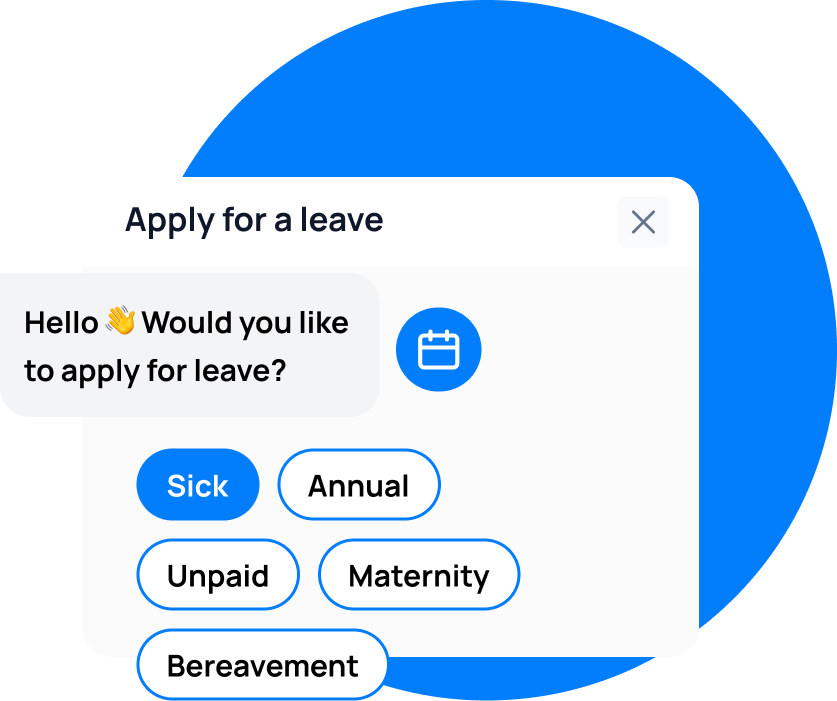
How Leave Management Software Helps
Award-Aware Policy Configuration
Modern leave management systems like Leave Balance allow you to configure leave policies that align with:
- NES minimum entitlements (automatic accrual rates)
- Award-specific leave loading (17.5% or custom percentages)
- Shift worker classifications (4 vs 5 week entitlements)
- Carry-over and expiry rules
- Cash-out restrictions where awards prohibit
Automated Accrual Calculations
Manual calculation errors are a leading cause of underpayment. Automated systems ensure:
- Correct accrual rates based on ordinary hours
- Pro-rata calculations for part-time employees
- Accrual during paid leave, no accrual during unpaid leave
- Compliance with award-specific entitlements
Audit Trails and Records
Employers must maintain accurate leave records for at least 7 years. Leave management software provides:
- Complete accrual and usage history
- Employee self-service balances
- Automated record keeping that satisfies Fair Work Ombudsman evidence requirements
FAQ: Modern Awards and Leave
Do Modern Awards override the National Employment Standards?
No. Awards can provide MORE than the NES but never LESS. The NES sets the national minimum floor. If an award provides a more generous entitlement, the award prevails.
How do I find which Modern Award applies to my employees?
Use the Fair Work Ombudsman’s Find My Award tool. Enter the industry and job duties, and the tool will identify the applicable award and classification.
What if my business operates across multiple states with different awards?
Apply the award that covers the work being performed, not the location of your head office. If you have employees covered by different awards, configure separate policies for each group.
Can I contract out of Modern Awards?
No. Modern Awards apply as mandatory minimum conditions. You cannot contract out of award entitlements, even with an individual agreement. You can provide MORE than the award, but never less.
What happens if I accidentally underpay leave entitlements?
Since January 2025, intentional wage underpayment is a criminal offence carrying fines up to $1.65 million for individuals and up to 10 years imprisonment. Civil penalties apply even for honest mistakes. If you discover underpayment, correct it immediately and consider self-reporting to the Fair Work Ombudsman.
Do casual employees get leave loading?
Casual employees are not entitled to annual leave or leave loading. They receive 25% casual loading on their base hourly rate to compensate for the lack of paid leave entitlements. Casual loading is calculated on the base rate before adding any leave loading for permanent employees.
How often do Modern Awards change?
Awards are reviewed annually through the annual wage review process. Legislative changes and court decisions also affect award obligations. Employers should review award compliance at least annually and subscribe to Fair Work Ombudsman updates.
Can I pay a lump sum in lieu of award-specified leave loading?
No. Leave loading must be paid as required by the award — either on each leave period or as an annual lump sum if the award permits. Paying a different rate or amount breaches the award.
Next Steps
Now that you understand Modern Award leave compliance, you may want to explore related topics:
- Annual Leave Entitlements in Australia: The Complete Employer’s Guide for 2026 — NES coverage including accrual rules
- Shift Worker Leave Entitlements in Australia: The Extra Week and How It Works — detailed shift worker guide
- Leave Loading in Australia: How to Calculate It and Who Gets It — complete loading calculation guide
- Fair Work Leave Compliance: The Employer’s Checklist for 2026 — comprehensive compliance checklist
leave emails? Track your employee's leave with Leave Balance