
Choosing payroll software in Nepal is harder than it looks, mostly because the field splits cleanly into two halves and neither half is a great fit for most SMBs. International tools (BambooHR, Gusto, Rippling) don’t handle Nepal-specific requirements at all. Local tools (RigoHR is the dominant name) handle Nepal but ship dated UI, expensive per-seat pricing, and weak integration stories.
This guide covers what to actually look for, where each option falls short, and how to evaluate vendors against the real day-to-day work of running Nepali payroll.
What “Nepal payroll” actually requires
A Nepal-fit payroll system has to handle, at minimum:
- Bikram Sambat calendar — fiscal year mid-Shrawan to mid-Shrawan, BS dates as primary
- SSF and PF — mutually exclusive, with correct mandatory contribution math
- TDS on salary — bracketed rates by filing status and category, with annual recomputation
- Investment declarations — life insurance, VPF, retirement contribution deductions
- §27 termination payouts — full recomputation of annual TDS at exit
- Gratuity — Labour Act formula, with SSF interaction
- Festival allowance — Dashain bonus pro-rated to attendance
- Public holiday work compensation — comp leave or comp pay
- Bank file generation — at least NMB, NABIL, NIC, EBLL, Prabhu
- IRD-compliant annual filing report
- Tax certificates for each employee at year-end
- Multi-language support — English UI for HR, Nepali for some employee-facing documents
Software that handles fewer than 80% of these is going to leak compliance work back to your HR team in spreadsheets. That’s where the real cost of payroll software ends up.
Where international tools fall short
The major international payroll tools (Gusto, Rippling, Justworks, BambooHR Payroll, Deel, Remote.com) are all designed around Western tax regimes — federal/state US tax, UK PAYE, AU PAYG. They are not designed for Nepal.
What they don’t do:
- Handle SSF/PF separation
- Compute Nepal TDS bracketed rates
- Generate IRD filings
- Output bank files for Nepali banks
- Handle BS calendar
- Compute Labour Act gratuity correctly
What some of them offer instead is Employer of Record (EOR) service — Deel and Remote.com will employ your Nepali staff on your behalf and handle the payroll. That works, but it’s not software; it’s outsourcing. Per-employee per-month costs run $300–$600, which is far more than running payroll yourself with the right tool.
If you’re an international company hiring 1–5 staff in Nepal, EOR makes sense. If you’re a Nepali company or an international company with 10+ Nepali staff, software is dramatically cheaper.
Where RigoHR falls short
RigoHR is the incumbent — most established Nepali companies use it or have used it. It does cover the Nepal-specific feature set comprehensively. The complaints we hear most often from companies migrating away:
- Per-seat pricing that becomes expensive at scale. Adding employees means adding cost, often unpredictably.
- Dated UI that requires training for new HR staff and fights against modern browser conventions.
- Weak integration story — limited APIs, no webhook framework, hard to wire into modern stacks.
- Slow product cadence — features ship, but slowly relative to modern SaaS expectations.
- Limited self-service — most employee actions still route through HR.
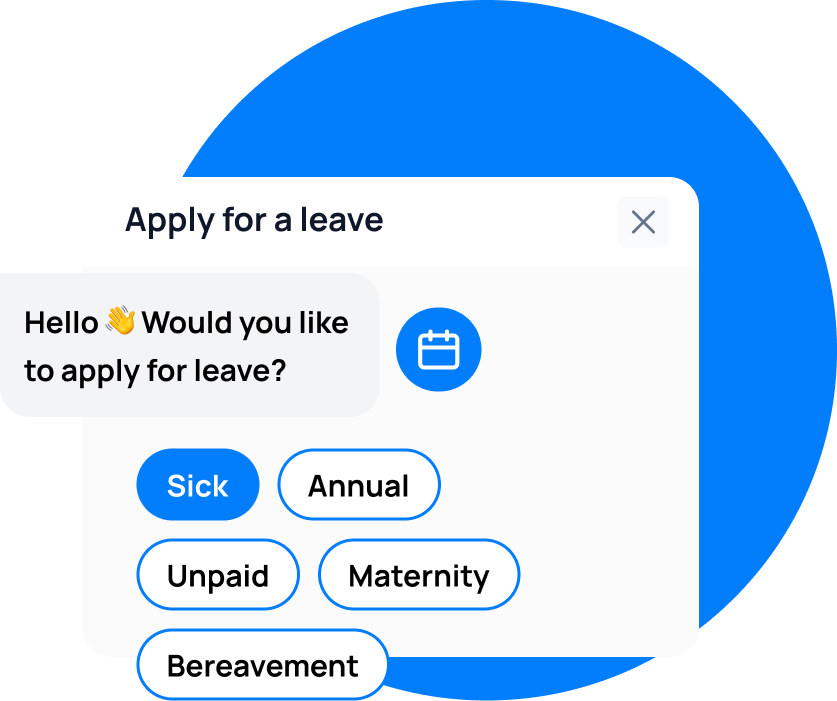
- No native chat integration — Slack, Teams, Google Chat workflows aren’t supported.
- Reporting is rigid — pre-built reports don’t always answer the question being asked.
RigoHR is functional but feels like a 2015-era tool. For companies that have outgrown it, the most-asked alternative question used to be “what else is there?” — for which the honest answer used to be “not much.”
leave emails? Track your employee's leave with Leave Balance
What’s changed in 2025–2026
Two things have shifted the landscape:
1. Modern SaaS architecture is reaching the Nepal market
A handful of newer tools — including Leave Balance + PayrollApp — bring modern SaaS practices to Nepal payroll: webhook fabrics, public APIs, chat integrations, modern UI, flat pricing. The compliance coverage is still being built out, but the architectural foundation is the right one for the next decade.
2. The HR + payroll bundle is the new default
International SaaS has moved to suites — HR, leave, expenses, and payroll in one billing line. Customers expect that. RigoHR doesn’t bundle that way; international tools don’t cover Nepal payroll. The gap is wide enough to be a real opportunity for products that span both.
What to look for in 2026
If you’re evaluating Nepal payroll software in 2026, score each option against:
Compliance coverage
- BS calendar, SSF/PF, TDS, IRD filing, gratuity, §27, festival, public holiday work, bank files
- Score: 0–10
Modern integration story
- Public API, webhooks, OAuth2 SSO, chat integrations (Slack/Teams/Google Chat)
- Score: 0–10
Bundle with leave management
- Native HR records, leave workflows, approvals, expense reimbursement, salary amendments — all in one product or tightly integrated
- Score: 0–10
Pricing model
- Flat or per-seat? Predictable as headcount grows? Bundle with HR?
- Score: 0–10
Total cost over 3 years
- Software + hours of HR work + hours of integration maintenance + IT involvement
- Score: 0–10
Migration path off the tool
- Can you export your data? Are you locked in?
- Score: 0–10
How Leave Balance + PayrollApp scores
We’ll be honest about where we’re strong and where we’re still building:
Strong:
- Compliance coverage: full Phase 2 Nepal payroll (gratuity, SSF/PF, TDS, IRD report, festival allowance, §27, encashment tax, bank files for 5 major banks).
- Modern architecture: webhook fabric, public API, OAuth2 SSO, chat integrations.
- Bundled with leave: HR, leave, expenses, salary amendments, bank accounts, shift self-service all in LeaveBalanceApp.
- Pricing: flat-rate bundle proposed at Rs 2,490/month for the whole suite, unlimited employees.
Still building:
- Some niche tax cases (split-resident filings, certain expat scenarios) — we cover the common cases, not all edges.
- Mobile apps (web works on mobile; native apps are on the roadmap).
- Some advanced reporting (custom report builder is in design, not yet shipped).
We are deliberately scoping for the SMB market — companies in the 5 to 500 employee range. We are not the right fit for 5,000-employee enterprises with complex multi-entity structures.
A migration framework
If you’re moving from RigoHR or a spreadsheet, we recommend:
- Pilot for one fiscal month with a subset of employees alongside your existing system, comparing payslips line by line.
- Cut over at fiscal year end (mid-Shrawan) to avoid mid-year reconciliation across two systems.
- Migrate historical data — at minimum, current fiscal-year-to-date earnings, deductions, and TDS records — so the IRD filing reflects the full year.
- Run the first full fiscal year on the new system with quarterly checkpoints.
- Compare year-end IRD filing against what the old system would have produced.
This is the migration path we walk through with new customers. Typical timeline: 2 weeks of data migration and configuration, 1 fiscal month of parallel run, full cutover by month 2.
leave emails? Track your employee's leave with Leave Balance
The bigger point
Nepal payroll software in 2026 is at the same inflection point that international payroll was at in 2018 — the incumbent dominates by inertia, but a generation of modern tools is closing the gap fast. The right time to evaluate alternatives is before your renewal is due, not the week of.
If your current setup is RigoHR or a spreadsheet, run a 30-minute scoping call with three vendors (us included). The opportunity cost of staying on a tool that doesn’t bundle leave and payroll, doesn’t expose webhooks, and prices per seat is real and growing each year.