
California paternity leave provides new fathers with 12 weeks of unpaid, job-protected leave under the California Family Rights Act (CFRA) and 8 weeks of paid benefits under the Paid Family Leave (PFL) programme. The two run concurrently — the father takes 12 weeks of leave that satisfies both CFRA and PFL simultaneously, with PFL providing income during the first 8 weeks. California was one of the first US states to extend paid family leave to both parents, and its system is one of the most established for paternity leave.
This guide covers the California paternity leave system in 2026: CFRA bonding leave, PFL benefits, eligibility requirements, how to apply, and employer obligations.
Key takeaways
- CFRA provides 12 weeks of unpaid, job-protected leave for bonding with a new child.
- PFL provides 8 weeks of paid benefits at 60-70% of wages (up to the weekly maximum), funded through employee payroll deductions.
- CFRA and PFL run concurrently — the father does not get 12 weeks plus 8 weeks, but 12 weeks with 8 weeks paid.
- California employers with 5 or more employees must comply with CFRA.
- PFL has no minimum length-of-service requirement — new employees can qualify.
California Family Rights Act (CFRA) for fathers
The California Family Rights Act provides eligible employees with up to 12 weeks of unpaid, job-protected leave for bonding with a new child. For fathers, the key details:
- Duration: 12 weeks per 12-month period.
- Reason: Bonding with a new child within 12 months of birth, adoption, or foster care placement.
- Payment: Unpaid — the employer is not required to pay the father during CFRA leave.
- Job protection: The father’s position (or a comparable position) must be available on return.
- Health insurance: The employer must maintain group health insurance during the leave.
CFRA eligibility
To qualify, the father must:
- Have worked for the employer for at least 12 months (not necessarily consecutive).
- Have worked at least 1,250 hours during the 12 months before leave starts.
- Work at a location where the employer has 5 or more employees within 75 miles.
The 5-employee threshold is significantly lower than the federal FMLA’s 50-employee threshold. This means smaller employers in California must comply with CFRA even if they are not subject to FMLA.
CFRA and FMLA interaction
For fathers eligible for both CFRA and FMLA, the two leaves run concurrently. The father takes 12 weeks that satisfy both laws. However, because CFRA has a lower employee threshold (5 vs 50), some fathers may be eligible for CFRA but not FMLA.
Paid Family Leave (PFL) for fathers
California’s Paid Family Leave programme provides:
- Duration: 8 weeks of paid benefits.
- Benefit rate: 60-70% of the father’s weekly wages, depending on income level, up to the weekly maximum (~$1,620 in 2026).
- Funding: Funded entirely through employee payroll deductions (SDI tax) — the employer does not fund the benefit.
- Who can claim: Either parent (birth or adoption) can claim PFL.
PFL eligibility
To qualify for PFL, the father must:
- Have earned at least $1,000 in a 12-month base period.
- Have paid into the SDI programme through payroll deductions.
- Be unable to work or have a reduction in hours due to the need to bond with a new child.
PFL does not have a minimum length-of-service requirement — new employees can qualify as long as they have earned enough and paid SDI contributions.
How PFL works in practice
The father applies through the California Employment Development Department (EDD):
- The father files a PFL claim online or by mail.
- EDD processes the claim and determines the benefit amount.
- EDD pays the father directly — the employer is not involved in the payment.
- The employer records the leave as unpaid leave in the payroll system.
PFL is designed to provide income during the bonding period, not to replace the employer’s salary obligation. The employer has no obligation to top up the PFL benefit to full salary unless a company policy requires it.
How CFRA and PFL stack for paternity leave
The interaction between CFRA and PFL creates a layered system:
| Programme | Duration | Payment | Job Protection |
|---|---|---|---|
| CFRA | 12 weeks | Unpaid | Yes |
| PFL | 8 weeks | 60-70% of wages | No (CFRA provides this) |
Stacking scenario
Scenario: James is a software developer in San Francisco. He has been with his employer for 3 years and wants to take paternity leave after the birth of his child.
| Component | Duration | Payment |
|---|---|---|
| CFRA leave | 12 weeks | Unpaid (health insurance continues) |
| PFL benefit | 8 weeks | 60-70% of wages (up to weekly max) |
| Total paid leave | 8 weeks | 60-70% of wages |
| Total job-protected leave | 12 weeks | Unpaid for 4 weeks |
The PFL benefit runs during the first 8 weeks of the CFRA leave. The remaining 4 weeks of CFRA are unpaid unless James uses accrued paid leave.
If the father also qualifies for FMLA
If James is at a large employer (50+ employees within 75 miles), FMLA also applies. FMLA and CFRA run concurrently — the 12 weeks satisfy both. PFL still provides 8 weeks of paid benefits during the CFRA/FMLA period.
How to apply for paternity leave
The application process for California paternity leave involves two steps:
Step 1: Notify the employer
The father should notify the employer at least 30 days before the expected leave date. The notification should include:
- The expected date of birth (or placement date for adoption).
- The expected leave start and end dates.
- The reason for leave (bonding with a new child).
Step 2: Apply for PFL through EDD
After the child is born (or placed), the father files a PFL claim through EDD:
- Go to edd.ca.gov and log in to the UI Online portal.
- Select “File a New Claim” and choose “Paid Family Leave.”
- Provide the required documentation (birth certificate or adoption papers).
- EDD processes the claim and determines the benefit amount.
- Payments are made directly to the father’s bank account.
The father should apply for PFL as soon as possible after the child’s birth — benefits are not retroactive beyond 30 days from the claim filing date.
Employer obligations in California
California employers must comply with several requirements for paternity leave:
- CFRA compliance: Provide 12 weeks of unpaid, job-protected leave to eligible fathers. Maintain health insurance.
- PFL facilitation: The employer is not responsible for PFL payments but must not interfere with the father’s ability to claim PFL benefits.
- Health insurance: Continue group health insurance during CFRA leave.
- No adverse action: Dismissing an employee for taking CFRA or PFL leave is prohibited.
- Reasonable accommodation: Under FEHA, employers must provide reasonable accommodations for pregnancy-related conditions — this applies to the birth mother, not the father, but employers should be aware of the distinction.
Common pitfalls for employers
- Confusing the CFRA and FMLA thresholds: CFRA applies at 5+ employees; FMLA at 50+. Many small California employers are subject to CFRA but not FMLA.
- Requiring the father to exhaust vacation before PFL: The employer cannot require the father to use vacation before taking PFL.
- Not maintaining health insurance during leave: The employer must maintain group health insurance during CFRA leave.
- Denying CFRA because the father is not the primary carer: CFRA bonding leave is available to both parents regardless of who is the primary carer.
leave emails? Track your employee's leave with Leave Balance
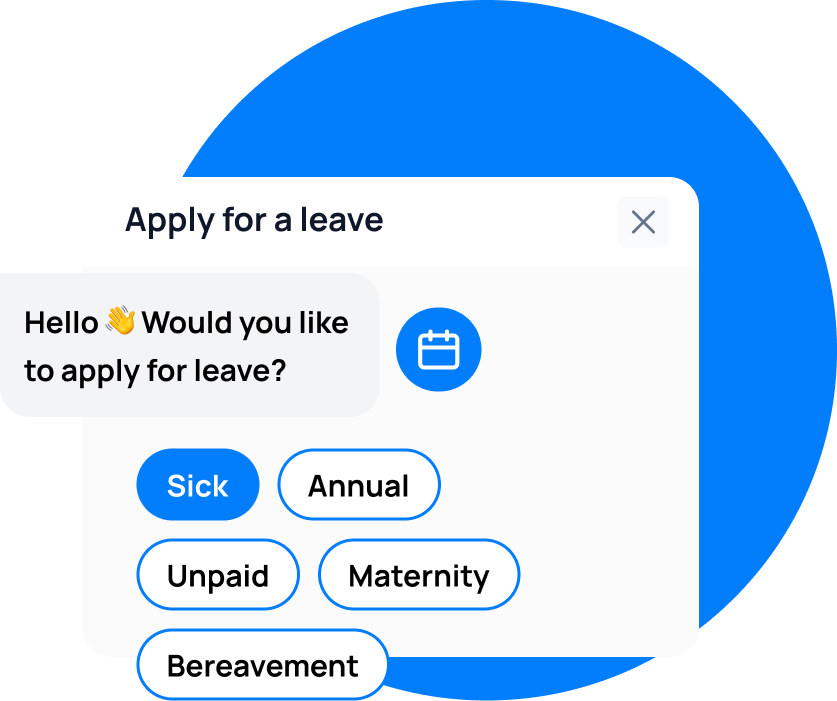
A leave management system that tracks CFRA and PFL concurrently, applies the correct employee threshold, and holds health insurance obligations on the employee record keeps California employers compliant across the paternity leave process.
Frequently asked questions
How long is paternity leave in California?
California provides 12 weeks of unpaid, job-protected leave under CFRA and 8 weeks of paid benefits under PFL. The two run concurrently — the father takes 12 weeks of leave with 8 weeks paid through PFL.
Is paternity leave paid in California?
PFL provides 8 weeks of paid benefits at 60-70% of wages. The employer is not required to pay the father during CFRA leave unless a company policy requires it. PFL is funded through employee payroll deductions.
Can my employer refuse my paternity leave request?
If you are CFRA-eligible, the employer cannot refuse the leave. If you are not eligible (for example, you have not worked 12 months), the employer may deny the request unless another state law applies.
How do I apply for PFL?
Apply through the California EDD website after the child is born. File a PFL claim online, provide the required documentation (birth certificate or adoption papers), and EDD will process the claim and make payments directly to your bank account.
Does my health insurance continue during paternity leave?
Yes. The employer must continue group health insurance during CFRA leave on the same terms as if you had continued working.
Sources
- California Department of Industrial Relations — CFRA (primary source)
- California EDD — Paid Family Leave
- California DIR — CFRA Factsheet
This article is general information, not legal advice. California leave laws and PFL benefit rates change annually — confirm current figures with the California Department of Industrial Relations and the Employment Development Department.