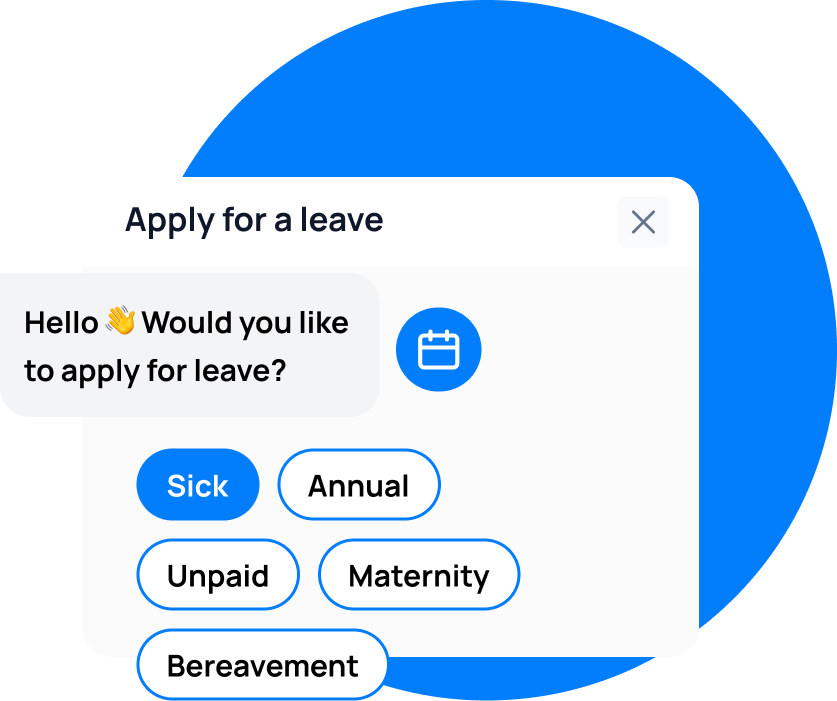
Employee self-service (ESS) is a technology platform that gives employees direct access to manage their own HR information, including submitting leave requests, viewing leave balances, updating personal details, accessing payslips and completing other administrative tasks. ESS platforms reduce the administrative burden on HR teams, improve data accuracy and give employees greater autonomy over their employment information.
Key Takeaways
- ESS platforms allow employees to request leave, view balances and update personal details without HR intervention
- Self-service systems improve data accuracy by eliminating manual data entry and reducing transcription errors
- Integration with payroll and rostering systems ensures leave data flows seamlessly into pay calculations and staffing plans
What Employee Self-Service Means for Employers
For HR teams, ESS eliminates the most repetitive and time-consuming administrative tasks. Instead of processing leave requests via email, manually updating employee records and fielding questions about leave balances, HR can focus on strategic work such as workforce planning, engagement and compliance.
The benefits extend beyond HR. Managers gain visibility of their team’s leave balances and upcoming absences without requesting reports. Employees can check their own leave balances, submit requests and track approvals in real time, which reduces frustration and improves the employee experience. According to a Deloitte survey, organisations with digital HR tools report 30% higher employee satisfaction with HR processes.
ESS platforms also support compliance. By automating leave accrual calculations, recording leave in real time and integrating with payroll systems, they reduce the risk of overpayments, underpayments and record-keeping failures. In Australia, where the Fair Work Act requires employers to maintain employee records for seven years, a digital ESS system provides an audit trail that satisfies these obligations.
Employee Self-Service Rules by Region
| Country | Rule | Detail |
|---|---|---|
| UK | GDPR governs data access | ESS platforms must comply with GDPR when processing employee personal data; employees have the right to access their data under Article 15 |
| AU | Fair Work Act record-keeping | Employers must keep records of leave taken and balances; ESS systems that integrate with payroll satisfy this requirement |
| US | State privacy laws apply | California’s CCPA and similar state laws govern how employee data is collected and stored through ESS platforms |
How Employee Self-Service Works in Practice
A mid-sized UK law firm implements an ESS platform integrated with its payroll and rostering systems. Before the platform, the HR team processed an average of 40 leave requests per week via email, each requiring manual balance checks, calendar updates and payroll notifications. After implementation, employees submit requests through the platform, which automatically checks the leave balance, routes the request to the manager for approval and updates the leave calendar and payroll system upon approval.
The result: the HR team spends 60% less time on leave administration, managers can approve or reject requests on their mobile devices, and employees have real-time visibility of their balances. The platform also flags potential issues, such as an employee requesting leave that would breach the minimum notice period required by the applicable Modern Award.
Common Mistakes with Employee Self-Service
- Implementing ESS without training employees and managers on how to use it, leading to low adoption
- Choosing an ESS platform that does not integrate with existing payroll and rostering systems, creating data silos
- Not configuring approval workflows to match the organisation’s leave policy, allowing requests that bypass required notice periods
- Failing to configure the platform to reflect the applicable Modern Award or statutory leave entitlements, resulting in incorrect balance calculations
- Neglecting to set up data access permissions, allowing employees to see information that should be restricted
FAQ
What is an employee self-service platform?
An employee self-service (ESS) platform is a digital tool that allows employees to manage their own HR tasks, such as submitting leave requests, viewing leave balances and updating personal information, without going through HR.
Is ESS legally required?
No. There is no legal requirement to implement an ESS platform. However, ESS systems help employers meet record-keeping obligations under the Fair Work Act in Australia and the Employment Rights Act in the UK.
Can ESS integrate with payroll?
Yes. Modern ESS platforms integrate with payroll systems so that approved leave is automatically reflected in pay calculations, reducing manual data entry and the risk of errors.
leave emails? Track your employee's leave with Leave Balance