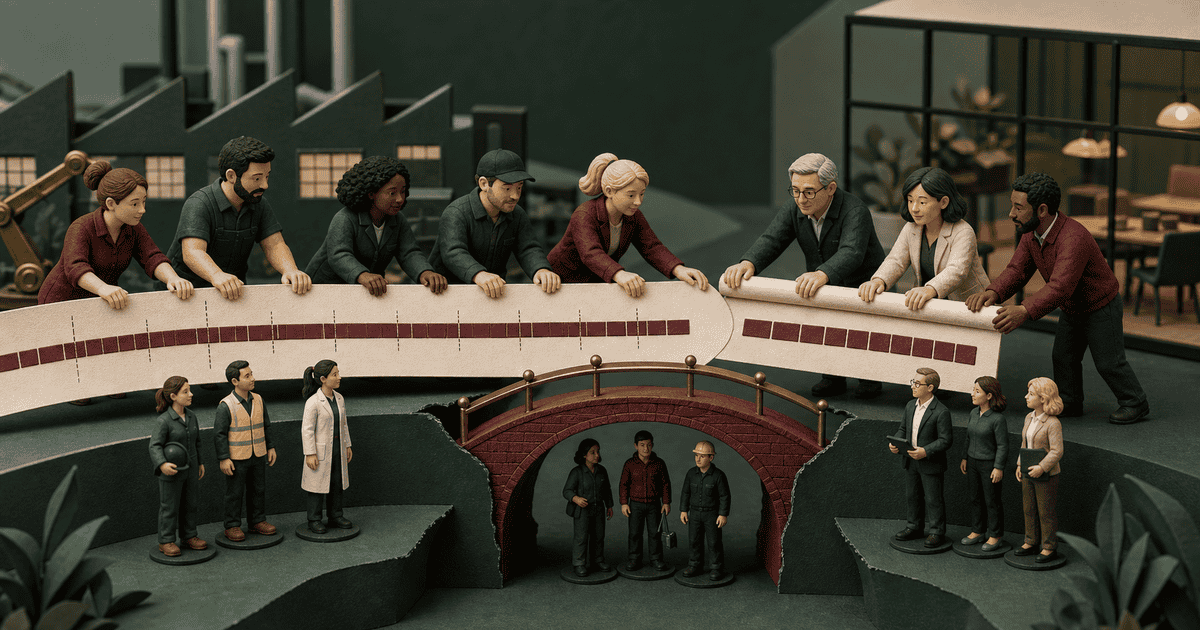
German short-time work (Kurzarbeit) allows employers to reduce employees’ working hours during an economic downturn while the Federal Employment Agency (Bundesagentur für Arbeit, BA) pays Kurzarbeitergeld (short-time work allowance) to compensate for the lost wages. Kurzarbeit is one of Germany’s most important labour market instruments — it was used extensively during the 2008 financial crisis and the COVID-19 pandemic, preventing mass layoffs by subsidising reduced hours rather than unemployment.
This guide covers how Kurzarbeit works, who is eligible, the Kurzarbeitergeld calculation, the application process, and the employer’s obligations during a short-time work period.
Key takeaways
- Kurzarbeit allows employers to reduce working hours (including to zero) during an economic downturn without dismissing employees.
- The Federal Employment Agency (BA) pays Kurzarbeitergeld to compensate for the lost wages — typically 60% of the net pay difference (67% for employees with children).
- Employers can apply for Kurzarbeit when at least 10% of the workforce is affected by a reduction of at least 10% of working hours.
- Kurzarbeit can last up to 12 months (extendable to 24 months in exceptional circumstances).
- The employer continues to employ the affected workers and remains responsible for social security contributions on the reduced hours.
How Kurzarbeit works
§169 SGB III is the statutory basis for Kurzarbeit. The process follows these steps:
- Employer applies to the BA — the application must be filed before or immediately after the reduced hours begin
- BA approves the application — the BA assesses whether the reduction is due to a lack of work (not an internal organisational issue)
- Employer reduces working hours — hours can be reduced to a minimum of zero for some or all employees
- BA pays Kurzarbeitergeld — the allowance compensates for the lost wages
- Employer pays the remaining salary — the reduced salary for the hours actually worked
The key principle is that Kurzarbeit is a temporary measure. The employer must demonstrate an intention to return to normal working hours once the economic situation improves.
Eligibility
Kurzarbeit is available to:
- All employees covered by statutory social insurance — including full-time, part-time, and marginal employment (Minijob) workers
- Fixed-term contract employees — if the contract is still running during the Kurzarbeit period
- Temporary agency workers — if the agency reduces their hours
- Trainees — if their training hours are reduced
The employer must meet three conditions:
| Condition | Threshold |
|---|---|
| Workforce affected | At least 10% of employees must have their hours reduced |
| Hour reduction | At least 10% of normal working hours must be lost |
| Cause | The reduction must be due to a lack of work (not the employer’s own decision) |
The “lack of work” requirement is important — an employer cannot introduce Kurzarbeit to save costs during a period of normal business activity. The BA will reject the application if the reduction is motivated by internal restructuring rather than external economic factors.
Kurzarbeitergeld calculation
The Kurzarbeitergeld is calculated as a percentage of the net pay difference between the employee’s normal salary and the reduced salary:
| Employee type | Kurzarbeitergeld rate |
|---|---|
| Employees without children | 60% of the net pay difference |
| Employees with children (at least one child eligible for child benefit) | 67% of the net pay difference |
Worked example
An employee normally earns €3,500/month net and works 40 hours/week. The employer reduces hours to 20 hours/week:
- Normal salary: €3,500/month
- Reduced salary: €1,750/month
- Lost wages: €1,750/month
- Kurzarbeitergeld (60%): €1,050/month
- Employee receives: €1,750 (salary) + €1,050 (Kurzarbeitergeld) = €2,800/month
- Net income reduction: €700/month (20%)
The employer pays the social security contributions on the reduced salary. The BA reimburses the employer’s social security contributions on the Kurzarbeitergeld amount.
Application process
The employer must apply to the BA through the Kurzarbeit portal (KURZARBEIT-Online). The application must include:
- Company details — registration number, industry classification
- Affected employees — names, social security numbers, expected hours reduction
- Cause of the reduction — evidence of the economic downturn (e.g. loss of orders, supply chain disruption)
- Expected duration — the proposed start and end dates of the Kurzarbeit period
The BA processes applications within 4–6 weeks of submission. The employer can introduce Kurzarbeit immediately after filing — the application does not need to be approved before the reduced hours begin.
Retroactive introduction
The BA allows retroactive introduction of Kurzarbeit for up to 3 months before the application is filed. This means an employer who has already reduced hours can apply for Kurzarbeit and receive retroactive Kurzarbeitergeld.
Duration and extension
Kurzarbeit can last up to 12 months within a 24-month period. The BA can extend the period to 24 months in exceptional circumstances (e.g. prolonged economic crisis).
The employer can:
- Increase or decrease the hours reduction during the Kurzarbeit period (with BA notification)
- End Kurzarbeit early if the economic situation improves
- Introduce Kurzarbeit in blocks — different teams or departments can have different reduced-hour schedules
Employer obligations
Six core duties apply to employers using Kurzarbeit:
- Apply to the BA before or immediately after the reduced hours begin
- Report the affected employees through the Kurzarbeit portal
- Pay the reduced salary for the hours actually worked
- Continue social security contributions on the reduced salary
- Communicate with the works council (Betriebsrat) — Kurzarbeit generally requires the works council’s agreement under §87 BetrVG
- Return to normal hours when the economic situation improves
The works council (Betriebsrat)
Kurzarbeit requires the works council’s agreement under §87 Abs. 1 Nr. 3 BetrVG, which governs the introduction and use of technical devices designed to monitor employee performance. More practically, the works council has a co-determination right over the reduction of working hours under §87 Abs. 1 Nr. 2 and 3 BetrVG.
The employer must negotiate the terms of the Kurzarbeit arrangement with the works council, including:
- Which employees are affected
- The extent of the hour reduction
- The duration of the Kurzarbeit period
- Any compensatory measures (e.g. additional training during reduced hours)
Common pitfalls
1. Applying too late
The BA requires the application to be filed before or immediately after the reduced hours begin. Delaying the application means lost Kurzarbeitergeld that cannot be recovered.
2. Not involving the works council
Kurzarbeit without works council agreement can be challenged. The employer must negotiate the arrangement before implementing it.
3. Using Kurzarbeit to avoid dismissal
The BA will reject an application if the reduction is motivated by the employer’s desire to avoid dismissal costs rather than a genuine lack of work. The cause must be external.
4. Forgetting to end Kurzarbeit
When the economic situation improves, the employer must restore normal hours. Continuing Kurzarbeit beyond the point of economic recovery can result in the BA withdrawing the Kurzarbeitergeld.
5. Not reporting changes
If the hours reduction changes (increase or decrease), the employer must report the change to the BA. Failure to report results in incorrect Kurzarbeitergeld payments that must be repaid.
For more German context, see our guide to German annual leave entitlements and German sick pay (Entgeltfortzahlung).
A leave management system that tracks reduced working hours, integrates with the Kurzarbeit portal, and manages the works council notification process keeps the administrative burden of German short-time work manageable.
Frequently asked questions
What is Kurzarbeit in Germany?
Kurzarbeit (short-time work) is a government-subsidised scheme that allows employers to reduce employees’ working hours during an economic downturn. The Federal Employment Agency pays Kurzarbeitergeld to compensate for the lost wages.
How much does the employee receive during Kurzarbeit?
Employees receive 60% of the net pay difference (67% for employees with children). The employer pays the remaining salary for the hours actually worked.
How long can Kurzarbeit last?
Kurzarbeit can last up to 12 months, extendable to 24 months in exceptional circumstances. The employer can end Kurzarbeit early if the economic situation improves.
Does the employer need the works council’s agreement?
Yes. Kurzarbeit requires the works council’s agreement under §87 BetrVG. The employer must negotiate the terms before implementing the reduced hours.
Can an employer use Kurzarbeit to avoid dismissal?
No. The BA will reject an application if the reduction is motivated by the employer’s desire to avoid dismissal costs. The cause must be a genuine lack of work due to external economic factors.
Sources
- Sozialgesetzbuch III (SGB III) — §169 Kurzarbeitergeld
- Bundesagentur für Arbeit — Kurzarbeit
- Betriebsverfassungsgesetz (BetrVG) — §87
Last updated: 26 July 2026. This article is general guidance, not legal advice. Kurzarbeit rules and Kurzarbeitergeld rates change — confirm current terms with the Bundesagentur für Arbeit.