India has no single federal statute governing employee leave. Instead, leave entitlements are scattered across the Factories Act 1948, state-level Shops and Establishments Acts, the Maternity Benefit Act 2017, and the partially implemented Code on Wages 2019. For any business with employees in India, this fragmented landscape creates genuine compliance risk — and the penalties for getting it wrong include fines, labour disputes, and reputational damage.
This guide covers the main leave types, how entitlements vary by state and industry, and the practical steps you need to take to manage leave correctly for an Indian workforce.
The Regulatory Landscape
Employee leave in India is governed by overlapping legislation depending on the type of establishment, industry, and location. There is no one-size-fits-all rule.
Key Legislation
| Legislation | Applies To | What It Covers |
|---|---|---|
| Factories Act 1948 | Manufacturing units with 10+ workers using power (20+ without) | Earned leave, sick leave, casual leave for factory workers |
| Shops and Establishments Acts | Commercial establishments, offices, restaurants, IT companies | Leave entitlements vary by state — most common for service sector |
| Maternity Benefit Act 2017 | All establishments with 50+ employees | Maternity leave, maternity benefit, crèche facilities |
| Code on Wages 2019 | All employees (partially implemented) | Consolidates wage-related provisions including leave encashment |
| Industrial Disputes Act 1947 | Industrial establishments | Retrenchment, notice period, leave on termination |
The Code on Wages 2019 was intended to consolidate multiple labour laws, including leave provisions, but implementation has been uneven across states. Many provisions remain governed by the older legislation.
State-Level Variation
This is the biggest challenge. The Shops and Establishments Act differs in every state. An IT company in Bengaluru follows the Karnataka Shops and Commercial Establishments Act, while the same company’s office in Mumbai follows the Maharashtra Shops and Establishments Act — and the leave entitlements are not identical.
For example, Karnataka mandates 12 days of casual leave, 12 days of sick leave, and 18 days of earned leave per year. Maharashtra mandates 15 days of earned leave and allows for sick leave and casual leave at the employer’s discretion, subject to a minimum total. Delhi provides 12 days casual leave, 12 days sick leave, and 15 days earned leave. Tamil Nadu provides 12 days each of casual and sick leave, and 15 days earned leave.
The lesson: you cannot assume one set of rules applies across your entire Indian workforce. Check the specific state legislation for every location where you have employees.
Types of Leave in India
Casual Leave (CL)
Casual leave is intended for short, unforeseen personal needs — a family event, a household emergency, or a day off for personal errands.
Typical entitlement: 7 to 12 days per year, depending on the applicable act and state.
Key characteristics:
- Does not accumulate from year to year in most states. Unused casual leave lapses at the end of the calendar year.
- Cannot be combined with any other leave type.
- Typically cannot be prefixed or suffixed to other leave (no long weekends by tacking casual leave onto a public holiday or weekend).
- No medical evidence required.
Sick Leave (SL)
Sick leave covers absences due to illness or injury, or to care for an immediate family member who is unwell.
Typical entitlement: 7 to 15 days per year, varying by state and establishment type.
Key characteristics:
- Often accumulates up to a specified cap (commonly 30 to 45 days total, including current year). Check the applicable state act.
- Employer may require a medical certificate, typically after 2 to 3 consecutive days of absence.
- Some state acts distinguish between ordinary sick leave and half-pay sick leave for extended illnesses.
- Under the Factories Act, an employee who has worked for 240 days or more in a calendar year earns sick leave at the rate of half a day for every 20 days worked.
Earned Leave / Privilege Leave (EL / PL)
Earned leave (also called privilege leave) is the most substantial leave entitlement for Indian employees. It is accrued based on days worked and is intended for rest, recreation, and planned time off.
Typical entitlement: 15 to 30 days per year, depending on the applicable act, state, and length of service.
Key characteristics:
- Accrues progressively based on days actually worked (not calendar days). Under the Factories Act, an employee earns 1 day of earned leave for every 20 days worked.
- Accumulates from year to year, subject to a cap (commonly 30 to 45 days total carry-forward under the Factories Act; state acts vary).
- Can be encashed (paid out) on resignation or termination. The encashment rate is calculated based on the employee’s basic wages at the time of encashment.
- Usually requires a minimum period of continuous service (commonly 240 days) before the employee can take earned leave for the first time.
- Employers can require advance notice for earned leave requests (commonly 15 days under the Factories Act).
- Can be carried forward when unused, up to the statutory maximum.
Maternity Leave
India’s Maternity Benefit Act 2017 provides some of the most generous maternity leave provisions in the Asia-Pacific region.
Entitlement: 26 weeks of paid maternity leave for the first two children. For a third child, the entitlement reduces to 12 weeks.
Breakdown:
- Up to 8 weeks can be taken before the expected date of delivery.
- The remaining period is taken after delivery.
- A woman having two or more surviving children is entitled to 12 weeks only.
- Paid at the rate of the woman’s average daily wage for the period of her absence.
Additional provisions:
- A nursing break of 15 minutes, twice daily, until the child is 15 months old.
- Employers with 50+ employees must provide a crèche facility within a prescribed distance.
- No woman can be required to do work of a strenuous nature during the one month preceding her expected delivery date.
- A woman who miscarries or suffers a medical termination is entitled to 6 weeks of paid leave.
Paternity Leave
Paternity leave is not mandated under federal Indian law. This is a significant gap compared to many other countries in the region.
However, some developments exist:
- The Central Civil Services (Leave) Rules provide 15 days of paternity leave for central government employees.
- Several state governments offer paternity leave ranging from 5 to 15 days.
- Many private sector companies offer paternity leave as a matter of policy (commonly 5 to 15 days), but this is voluntary, not statutory.
- The Code on Social Security 2020 introduced some provisions but paternity leave remains largely unaddressed at the federal level.
Compensatory Off
When an employee works on a weekend, public holiday, or scheduled day off, many organisations grant a compensatory day off (commonly called “comp off”) in lieu.
- No federal mandate for compensatory off — it is typically governed by employment contracts, company policy, or specific state provisions.
- The Factories Act limits the total number of hours an employee can work in a week and requires compensatory rest if those limits are exceeded.
- In practice, most IT and service sector companies in India have formal comp-off policies.
leave emails? Track your employee's leave with Leave Balance
Public Holidays
India recognises three types of public holidays, and the number varies significantly by state:
- National holidays: Republic Day (26 January), Independence Day (15 August), and Gandhi Jayanti (2 October). These are mandatory across all states.
- State-specific holidays: Each state declares additional holidays based on regional festivals and events. For example, Karnataka observes Rajyotsava, Maharashtra observes Shivaji Jayanti, and West Bengal observes Durga Puja-related holidays.
- Optional holidays: Some states list additional holidays that employees may choose to observe, subject to employer approval.
A typical Indian employee gets between 10 and 18 public holidays per year, depending on their state. As an employer, you must follow the holiday list published by the relevant state government or the Ministry of Personnel, Public Grievances and Pensions for central government employees.
Leave on Termination
When employment ends, the treatment of accrued leave is a critical compliance requirement.
Earned leave encashment: Unused earned leave must be encashed at the employee’s last drawn basic wage (or average daily wage, depending on the applicable act). This is a statutory obligation — you cannot refuse to pay it.
Calculation: Encashment is typically calculated as (number of unused earned leave days) x (daily wage at the time of termination).
Sick leave and casual leave: These are generally not encashable on termination. Unused casual leave lapses, and sick leave balances are forfeited in most jurisdictions.
Important: Failing to pay earned leave encashment on termination is one of the most common causes of labour disputes in India. It is enforceable through labour courts and can result in penalties and legal costs.
Recordkeeping Requirements
Indian labour law places specific obligations on employers to maintain leave records.
- Leave registers: The Factories Act and most Shops and Establishments Acts require employers to maintain a leave register showing each employee’s leave balance, leave taken, and leave accrued.
- Retention period: Records must typically be retained for a minimum of 3 years, though some state acts specify longer periods.
- Format: Many states prescribe a specific format for the leave register. Some now accept electronic records, but the requirements vary.
- Employee access: Employees have the right to inspect their leave records and request information about their accrued balances.
In 2026, maintaining paper registers is increasingly impractical, especially for companies with employees across multiple states. Digital leave management systems that can handle multiple leave policies, accrual rules, and encashment calculations are becoming essential for compliance.
Common Compliance Mistakes
1. Assuming One Leave Policy Covers All Locations
This is the single most frequent error. The leave entitlements for your Bengaluru office are governed by different legislation than your Mumbai or Gurgaon office. Applying a single policy without accounting for state-specific minimums creates compliance exposure.
2. Not Paying Earned Leave Encashment on Termination
Unused earned leave must be encashed. This is not optional, and failing to do it is a common trigger for labour court proceedings. The calculation must be at the employee’s daily wage rate at the time of termination.
3. Lapsing Leave That Should Accumulate
Casual leave lapses. But earned leave accumulates. Some employers incorrectly apply a “use it or lose it” policy to all leave types, including earned leave. Under most Indian legislation, earned leave carry-forward is a statutory right up to the prescribed maximum.
4. Not Maintaining Proper Leave Records
The leave register is a legal document. Failure to maintain it, or maintaining it inaccurately, weakens your position in any labour dispute. If an employee claims they had 30 days of unused earned leave and you have no records, the labour court will likely accept the employee’s claim.
5. Deducting Wages for Statutory Leave
You cannot deduct an employee’s wages for any period of authorised leave — earned leave, sick leave, casual leave, or maternity leave. Wage deductions for authorised absences violate the Payment of Wages Act and can result in penalties.
Best Practices for Managing Leave in India
Use a Centralised Leave Management System
For organisations with employees in multiple states, a centralised system with state-specific policy configurations is the most practical approach. Configure each location’s leave entitlements according to the applicable state act, track accruals automatically, and maintain digital records that satisfy statutory requirements.
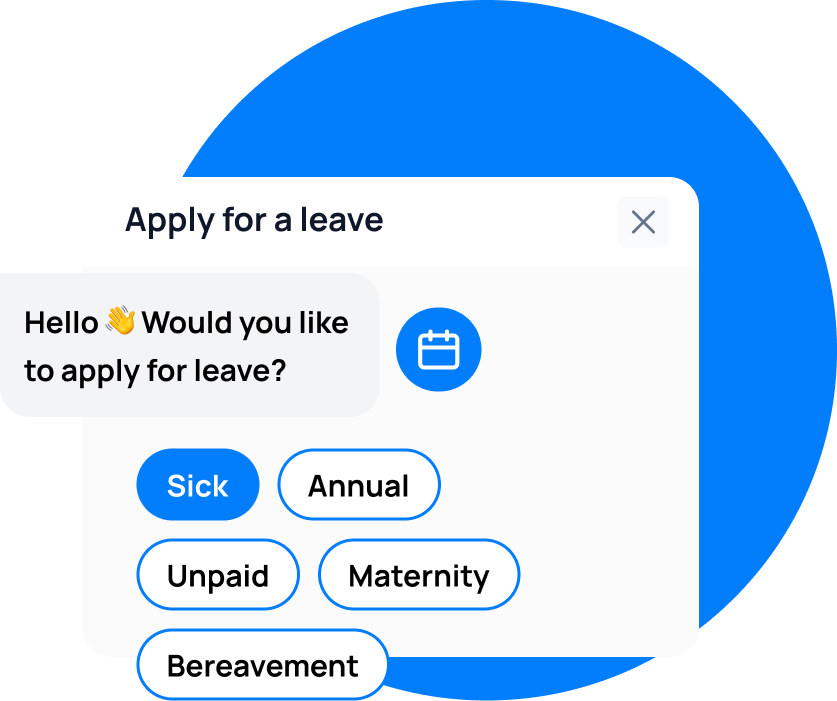
Leave Balance supports unlimited custom leave policies, making it straightforward to configure different accrual rates and entitlements for each of your Indian locations. Leave requests, approvals, and balance checks happen directly in Slack or Microsoft Teams, where your team already works.
Write a Clear Leave Policy
Document your leave policy in writing and ensure every employee receives a copy. The policy should specify:
- Leave entitlements by type and location
- Accrual rules and carry-forward limits
- Notice periods for leave requests
- Evidence requirements (medical certificates, etc.)
- Holiday calendar for each office location
- Encashment rules for earned leave on termination
A written policy does not just help with compliance — it reduces the administrative burden of answering the same questions repeatedly and provides a reference point for managers handling leave requests.
Track Leave Patterns
Unusually high sick leave usage or consistently unused earned leave can signal underlying issues — burnout, disengagement, or a culture where employees feel unable to take time off. Use reporting tools to spot patterns and address root causes before they affect retention or productivity.
For guidance on identifying and addressing leave-related patterns, see our guide to spotting absence trends.
Conduct an Annual Leave Audit
At least once a year, review your leave records for accuracy. Verify that:
- Accrual rates match the applicable state legislation for each location
- Carry-forward balances have been calculated correctly
- Encashment calculations on terminations during the year were accurate
- Leave registers are up to date and complete
- Your holiday calendar reflects the current year’s state gazette notifications
What About the Codes?
The Indian government introduced four labour codes in 2019-2020 to consolidate 29 existing labour laws. The Code on Wages is the most relevant to leave management.
As of 2026, implementation has been uneven. Several states have notified the rules under the Code on Wages, while others continue to operate under the older legislation. For employers, the practical implication is that you need to check whether your state has adopted the Code on Wages rules or is still operating under the Factories Act and Shops and Establishments Act.
Key provisions under the Code on Wages relevant to leave:
- Consolidates the definition of “wages” used for leave encashment calculations
- Provides a uniform framework for minimum wage compliance
- Does not fundamentally change leave entitlement amounts — those remain governed by the respective establishment acts
Monitor your state’s implementation status and consult with a local labour law practitioner when transitioning from the old framework to the new.
Getting Started
Managing leave across India’s fragmented regulatory landscape is not simple, but it is manageable with the right tools and processes. Start by identifying the applicable legislation for each of your locations, configure your leave policies accordingly, maintain accurate records, and use software that handles the tracking so you can focus on running your business.
Leave Balance costs a flat $10/month — unlimited employees, unlimited policies, integrated into Slack and Microsoft Teams. For teams with employees across multiple Indian states, that simplicity matters.
leave emails? Track your employee's leave with Leave Balance