
Maternity leave in the United States is not a single federal entitlement — it is a patchwork of the federal Family and Medical Leave Act (FMLA), state paid family leave (PFL) programmes, and employer policies. The FMLA provides 12 weeks of unpaid, job-protected leave, but only to employees who meet specific criteria. Nine states and Washington DC have enacted paid family leave programmes that layer on top of FMLA. The result is that maternity leave duration, pay, and eligibility vary dramatically depending on where the employee works and who they work for.
This guide covers the US maternity leave landscape in 2026: what FMLA provides, how state PFL programmes work, the gaps employers must fill, and how to manage compliance across multiple states.
Key takeaways
- FMLA provides 12 weeks of unpaid, job-protected leave for eligible employees at employers with 50 or more employees within 75 miles.
- No federal paid maternity leave exists — the US is the only OECD country without a national paid parental leave programme.
- Nine states and Washington DC have enacted paid family leave programmes that provide income during leave.
- Employers with fewer than 50 employees are not subject to FMLA and may have no statutory leave obligation at all.
- Company policy often fills the gap — but there is no legal requirement to do so.
The federal Family and Medical Leave Act (FMLA)
The Family and Medical Leave Act provides eligible employees with:
- 12 weeks of unpaid, job-protected leave in a 12-month period.
- Qualifying reasons: Birth and care of a newborn, adoption or foster care placement, serious health condition of the employee or a family member.
- Job protection: The employee must be restored to the same or an equivalent position.
- Health insurance: The employer must continue group health insurance during the leave.
FMLA eligibility
To qualify, the employee must:
- Have worked for the employer for at least 12 months (not necessarily consecutive).
- Have worked at least 1,250 hours during the 12 months before leave begins.
- Work at a location where the employer has 50 or more employees within 75 miles.
The 50-employee threshold and the 75-mile radius rule mean that many employees — particularly those at small businesses, remote workers, or employees at branch locations — do not qualify for FMLA protection.
FMLA limitations
- Unpaid leave: The employer is not required to pay the employee during FMLA leave, though the employee may use accrued paid leave.
- Small employer exemption: Employers with fewer than 50 employees are entirely exempt.
- Intermittent leave: FMLA allows intermittent leave for qualifying reasons, but birth-related leave must be taken in a single block.
- No wage replacement: The employee receives no income from FMLA itself.
State paid family leave programmes
As of 2026, nine states and Washington DC operate paid family leave programmes that provide income during maternity leave. These programmes are funded through employee payroll deductions and pay benefits through the state — not the employer.
| State | Programme | Duration | Benefit Rate | Weekly Cap (2026) |
|---|---|---|---|---|
| California | PFL | 8 weeks | 60-70% of wages | ~$1,620 |
| New York | PFL | 12 weeks | 67% of wages | ~$1,151.16 |
| Washington | PFML | 12 weeks | ~90% of wages (low earners) | ~$1,479 |
| New Jersey | FLI | 12 weeks | 85% of wages | ~$1,033 |
| Massachusetts | PFML | 12 weeks | 80% of wages | ~$1,129.82 |
| Connecticut | PFL | 12 weeks | 95% of wages (low earners) | ~$900 |
| Colorado | FAMLI | 12 weeks | 90% of wages (low earners) | ~$1,100 |
| Oregon | PFML | 12 weeks | 100% of wages (low earners) | ~$1,500 |
| Maryland | FAMLI | 12 weeks | 90% of wages (low earners) | ~$1,000 |
| Washington DC | PFML | 12 weeks | Up to 100% of wages | ~$1,000 |
Note: Benefit rates and caps change annually. The figures above are approximate 2026 estimates.
State PFL and FMLA interaction
In most cases, state PFL runs concurrently with FMLA when both apply. The employee takes 12 weeks of leave that satisfies both federal FMLA and state PFL simultaneously, with the state providing income during that period. However:
- If the employee is not FMLA-eligible (for example, at a small employer), the state PFL may still apply independently.
- Some states (like California) allow PFL to run after FMLA exhausts, extending the total leave period.
- PFL provides income replacement but not job protection — FMLA provides the job protection.
The employer policy gap
Outside of FMLA and state PFL, there is no federal requirement for employers to provide paid maternity leave. This means:
- Employers with fewer than 50 employees may have no statutory leave obligation at all.
- Employers in non-PFL states (the majority of US states) may only offer unpaid FMLA leave — or nothing.
- Company policy is the only source of paid maternity leave for millions of workers.
What leading employers offer
According to industry surveys, the most common employer-provided maternity leave policies include:
| Policy Type | Typical Offering |
|---|---|
| Large tech companies | 16-26 weeks fully paid |
| Fortune 500 average | 9-12 weeks fully paid |
| Mid-market employers | 6-8 weeks fully paid |
| Small businesses | 0-6 weeks unpaid (FMLA only) |
The gap between large employers and small businesses is significant. An employee at a 200-person company in a non-PFL state may have access to nothing beyond FMLA’s 12 weeks unpaid — while a colleague at a Fortune 500 company in the same city receives 16 weeks fully paid.
Multi-state compliance challenges
Employers operating across multiple states face several compliance challenges:
- Different employee thresholds: FMLA requires 50 employees within 75 miles; state PFL programmes may apply to smaller employers.
- Different benefit rates: Each state sets its own PFL rate and weekly cap, creating different costs for the same leave.
- Different eligibility criteria: Some states require a minimum number of weeks worked; others use a wage threshold.
- Different contribution rates: The employee payroll deduction rate varies by state (typically 0.1-0.5% of wages).
- Different administrative processes: Each state has its own application, reporting, and compliance requirements.
For employers with employees in multiple states, maintaining compliance requires state-specific leave tracking, separate payroll deductions per state, and awareness of each state’s PFL application and reporting requirements.
Putting it into practice
Five steps cover most US maternity leave compliance:
- Determine whether the employee qualifies for FMLA (12 months, 1,250 hours, 50+ employees within 75 miles).
- Check whether the employee is in a state with a PFL programme and apply for benefits if eligible.
- Calculate the combined leave entitlement (FMLA + state PFL running concurrently or sequentially).
- Communicate the employee’s rights, including any company policy benefits beyond statutory minimums.
- Track leave accurately across multiple states if the employer operates in more than one jurisdiction.
leave emails? Track your employee's leave with Leave Balance
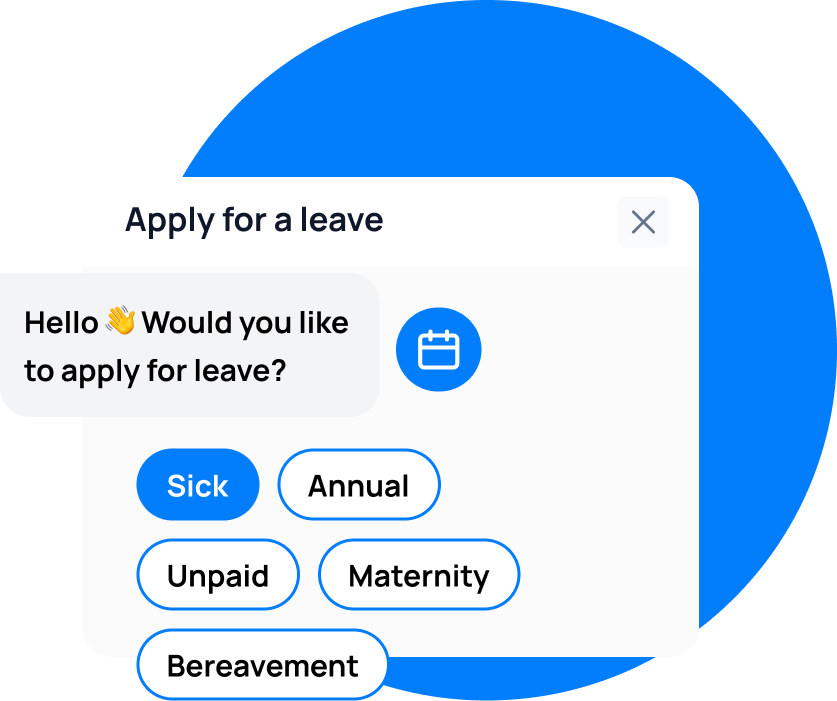
A leave management system that tracks FMLA eligibility across all 50 states, applies state-specific PFL rules, and flags multi-state compliance gaps keeps employers on the right side of a fragmented regulatory landscape.
Sources
- US Department of Labour — FMLA (primary source)
- National Partnership for Women and Families — State Paid Leave Laws
- American Progress — Paid Family and Medical Leave
This article is general information, not legal advice. US leave laws and state PFL benefit rates change frequently — confirm current figures with the US Department of Labour and the relevant state agencies.