In most UK jobs, you cannot simply refuse to work a bank holiday. There is no statutory right to bank holidays off, so if your contract requires you to work them — or is silent and your employer reasonably instructs you to — declining is a refusal of a lawful instruction, which can be treated as a disciplinary matter.
That is the default. It is not the whole picture. Four routes can genuinely give you the right to say no, and they are worth working through before you assume you have no choice.
Key Takeaways
- There is no statutory right to bank holidays off — GOV.UK confirms employers are not required to give paid leave on bank holidays.
- Your contract is the strongest starting point for a right to refuse.
- A refusal grounded in religion or belief, or in a disability-related adjustment, engages the Equality Act 2010 and must be handled differently.
- Booking the day as annual leave in advance is the practical route most people should use.
Why There Is No General Right to Refuse
UK law sets a quantity of paid holiday, not a schedule. The Working Time Regulations 1998 give almost every worker 5.6 weeks of paid leave, capped at 28 days. They say nothing about which days those are, and they attach no special legal status to the 8 bank holidays in England and Wales.
Retail, hospitality, healthcare, transport, emergency services, and manufacturing all operate on bank holidays. Contracts in those sectors routinely require it — sometimes in a clause buried in the hours-of-work section rather than under holiday.
Refusing a shift you are contractually obliged to work is misconduct. It rarely results in dismissal for a first offence, but it puts you on the wrong side of the process and weakens any later argument you make.
The Four Grounds That Can Let You Refuse
Work through these in order. The first that applies is your strongest position.
1. Your Contract Says You Do Not Work Bank Holidays
The clearest ground. If your written terms state that bank holidays are non-working days — or your contracted days are specified in a way that excludes them — your employer needs your agreement to change that. A unilateral change to contractual terms is a breach of contract.
Watch for the qualifier. “Bank holidays are normally non-working days” is much weaker than “you are not required to work bank holidays.” The word “normally” preserves the employer’s discretion.
2. Custom and Practice Has Made It a Term
If bank holidays have been treated as guaranteed days off for you and your colleagues consistently over several years, that practice can become an implied contractual term even without written wording. The test is whether the practice has been long-standing, consistent, and generally known.
One quiet year where a skeleton crew worked Boxing Day does not defeat it, but a mixed pattern usually does. Gather evidence — old rotas, past years’ payslips — before relying on this.
3. Religion or Belief Under the Equality Act 2010
A blanket requirement to work Christmas Day, Good Friday, or Easter Monday can indirectly disadvantage employees of certain faiths. Equally, a rigid bank holiday calendar built on Christian festivals can disadvantage employees who need time off for Eid, Diwali, Yom Kippur, or Vaisakhi instead.
This is not an absolute right to refuse. Indirect discrimination is lawful if the employer can objectively justify the requirement as a proportionate means of achieving a legitimate aim — genuine operational need usually qualifies. What is much harder to justify is refusing a swap request when one was available.
Ask for a swap rather than a refusal. It is a far more defensible position for you and a far harder one for your employer to turn down without a reason.
4. A Disability-Related Reasonable Adjustment
If a disability makes bank holiday working materially harder — a long shift, disrupted routine, reduced transport — adjusting the requirement can be a reasonable adjustment your employer is legally obliged to consider under the Equality Act 2010. Put the request in writing and connect it explicitly to the disability and the barrier.
The Practical Route: Book It as Annual Leave
Before any of this becomes a confrontation, use the mechanism that already exists: book the bank holiday as annual leave, early.
Most employers expect bank holiday requests months in advance. If you submit the request early and it is approved, the question of refusal does not arise. This is the cleanest solution for both sides and avoids the precedent-setting problems that come with a formal refusal.
If your employer forces you to take annual leave on a bank holiday when you would rather work it and take the time at another point, the position depends on whether the contract allows the employer to dictate when leave is taken. The Working Time Regulations allow employers to require notice of at least twice the length of the leave period being imposed, but some contracts go further.
What Happens If You Refuse Without Grounds
If you refuse a lawful instruction to work a bank holiday and have no contractual, Equality Act, or custom-and-practice defence, your employer can treat it as:
- Unauthorised absence — potentially triggering a disciplinary process
- Misconduct — which, if repeated, can lead to formal warnings
- Gross misconduct — only in exceptional circumstances where the refusal causes serious operational harm
Most employers would start with an informal conversation and a written record. The key risk is that repeated refusals build a pattern that justifies escalating the process.
Multi-Faith Workplaces: Best Practice
Employers with diverse teams should consider offering substitute days — allowing employees to swap a bank holiday they do observe for one that matters to their faith. This is not a legal requirement, but it is a proportionate way to manage indirect discrimination risk and is increasingly common in the UK public sector and larger private employers.
The alternative — a rigid bank holiday calendar with no flexibility — is legally riskier and more likely to generate formal complaints.
How Leave Balance Helps
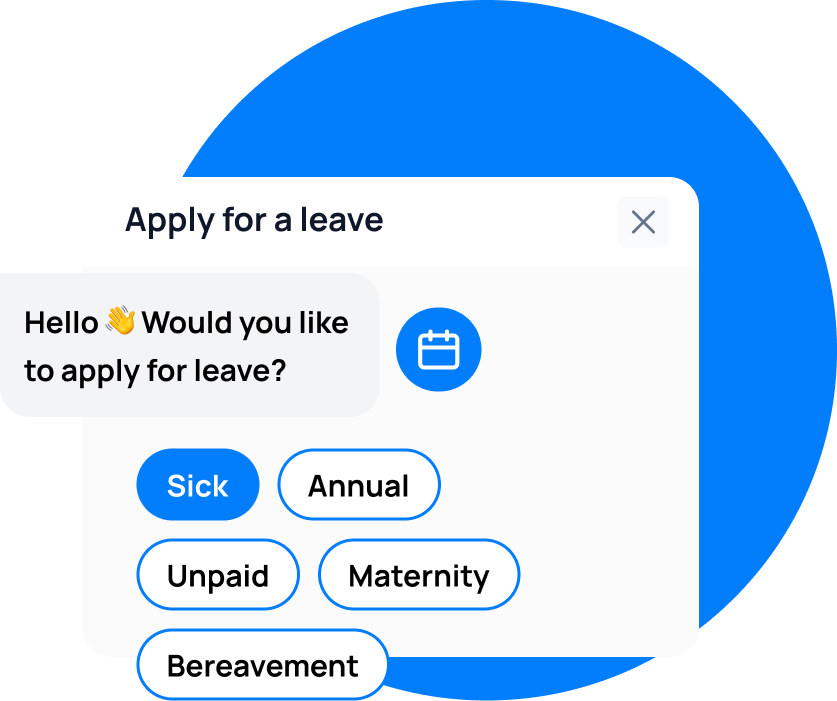
Leave Balance lets employees book bank holidays as annual leave through a self-service portal, and lets managers see at a glance which team members are available on any given bank holiday. For multi-site UK employers, the system applies the correct bank holiday calendar per nation automatically.
leave emails? Track your employee's leave with Leave Balance