Your employer can ask you for evidence that would satisfy a reasonable person that your personal/carer’s leave was taken for a genuine reason. That is the whole statutory test, set by section 107 of the Fair Work Act 2009 — there is no minimum number of days before evidence can be requested, and no fixed list of documents that must be accepted.
What the test does contain is a limit. The evidence requested must itself be reasonable in the circumstances, which is where most disputes actually land: not on whether evidence can be asked for, but on how much, how often, and how intrusive.
Key Takeaways
- The test is evidence that “would satisfy a reasonable person”, per the Fair Work Ombudsman.
- A medical certificate or a statutory declaration are the two standard forms of acceptable evidence.
- There is no one-day or three-day threshold in the NES — unlike New Zealand. Awards and agreements can add their own rules.
- The Fair Work Ombudsman does not consider it reasonable for an employer to contact your doctor or attend your appointment.
- No evidence when properly asked can mean no payment for the absence.
What Evidence Can My Employer Ask For When I Take Sick Leave?
Two forms of evidence do the job in almost every case.
A medical certificate from a registered health practitioner. That includes GPs, and in many circumstances also pharmacists, nurse practitioners, dentists and other registered practitioners acting within their scope. A certificate that states the employee was unfit for work on specified dates is sufficient — it does not need to name the condition.
A statutory declaration. Where a certificate could not reasonably be obtained — a one-day illness with no available appointment, an overnight family emergency, care for a household member — a statutory declaration made under the Statutory Declarations Act 1959 is a recognised alternative. Since 2024 Commonwealth statutory declarations can be made and witnessed digitally, which removes the old “I couldn’t find a JP” objection.
Your award or registered agreement may go further and specify when evidence is required and what type is acceptable. Where it does, that clause governs. Always check the award before writing a policy from scratch.
Is There a Minimum Number of Days Before Evidence Can Be Required?
Not in the NES. This surprises people who have worked in New Zealand, where an employer generally cannot require proof until an absence reaches three consecutive days without meeting the cost.
In Australia, an employer can in principle request evidence for a single day. Whether doing so is reasonable is a separate question, and reasonableness is judged on the circumstances: the pattern of absence, the operational impact, whether the request is applied consistently, and whether it would be practical for the employee to comply.
Most Australian employers set their own threshold in policy. A common and defensible structure:
| Absence | Typical policy requirement |
|---|---|
| 1 day, no pattern | Self-certification through the leave system |
| 2 or more consecutive days | Medical certificate or statutory declaration |
| Day before or after a public holiday or approved leave | Medical certificate |
| Identified pattern (e.g. repeated Mondays) | Certificate for each occurrence, on written notice |
| Carer’s leave, any length | Statutory declaration acceptable |
A written threshold applied uniformly is far easier to defend than ad hoc requests made only of certain employees.
What Your Employer Cannot Require
Four limits are worth knowing precisely.
1. They cannot demand a diagnosis
A certificate confirming unfitness for work on stated dates satisfies the test. Insisting an employee disclose the nature of their illness — particularly mental health, reproductive health, or a chronic condition — goes beyond what a reasonable person needs and risks breaching privacy obligations and disability discrimination law.
2. They cannot contact your doctor for more information
The Fair Work Ombudsman states plainly that it does not consider it reasonable for an employer to contact an employee’s doctor for further information, nor to attend a medical appointment with the employee unless the employee has requested it. Your treating relationship is not an HR channel.
3. They cannot force you to use their nominated doctor
Requiring an employee to see a company-nominated practitioner instead of their own GP for ordinary short-term sick leave is generally unreasonable. Independent medical examinations have a legitimate place in long-term absence and return-to-work management, but that is a different process with its own consultative obligations — not a substitute for a routine certificate.
4. They cannot apply the rule selectively
Requiring evidence from one employee and not another in identical circumstances undermines the reasonableness of the request and can support a discrimination or adverse action claim.
What Happens If You Don’t Provide Evidence
If evidence is properly requested and not provided, the employer may refuse to pay for the absence. That is the direct consequence written into the scheme.
It is important to be precise about what that does and does not mean:
- It does not automatically make the absence unauthorised. Non-payment and misconduct are separate findings.
- It does not permit instant dismissal. Dismissing an employee for a single unevidenced absence is very unlikely to be a valid reason.
- It does not remove the temporary absence protection. But that protection is tied to absences supported by a medical certificate or statutory declaration — which is precisely why supplying evidence matters when the absence runs long.
A Reasonableness Test You Can Actually Apply
When you are unsure whether a request crosses the line, run it through four questions. If any answer is no, rethink the request.
- Proportionate? Is the evidence you are asking for proportionate to the length and pattern of the absence?
- Practical? Could this employee realistically obtain it — same-day GP appointment, cost, remote location, care responsibilities?
- Private? Does it stop at “unfit for work on these dates”, or does it reach into diagnosis and treatment?
- Consistent? Would you make the same request of every employee in the same situation, and can you show that you have?
Proportionate, practical, private, consistent. A request that passes all four is very likely to satisfy the reasonable person standard; one that fails on privacy or consistency is the kind that ends up in front of the Fair Work Commission.
What This Means for You
- Employees: notify as soon as practicable and say how long you expect to be away. Keep certificates and declarations — they are what protect a longer absence.
- Employers: write your evidence threshold into policy, publish it, and apply it identically to probationers and long-serving staff. Ad hoc requests are the risk, not evidence requests as such.
- Store the evidence properly. Medical information is sensitive. Restrict access to those who need it and keep it out of general leave reporting, in line with employer leave record obligations.
- Check the award first. Where an award or agreement specifies evidence rules, they override your policy preference.
For the entitlement these rules sit on top of, see personal leave, sick leave and carer’s leave in Australia and sick leave vs personal leave.
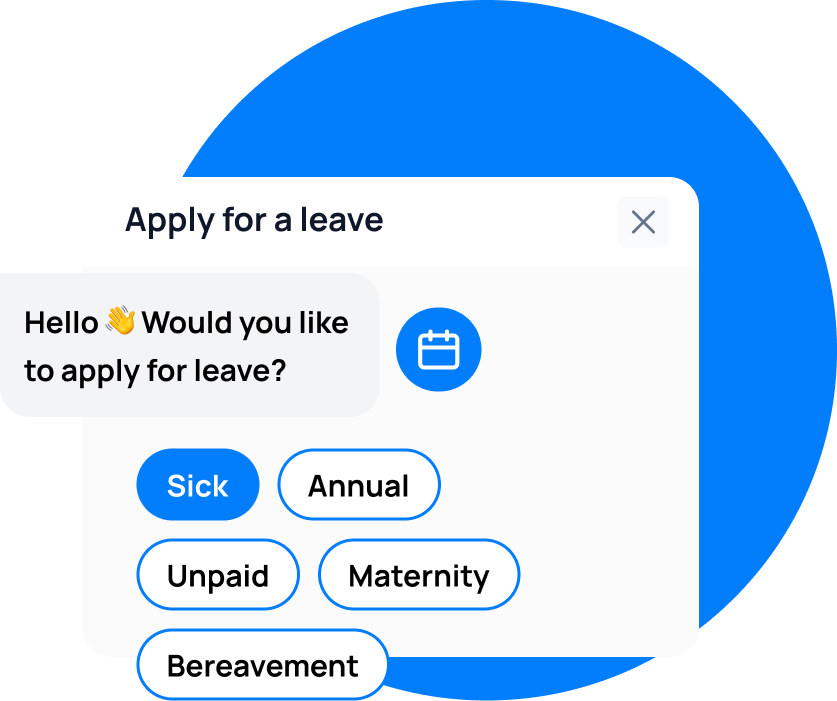
Leave Balance lets you set evidence requirements per leave type and per absence duration, prompt for the document at request time, and keep it attached to the record with restricted visibility — so the policy is applied the same way every time, by the system rather than by whoever is on duty.
leave emails? Track your employee's leave with Leave Balance
This article is general information about Australian workplace entitlements, not legal advice. Check your applicable modern award or enterprise agreement, or contact the Fair Work Ombudsman, for advice about your situation.