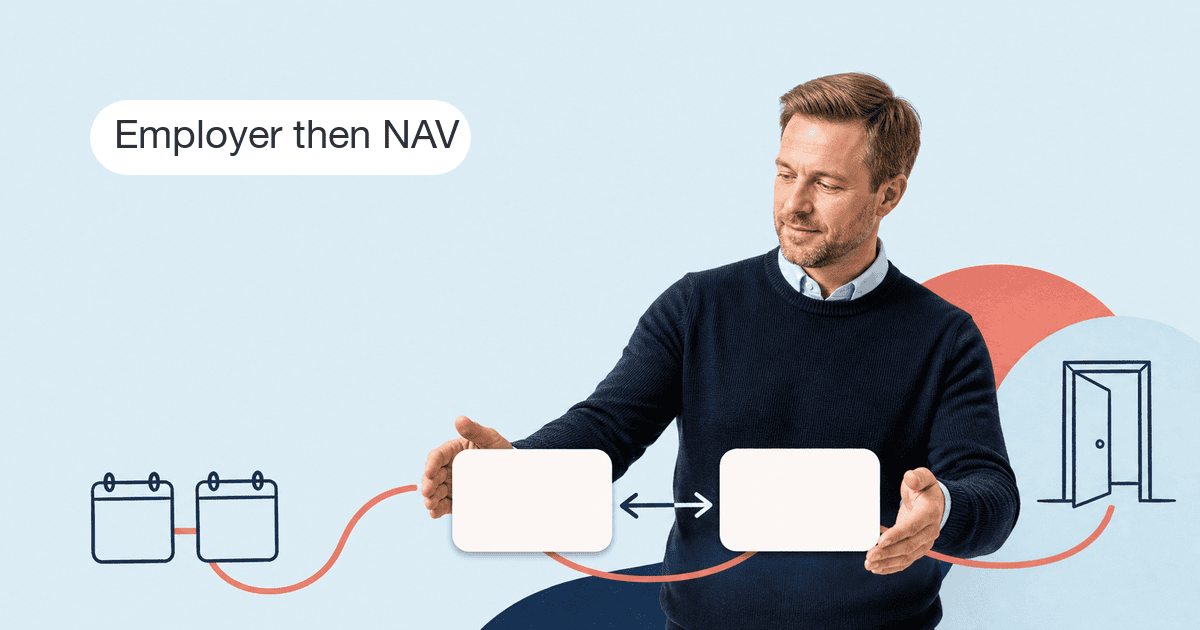
Norway’s sick leave law provides employees with 100% pay coverage for up to 52 weeks of illness, split between employer-funded days and the National Insurance Scheme (NAV). The employer pays directly for the first 16 calendar days, after which NAV takes over with sickness benefit (sykepenger).
Key Takeaways
- Employers pay full salary for the first 16 calendar days under the Sick Pay Act (Sykelønnsloven)
- NAV pays 100% of qualifying income up to a ceiling for weeks 3–52
- A medical certificate is required from day 4 (doctor’s note) or day 8 (self-certification possible for the first 3 days)
- Employers have a three-year active follow-up duty (oppfølgingsplikt) from the first day of sick leave
- The karensperiode (waiting period) of 3 unpaid days was abolished in 2019
Norway’s Sick Leave Entitlement
Norway’s sick leave system gives employees generous coverage. Under the Sick Pay Act (Sykelønnsloven), employees who are members of the Norwegian National Insurance Scheme are entitled to sick pay for up to 52 weeks within a rolling 12-month period.
The employer pays for the first 16 calendar days (the employer’s period), and NAV pays for weeks 3 through 52. Days 1 and 2 after the employer’s period are unpaid (the former karensperiode), but from week 3 the employee receives full compensation from NAV.
Self-employed individuals and those without employer sick pay entitlements can claim directly from NAV after a qualifying period.
Who Pays for Sick Leave?
| Period | Pay Rate | Who Pays |
|---|---|---|
| Days 1–16 (employer’s period) | 100% of salary | Employer |
| Days 17–19 (NAV waiting days) | Unpaid (formerly karensperiode) | Neither |
| Weeks 3–16 | 100% of qualifying income | NAV (employer forwards pay) |
| Weeks 17–52 | 100% of qualifying income | NAV directly to employee |
Note: In many cases, the employer continues to pay the employee during weeks 3–16 and reclaims the amount from NAV, providing a seamless payment experience.
Sick Leave Pay Rates
| Period | Pay Rate | Ceiling (2026 approx.) | Source |
|---|---|---|---|
| Employer period (days 1–16) | 100% of salary | NAV maximum (G) × 6 | Sykelønnsloven |
| NAV weeks 3–14 | 100% of qualifying income | Up to 6G (approx. NOK 690,000) | National Insurance Act |
| NAV weeks 15–52 | 100% of qualifying income | Up to 6G | National Insurance Act |
| Parental sick leave (weeks 17–30) | 100% | Up to 6G | National Insurance Act |
The “G” (grunnbeløp) is the national base amount, which was approximately NOK 115,000 in 2025. The maximum qualifying income for sickness benefit is 6G per year.
Medical Certificate Requirements
Norway uses a tiered medical documentation system:
- Days 1–3: Employee can self-certify (egenmelding) — no doctor’s note required
- Days 4–16: A medical certificate from a doctor is required, though the employer may accept self-certification for the first 4 days if agreed in the employment contract
- From day 17: NAV requires ongoing medical documentation and may request an independent medical assessment (IMR)
Employers who want to require a medical certificate from day 1 must state this in the employment contract. Many collective agreements limit this right.
How to Calculate Sick Pay in Norway
Example: An employee earning NOK 600,000/year is off sick for 30 calendar days.
- Daily salary: NOK 600,000 ÷ 260 working days = NOK 2,308/day
- Employer period (16 calendar days): 12 working days × NOK 2,308 = NOK 27,696
- NAV waiting days (days 17–19): 3 days unpaid
- NAV weeks 3–4 (days 20–30): 8 working days × NOK 2,308 = NOK 18,464 (paid by NAV)
Total paid to employee: NOK 27,696 (employer) + NOK 18,464 (NAV) = NOK 46,160
Active Follow-Up Duties
Norwegian employers have a statutory oppfølgingsplikt (active follow-up duty) that begins on the first day of sick leave. The obligation has three phases:
- Month 1 (week 1–4): The employer must have a conversation with the employee about how to return to work
- Month 2–3 (week 5–12): A formal meeting (dialogmøte 1) must be held, with a plan for adjusted duties or gradual return
- From month 4: NAV may convene a formal follow-up meeting (dialogmøte 2) with the employer, employee, and sometimes the primary care physician
Failing to meet the follow-up duty can result in financial penalties from NAV and potential liability in wrongful dismissal claims.
Employer Obligations and Penalties
Norwegian employers must:
- Report sick leave to NAV within the required timeframe
- Pay sjuklön during the employer’s 16-day period
- Reclaim NAV sickness benefit on behalf of the employee during weeks 3–16
- Conduct the required follow-up meetings at the prescribed intervals
- Offer adjusted duties where reasonably possible
- Maintain sick leave records for at least 3 years after the employee leaves
Non-compliance can result in NAV refusing reimbursement, fines, or increased employer contributions to the National Insurance Scheme.
Comparison With Other Countries
| Country | Sick Days | Pay | Certificate Required |
|---|---|---|---|
| Norway | 52 weeks (split employer/NAV) | 100% | Day 4 (or day 1 if contractually agreed) |
| UK | 28 weeks SSP | £116.75/week | Day 7 |
| Australia | 10 days personal/carer’s leave | Full rate | 2+ consecutive days |
| US | Varies by state | Varies | Employer policy |
FAQ
What is the karensperiode and was it abolished?
The karensperiode was a 1-day unpaid waiting period after the employer’s 16-day sick pay period. It was effectively abolished in July 2019, meaning employees now receive NAV sickness benefit from the first day after the employer’s period ends (with 2 waiting days in between).
Can an employer fire someone who is on long-term sick leave?
Norwegian law provides strong protection against dismissal during sick leave. An employer can only dismiss an employee on sick leave if there are documented reasons unrelated to the illness, such as redundancy or gross misconduct. Dismissal during sick leave carries a high burden of proof and is frequently challenged in court.
How does NAV calculate qualifying income for sickness benefit?
NAV uses the employee’s income from the 12 months before the sick leave began, up to the maximum of 6G per year. For employees with variable income, NAV takes an average of the qualifying period. Income above 6G is not included in the benefit calculation.
leave emails? Track your employee's leave with Leave Balance
