The Family and Medical Leave Act (FMLA), codified at 29 USC § 2601, is the federal law that guarantees eligible employees up to 12 weeks of unpaid, job-protected leave per year. If you employ 50 or more people, FMLA applies to your business — and getting it wrong can cost you six figures in back pay, liquidated damages, and legal fees.
This guide covers every FMLA obligation you need to know as an employer in 2026: who qualifies, what leave you must provide, what notice and paperwork you can require, and how to avoid the most common compliance mistakes.
Key Takeaways
- FMLA applies to employers with 50+ employees within a 75-mile radius of the worksite.
- Eligible employees get up to 12 weeks of unpaid, job-protected leave per year (26 weeks for military caregiver leave).
- You must maintain group health insurance during leave and restore the employee to the same or equivalent position.
- Violations can result in back pay, liquidated damages, attorneys’ fees, and penalties exceeding $100,000 for willful violations.
What Is FMLA and Who Does It Cover?
FMLA was signed into law in 1993 to balance the demands of the workplace with the needs of families. The law entitles eligible employees of covered employers to take unpaid, job-protected leave for specified family and medical reasons, with continuation of group health insurance coverage under the same terms and conditions as if the employee had not taken leave.
Employer Eligibility: Does FMLA Apply to You?
You’re a covered employer under FMLA if you meet both of these conditions:
- You employed 50 or more employees for at least 20 calendar weeks in the current or preceding calendar year. This includes full-time, part-time, and temporary workers.
- Those employees work within a 75-mile radius of the worksite where the employee requesting leave works.
Private-sector employers of all sizes are covered. Public agencies (state, local, and federal) and public and private elementary and secondary schools are covered regardless of the number of employees they employ.
Employee Eligibility: Who Can Take FMLA Leave?
An employee is eligible for FMLA leave if they meet all three of the following criteria:
- They’ve worked for you for at least 12 months. These don’t need to be consecutive — prior periods of employment count if the break in service was less than seven years.
- They’ve worked at least 1,250 hours in the 12 months immediately preceding the leave request. That’s roughly 24 hours per week.
- They work at a location where you have at least 50 employees within a 75-mile radius.
You can require employees to provide this eligibility information, but you cannot apply stricter standards than the federal minimums.
Six Qualifying Reasons for FMLA Leave
FMLA leave is not discretionary. If an eligible employee requests leave for a qualifying reason, you must grant it. The six qualifying reasons are:
1. Birth, Adoption, or Foster Care Placement
Employees are entitled to 12 weeks of leave for the birth of a child, for placement of a child with them for adoption, or for placement of a child in foster care. Both mothers and fathers qualify. This leave must conclude within 12 months after the birth or placement.
2. Serious Health Condition of the Employee
A “serious health condition” under FMLA means an illness, injury, impairment, or physical or mental condition that involves inpatient care or continuing treatment by a healthcare provider. Examples include pregnancy complications, cancer treatment, recovery from surgery, and chronic conditions like diabetes or epilepsy that require periodic treatment.
3. Serious Health Condition of an Immediate Family Member
Employees can take FMLA leave to care for a spouse, son, daughter, or parent with a serious health condition. Note that “son or daughter” includes biological, adopted, foster, step, legal ward, or a child for whom the employee stood in loco parentis. In-laws and siblings are not covered under federal FMLA (though some state laws expand this).
4. Qualifying Exigency From Military Deployment
When a covered military member (spouse, son, daughter, or parent) is called to active duty in support of a contingency operation, the employee may take leave for qualifying exigencies. These include:
- Short-notice deployment (up to seven days)
- Attending military ceremonies and events
- Making childcare and financial arrangements
- Attending counseling sessions
- Spending time with the deployed family member during a rest and recuperation break (up to five days)
- Post-deployment activities
This leave is capped at 12 weeks per year.
5. Military Caregiver Leave
Employees may take up to 26 weeks of leave during a single 12-month period to care for a covered service member with a serious injury or illness. The 26-week entitlement applies only to this specific type of leave — it does not increase the standard 12-week FMLA entitlement.
6. Qualifying Reasons Under State Paid Leave Laws
Several states have enacted paid family and medical leave programs that run alongside or extend FMLA protections. We’ll cover these interactions later in this guide.
Your Obligations as an Employer
FMLA isn’t just about granting leave. You have specific ongoing obligations before, during, and after an employee’s absence.
Maintain Health Insurance Coverage
You must maintain the employee’s group health insurance coverage on the same terms as if the employee continued to work. If the employee was paying a portion of the premium before leave, you can require them to continue paying that share. If they don’t pay, you may drop their coverage — but only after providing 30 days’ written notice.
Job Restoration
When the employee returns from FMLA leave, you must restore them to the same position they held before leave, or to an equivalent position with identical pay, benefits, and other terms and conditions of employment. An equivalent position must have the same status, responsibilities, skill level, and authority.
There is an exception for salaried employees who are among the highest-paid 10% of your workforce. You can deny restoration to these “key employees” only if doing so is necessary to prevent substantial and grievous economic injury to your business operations — and you must notify the employee in writing at the start of leave.
Post FMLA General Notice
You must post a FMLA general notice in a conspicuous place at every worksite where it can be seen by employees and applicants. You must also include FMLA information in employee handbooks or distribute it to new hires.
No Interference or Retaliation
You cannot interfere with, restrain, or deny the exercise of any FMLA right. You also cannot discriminate or retaliate against any employee for using FMLA leave. Using FMLA leave cannot be held against an employee in any employment action — including hiring, promotion, or termination.
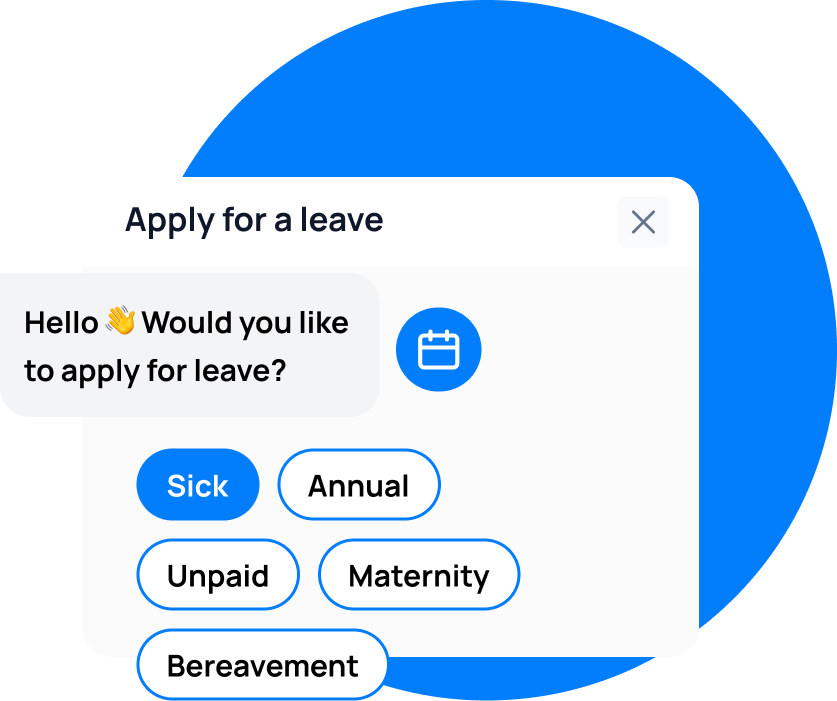
leave emails? Track your employee's leave with Leave Balance
Intermittent and Reduced-Schedule Leave
FMLA leave doesn’t have to be taken all at once. Employees may take leave intermittently (in separate blocks of time) or on a reduced schedule (reducing the employee’s usual weekly schedule) when medically necessary or for qualifying exigencies related to military deployment.
Here’s what you need to know about intermittent leave:
- Employees must make a reasonable effort to schedule intermittent leave so it doesn’t disrupt your operations.
- You can temporarily transfer an employee to an available alternative position with equivalent pay and benefits if that position better accommodates recurring intermittent leave.
- Intermittent leave for birth, adoption, or foster care placement requires your advance agreement.
- You must track intermittent leave to the nearest hour (or the shorter increment your payroll system uses).
For reduced-schedule leave, each week in which the employee takes leave counts as a fraction of a week of FMLA entitlement. If an employee normally works 40 hours and drops to 20 hours, that week counts as 0.5 weeks of their 12-week entitlement.
Notice Requirements
Employee Notice for Foreseeable Leave
When leave is foreseeable (such as the birth of a child or scheduled surgery), the employee must provide at least 30 days’ advance notice before the leave is to begin. If the need for leave becomes known less than 30 days in advance, notice must be given as soon as practicable — generally within one to two business days of learning the need.
Notice for Unforeseeable Leave
When leave is unforeseeable (such as a sudden medical emergency), the employee must provide notice as soon as practicable, which typically means within one to two business days of the event that triggered the need. They don’t need to mention “FMLA” specifically — but they do need to provide enough information for you to determine whether the leave qualifies.
Your Response as the Employer
Once an employee gives proper notice, you must respond within five business days. You must provide a Notice of Eligibility and Rights & Responsibilities letter, and if the leave is for a medical reason, you must also provide a Designation Notice within those five days. If you need more information to determine whether the leave qualifies, you must notify the employee and give them at least 15 calendar days to provide the necessary certification.
Medical Certification
You have the right to request medical certification to support an employee’s FMLA leave request. Here’s what you can and cannot do:
- You can request certification from a healthcare provider for leave due to a serious health condition. The WH-380-E form covers employee leave, and WH-380-F covers family member leave.
- You must give the employee at least 15 calendar days to provide certification.
- You can request recertification every 30 days (or every 6 months if the condition lasts more than a year), but only in connection with an absence.
- You can get a second opinion at your own expense if you have reason to doubt the first certification.
- You cannot require the employee to provide more information than what’s on the DOL forms.
- You cannot contact the healthcare provider directly without the employee’s written authorization.
If the employee fails to provide adequate certification within the allotted time, you may deny the leave request — but you must provide written notice explaining why.
Recordkeeping Requirements
You must retain FMLA-related records for at least three years. This includes:
- Basic payroll and employee data (such as name, address, rate of pay, and hours worked)
- Dates FMLA leave was taken
- Copies of FMLA notices provided to employees
- Any documents describing employee benefits or employer policies regarding leave
- Records of any disputes regarding FMLA designation
These records must be made available for inspection by representatives of the Department of Labor’s Wage and Hour Division upon request.
Penalties for Non-Compliance
FMLA violations carry serious financial and legal consequences. The DOL’s Wage and Hour Division can investigate complaints, and employees can file private lawsuits.
What Counts as a Violation?
- Interference: Discouraging employees from taking FMLA leave, refusing to approve qualifying leave, or imposing improper conditions on leave.
- Retaliation: Firing, demoting, disciplining, or otherwise punishing an employee for requesting or taking FMLA leave.
- Failure to restore: Not returning the employee to the same or equivalent position after leave.
- Failure to maintain benefits: Dropping health coverage without proper notice.
Damages and Financial Exposure
Violations can result in:
- Actual monetary losses — back pay, lost wages, and the value of lost benefits
- Liquidated damages — equal to the amount of actual damages, unless you can show you acted in good faith and had reasonable grounds for believing you were not violating the FMLA
- Attorneys’ fees and costs — the prevailing party can recover these, and employees often win fee awards
- Civil money penalties — the DOL can assess penalties of up to [varies by violation and year] for willful violations
For willful violations, liquidated damages and actual damages are stacked. A single employee lawsuit can easily exceed $100,000 when you factor in back pay, lost benefits, doubled damages, and attorneys’ fees. Class or collective actions multiply that exposure dramatically.
How FMLA Interacts With State Leave Laws
FMLA sets a floor, not a ceiling. Many states have enacted leave laws that provide greater protections than the federal baseline. When state and federal law overlap, the employee generally gets the benefit of whichever law is more generous.
States With Paid Family and Medical Leave
Several states have implemented or are rolling out paid family and medical leave programs that work alongside FMLA:
- California: The California Family Rights Act (CFRA) and State Disability Insurance (SDI) / Paid Family Leave (PFL) provide up to 8 weeks of paid bonding leave and partial wage replacement for medical leave. CFRA also covers a broader set of family relationships than FMLA.
- New York: Paid Family Leave provides up to 12 weeks of paid leave at a percentage of the employee’s average weekly wage for bonding, caring for a seriously ill family member, or qualifying military exigencies.
- New Jersey: The Family Leave Insurance (FLI) and Temporary Disability Insurance (TDI) programs provide paid leave for bonding and medical conditions.
- Washington, Massachusetts, Connecticut, Oregon, Colorado, Maryland, and Minnesota also have paid family and medical leave programs, with more states adding coverage through 2026 and beyond.
In most of these states, paid leave runs concurrently with FMLA leave. The employee’s 12-week FMLA entitlement and the state paid leave entitlement count against each other simultaneously. This means the total time away doesn’t double — it overlaps.
If you operate in multiple states, you need to track the rules for each jurisdiction. Our paid leave laws by state guide breaks down every state’s current leave requirements.
How to Build an FMLA-Compliant Leave Policy
Your employee handbook should include a clear FMLA policy that covers these essentials:
- Eligibility criteria — spell out the 12-month, 1,250-hour, and 75-mile-radius requirements.
- Qualifying reasons — list all six qualifying reasons in plain language.
- Notice procedures — explain the 30-day rule for foreseeable leave and the “as soon as practicable” standard for unforeseeable leave.
- Certification requirements — state that medical certification may be required and when it must be provided.
- Benefits during leave — explain how health insurance, accrued PTO, and other benefits are handled.
- Job restoration — clearly state your commitment to restoring employees to the same or equivalent position.
- Anti-retaliation — explicitly state that FMLA leave will not be used against any employee.
If you’re building your leave policy from scratch, our PTO policy creation guide walks you through writing a comprehensive policy that accounts for both federal and state requirements.
FAQ: Common FMLA Questions From Employers
Can I require employees to use paid leave before FMLA leave?
You may require employees to use their accrued paid vacation, personal, or family leave concurrently with unpaid FMLA leave. However, you cannot require them to use sick leave unless the FMLA leave is for the employee’s own serious health condition. Some states have their own rules — for instance, California’s regulations restrict when employers can force employees to substitute paid leave.
Does FMLA apply to remote employees?
Yes. For remote employees, the 75-mile radius is measured from the employee’s home office to the nearest worksite. If that worksite has 50+ employees within 75 miles, the remote employee is covered.
Can I contact an employee on FMLA leave?
You can make limited contact for legitimate business purposes, such as passing along urgent information about benefits enrollment deadlines. However, you cannot call repeatedly to check on the employee’s health, pressure them to return early, or assign work. Any contact that could reasonably be perceived as discouraging leave use can constitute interference.
What if an employee doesn’t return to work after FMLA leave?
If the employee fails to return and does not have a qualifying reason for the failure to return, you may recover the cost of the health insurance premiums you paid during their leave. You must give the employee at least 30 days to return before pursuing recovery.
Do small businesses (under 50 employees) have any FMLA obligations?
No. FMLA does not apply to employers with fewer than 50 employees. However, some states have family leave laws with lower employee thresholds. Always check your state-specific requirements in addition to federal law.
Can two spouses who work for the same employer both take FMLA leave?
Yes, but their combined FMLA leave for the same qualifying reason (birth, adoption, foster care, or to care for the same seriously ill parent) is limited to a combined total of 12 weeks. They are each still individually entitled to 12 weeks for their own qualifying reasons, such as their own serious health condition.
Stay Compliant Without the Headache
Tracking FMLA leave manually — especially intermittent leave, overlapping state laws, and recertification deadlines — is a compliance minefield. A single missed deadline or improper designation can expose your business to costly litigation.
Leave Balance automates leave request workflows, tracks entitlement balances in real time, and gives you an audit trail for every leave decision. Start your free trial and get your FMLA tracking under control.