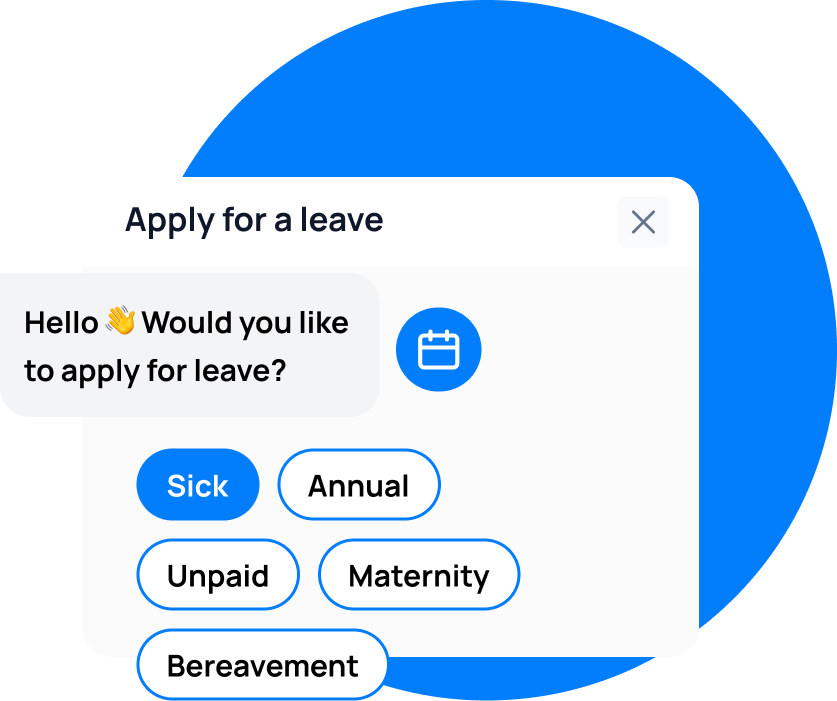
A leave management system is software that automates the process of requesting, approving, tracking, and reporting on employee time off. It replaces spreadsheets, email chains, and paper forms with a centralised platform that gives employees, managers, and HR a single source of truth for leave balances, policies, and approvals.
Every business with more than a handful of employees eventually hits the limits of manual leave tracking. A leave management system solves the coordination problem — who is off, when, and whether the business can absorb the absence.
Key Takeaways
- A leave management system centralises leave requests, approvals, balances, and policy enforcement in one platform.
- Key features include self-service booking, automated accrual, approval workflows, calendar integration, and real-time reporting.
- Spreadsheets and email-based systems create errors, compliance gaps, and administrative overhead that grow with headcount.
- Modern systems enforce award and policy rules automatically, reducing the risk of overpayments or underpayments.
- The right system scales from 10 to 10,000 employees without requiring a process redesign.
What Does a Leave Management System Do?
At its core, a leave management system handles five functions:
- Leave requests — Employees submit requests through a web or mobile interface, selecting leave type and dates.
- Approvals — Managers review and approve or reject requests based on team availability and policy rules.
- Balance tracking — The system automatically calculates and updates leave balances as leave is taken, accrued, or adjusted.
- Policy enforcement — Rules around notice periods, blackout dates, carryover limits, and eligibility are applied automatically.
- Reporting — HR and finance get real-time visibility into leave liabilities, team coverage, and usage trends.
Each function eliminates manual work. Together, they transform leave from an administrative burden into a managed process with audit trails and compliance guarantees.
Key Features to Look For
Not all leave management systems are equal. The features that matter depend on your team size, industry, and jurisdiction. Here are the core capabilities to evaluate:
Self-Service Booking
Employees should be able to request leave from any device without contacting HR. The interface should show their current balance, upcoming approved leave, and any policy restrictions before they submit.
Automated Accrual Calculation
The system should calculate leave accrual based on each employee’s start date, employment type, and working pattern. This eliminates the manual spreadsheet math that leads to overpayments and disputes. For a deeper look at accrual mechanics, see our guide on leave accrual rates.
Approval Workflows
Look for configurable multi-level approval chains. A request might need manager approval first, then HR approval if it exceeds a certain duration. The workflow should handle delegations — if a manager is on leave, the request routes to their backup.
Calendar Integration
Approved leave should sync with team calendars (Google Calendar, Outlook, Microsoft 365) so managers can see absences at a glance. This is one of the most-used features in practice.
Award and Policy Rules Engine
For Australian employers, the system should understand leave loading obligations, Fair Work award provisions, and NES entitlements. For UK employers, it should handle Working Time Regulations and bank holiday logic. The rules engine should be configurable without requiring a developer.
Reporting and Analytics
At minimum, the system should report on:
- Individual and team leave balances
- Upcoming absences (this week, this month, this quarter)
- Leave liability estimates for finance
- Usage trends by department, leave type, or period
- Approaching expiry dates for carryover limits
Mobile Access
A mobile-friendly interface or dedicated app ensures remote and frontline workers can request leave without needing desk access. This is critical for industries like hospitality, retail, and manufacturing.
Leave Management System vs Spreadsheets
Many businesses start with a shared spreadsheet. It works at five employees. It breaks at fifty.
| Capability | Spreadsheet | Leave Management System |
|---|---|---|
| Accuracy | Manual entry, formula errors, version conflicts | Automated calculations, single source of truth |
| Approval tracking | Email chains, no audit trail | Built-in workflows with timestamps |
| Policy enforcement | Manual checking, inconsistent | Automatic rule application |
| Balance tracking | Prone to drift from actual entitlements | Real-time, award-compliant accrual |
| Reporting | Manual pivot tables, stale data | Live dashboards and scheduled reports |
| Compliance | Relies on HR knowledge | Enforced by the system |
| Scalability | Breaks down past ~30 employees | Scales to thousands |
| Employee experience | Email HR, wait for response | Self-service, instant confirmation |
The hidden cost of spreadsheets is not the time spent updating them — it is the errors that slip through. A miscalculated accrual or missed policy rule can result in overpayments that are difficult to recover or underpayments that create legal exposure.
Benefits of a Leave Management System
Reduced Administrative Burden
HR teams typically spend 5-10 hours per month managing leave manually for a 50-person company. A system reduces this to near-zero for routine requests, freeing HR to focus on strategic work.
Improved Compliance
Automated rules ensure that statutory minimums are met, award provisions are applied, and policy exceptions are documented. This is particularly valuable in Australia, where multiple overlapping awards and the NES create a complex compliance landscape.
Better Workforce Planning
Managers can see upcoming absences weeks or months in advance, allowing them to plan coverage and avoid understaffing. This is the difference between discovering someone is off tomorrow and seeing it in a dashboard three weeks ahead.
Accurate Leave Liability Reporting
Finance teams get real-time data on accrued leave, including leave loading obligations. This eliminates the end-of-quarter scramble to reconcile leave balances for financial reporting.
Employee Satisfaction
Employees value transparency and autonomy. Being able to check their own balance, see team availability, and request leave without emailing HR improves the employee experience. This is especially true for remote and distributed teams where informal check-ins are not possible.
Implementation Best Practices
1. Audit Current Leave Data
Before migrating, reconcile all existing leave balances. Export current balances from spreadsheets or payroll systems and verify them against employment contracts and award provisions. Start clean.
2. Define Your Policy Rules in Writing
Document every rule the system needs to enforce: accrual rates, carryover limits, notice periods, blackout dates, and eligibility criteria. If the rules are not documented, the system cannot enforce them consistently.
3. Pilot with One Team
Roll out the system to a single team before going company-wide. This surfaces workflow issues, training gaps, and configuration problems without disrupting the entire business.
4. Train Managers First
Managers are the primary users of approval workflows. Train them before employees so they are ready to process requests from day one. A 30-minute session covering request review, delegation, and reporting is typically sufficient.
5. Communicate the Change
Explain to employees why the change is happening, what the new process looks like, and when it takes effect. Provide a simple FAQ and a support channel for questions during the transition.
Frequently Asked Questions
How much does a leave management system cost?
Costs vary by provider and team size. Many SaaS leave management tools charge per employee per month, ranging from $2 to $10 per employee. For a 50-person team, expect to pay between $100 and $500 per month. Some providers, like Leave Balance, offer flat-rate pricing regardless of team size.
When should a company move from spreadsheets to a leave management system?
The tipping point is typically around 20-30 employees. Beyond that, the volume of requests, the complexity of approval chains, and the risk of calculation errors make spreadsheets more expensive than the software they replace. If you are spending more than a few hours per month on leave administration, it is time to switch.
Can a leave management system handle multiple leave types?
Yes. A good system supports annual leave, personal leave, long service leave, parental leave, compassionate leave, and custom leave types. Each type can have its own accrual rules, eligibility criteria, and approval workflows.
Does a leave management system integrate with payroll?
Most modern systems integrate with popular payroll platforms. This ensures that leave payments, including leave loading, are accurately reflected in payslips without manual data entry. Check that your system integrates with your specific payroll provider before committing.
Is a leave management system secure?
Reputable providers offer data encryption, role-based access controls, and compliance with Australian Privacy Principles (APPs) under the Privacy Act 1988. Employee leave data is sensitive personal information and should be stored in systems that meet these standards.
leave emails? Track your employee's leave with Leave Balance