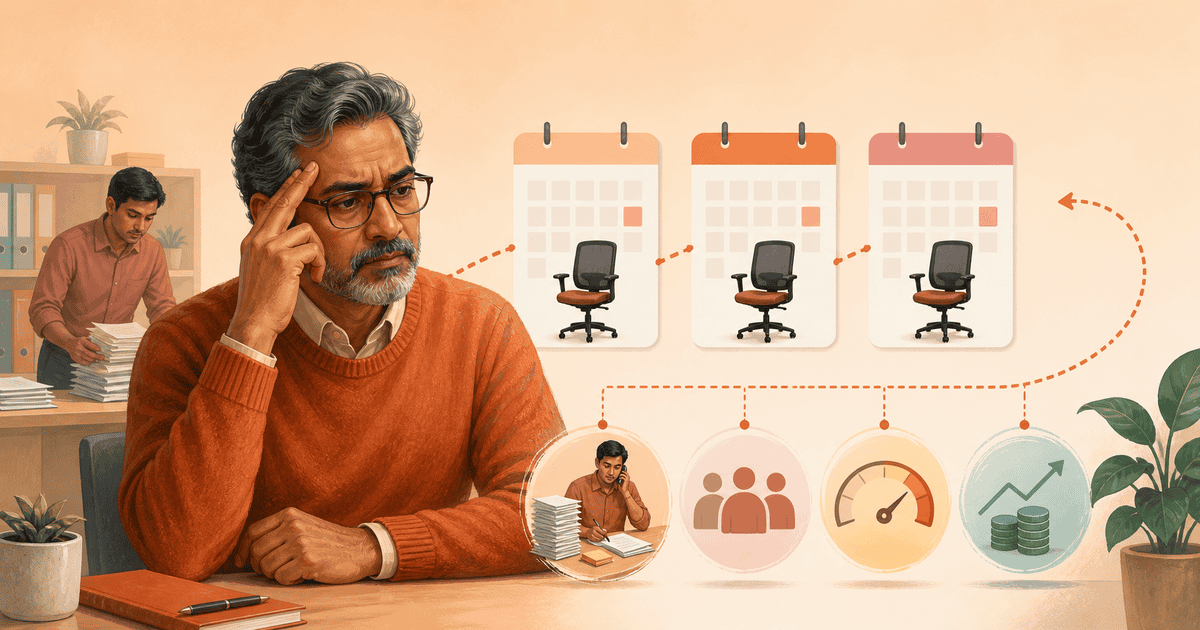
Absenteeism is a pattern of habitual, avoidable absence from scheduled work. It describes repeated unplanned absence that is not explained by genuine illness, disability, or an agreed entitlement. One employee with pneumonia is absence. The same employee taking single days every third Monday for a year is absenteeism.
The word gets used loosely, and that looseness causes real damage. Label legitimate sickness as absenteeism and you get a disengaged workforce plus a discrimination risk. Ignore genuine absenteeism and it spreads.
Key Takeaways
- Absenteeism is habitual avoidable absence, not any absence.
- The UK lost 185.6 million working days to sickness and injury in 2022, a rate of 2.6% (ONS).
- Frequency, not duration, is the signal that separates absenteeism from illness.
- Engagement is the strongest lever: top-quartile engaged teams show 81% lower absenteeism (Gallup).
What Is Absenteeism, Exactly?
Absenteeism is repeated, avoidable, unplanned absence from work. It is a subset of total absence, and a small one: the ONS found minor illnesses such as coughs and colds were the single most common reason for UK sickness absence in 2022, with musculoskeletal problems and mental health conditions also prominent. Most absence is exactly what it says it is.
The defining feature of absenteeism is the pattern, not the cause given. Look for:
- Frequency over duration. Many short episodes rather than one long one.
- Predictability. Clustering around weekends, paydays, specific shifts, or particular projects.
- No progression. Absence that never resolves into a diagnosis, adjustment, or recovery plan.
- Notification behaviour. Consistently late or minimal notification.
None of these alone proves anything. A single parent with unreliable childcare shows the same frequency pattern as a disengaged employee, and the correct response to each is completely different.
Absenteeism vs Absence vs Presenteeism
| Term | Definition | What it costs |
|---|---|---|
| Absence | Any unplanned time away from scheduled work | Cover, sick pay, disruption |
| Absenteeism | Habitual, avoidable absence | The above, plus culture erosion |
| Presenteeism | Working while unwell or unproductive | Slower work, errors, longer recovery |
| Leaveism | Using annual leave to cover illness or catch up on work | Hidden absence, burnout risk |
Presenteeism and leaveism matter here because cracking down hard on absenteeism usually converts it into one of them. Your absence rate drops, your error rate rises, and you congratulate yourself.
What Causes Absenteeism?
Rarely one thing. In our experience with customer absence data, persistent absenteeism almost always traces back to one of five drivers, and only one of them is about the individual.
1. Disengagement
The strongest and best-evidenced driver. Gallup’s Q12 meta-analysis found business units in the top quartile for engagement had 81% lower absenteeism than bottom-quartile units (Gallup). An employee who believes the day will go badly whether they attend or not has a low bar for staying home.
2. Workload and Burnout
Chronic overload produces absence that looks unexplained because it is cumulative. The tell is timing: spikes immediately after deadlines, or in the first week back from leave.
3. Management Behaviour
Absenteeism is often team-shaped rather than person-shaped. If one team runs at double the organisational rate with a comparable job design, the variable is usually the manager.
4. Caring and Life Logistics
Childcare gaps, elder care, and unreliable transport produce frequent short absences that are entirely legitimate but get mislabelled. Flexible start times fix more of these than any policy.
5. Policy Design
Some policies actively manufacture absenteeism. Unpaid first days push employees to take a full week rather than one day. Rigid attendance bonuses encourage people to come in infected. A “use it or lose it” leave policy pushes holiday into sick days.
How Much Does Absenteeism Cost?
More than sick pay, and the direct portion is the easy part to model. Here is a transparent per-employee calculation you can run on your own numbers.
Worked example: one employee, one year
| Input | Value |
|---|---|
| Salary | £35,000 |
| Employer on-costs (NI, pension, ~23%) | £8,050 |
| Total employment cost | £43,050 |
| Working days per year (after leave) | 226 |
| Cost per working day | £190.49 |
| Absence days at the UK average of 7.8 | 7.8 |
| Direct salary cost of absence | £1,486 |
Multiply by headcount and you have your floor. On a 200-person organisation that is roughly £297,000 a year in salary alone, before any of the following:
- Cover cost. Agency or overtime typically runs 20% to 50% above base rate.
- Output loss. Only relevant where the work cannot simply wait, which in customer-facing and production roles it cannot.
- Secondary absence. Colleagues absorbing the work, then going off themselves.
- Management time. Return-to-work meetings, rescheduling, occupational health referrals.
For a region-specific breakdown with local data, see our analysis of the cost of absenteeism for Australian businesses.
The 7.8-day figure comes from the CIPD Health and Wellbeing at Work survey (2023), which also put UK absence at 3.4% of working time. Substitute your own absence rate for a figure that reflects your actual position.
For the latest official UK and US measures, including why hours-lost, workers-absent, and benefit-access percentages cannot be ranked together, see sick leave statistics for 2026.
How Do You Identify Genuine Absenteeism?
Use a frequency-weighted measure, then apply judgement. A raw day count cannot distinguish one 10-day illness from ten separate single days, and only the second pattern suggests absenteeism.
The Bradford Factor is the standard tool: it squares the number of episodes, so scattered single days score far higher than one continuous absence. Treat the score as a prompt for a conversation, never as an automatic trigger for action. Absence linked to a disability requires reasonable adjustments, not a sanction, and mechanical trigger scores are a well-worn path to a discrimination claim.
Three checks before you conclude anything:
- Is the pattern team-wide? If so, the problem is the team, not the person.
- Has anything changed? New manager, new shift, new home circumstance.
- What does the return-to-work conversation say? Most genuine issues surface here if the question is “what would help?” rather than “why were you off?”
What Actually Reduces Absenteeism?
Interventions that change conditions, not interventions that change consequences. Punitive approaches shift absence into presenteeism and leaveism rather than removing it.
- Consistent return-to-work conversations. The highest-yield intervention available and the cheapest. Every absence, every time, same tone.
- Flexible start and finish times. Removes the caring and transport category almost entirely.
- Manager training on the first conversation. Most damage happens in the first five minutes after an employee returns.
- Fix the outlier team first. One team at double the rate contributes more to your total than a broad half-point improvement everywhere else.
- Make sick pay generous enough that one day is possible. Employees who cannot afford a single unpaid day take a full week or come in ill.
Frequently Asked Questions
What is the difference between absence and absenteeism?
Absence is any unplanned time away from scheduled work, including genuine illness. Absenteeism is the subset that is habitual and avoidable. Most absence is not absenteeism: minor illness was the most common cause of UK sickness absence in 2022 according to ONS, and the UK average of 7.8 days per employee reflects normal health, not misconduct.
What is an acceptable level of absenteeism?
There is no acceptable level of absenteeism as such, because by definition it is avoidable. There is an expected level of absence: 3.4% of working time in the UK, per CIPD. Set your triggers against absence patterns rather than against a tolerance for absenteeism.
Is absenteeism grounds for dismissal?
It can be, but only after a fair and documented process: clear policy, applied triggers, return-to-work conversations, occupational health input where health is involved, and reasonable adjustments where a disability exists. Dismissing on a trigger score alone is a common source of unfair dismissal claims.
How do you measure absenteeism?
Combine an absence rate for volume with a frequency-weighted score such as the Bradford Factor for pattern. The rate tells you how much time you are losing; the frequency score tells you whether the shape of that loss looks like illness or like a habit.
Where to Start
Pull your last 12 months of absence and sort it by episode count rather than total days. The names at the top of that list are a different group from the ones at the top of a total-days list, and that difference is the whole point. Start the conversations there, and start them by asking what would help.
leave emails? Track your employee's leave with Leave Balance
